
Indigenous Food Traditions: What Was Eaten in North America Before European Contact

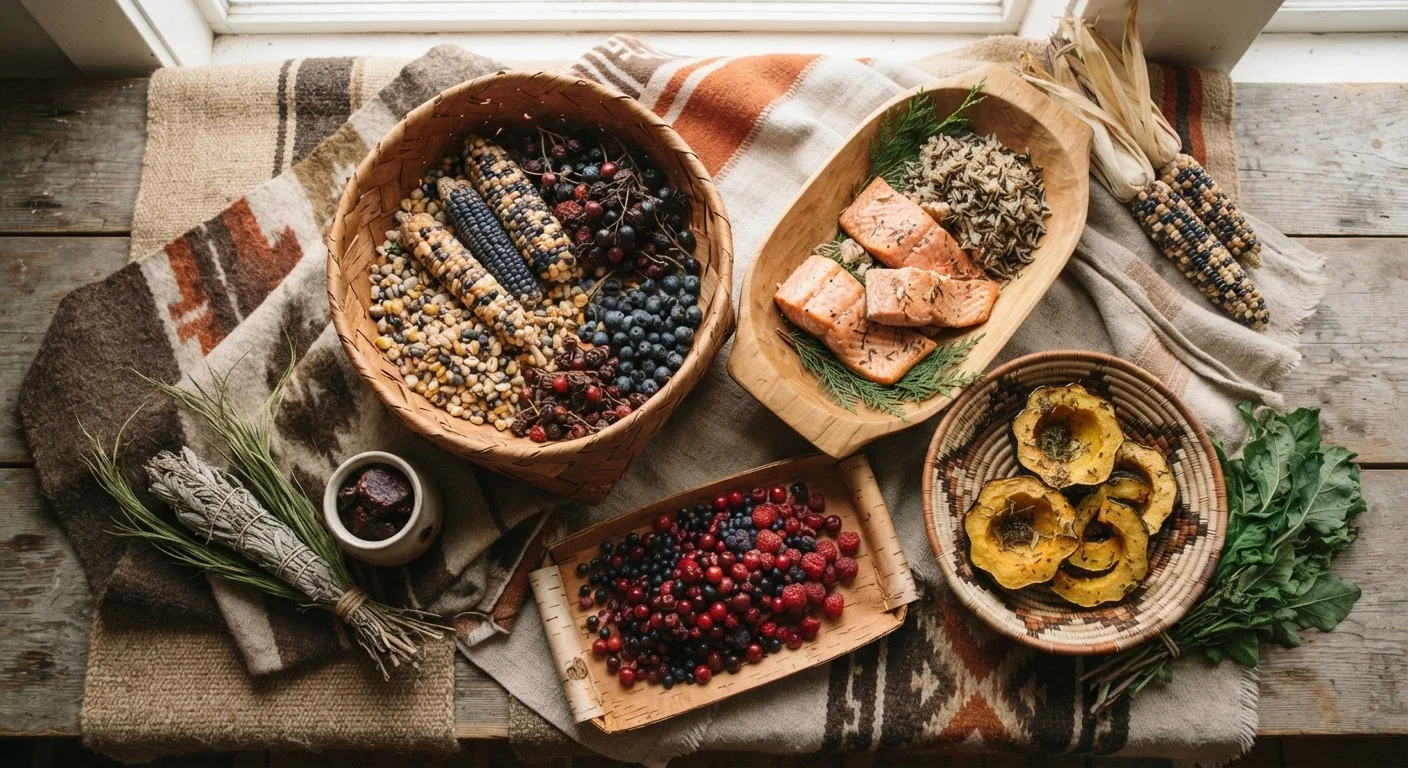
Photo: QuickAdvisor.net editorial
Key Takeaways
- Pre-contact North America had hundreds of distinct Indigenous food cultures, not a single unified cuisine.
- The Three Sisters - corn, beans, and squash - formed one of the most nutritionally complete agricultural systems ever developed.
- Food was inseparable from ceremony, ecology, and community identity across all Indigenous nations.
- Many staple American foods today - including tomatoes, potatoes, and chocolate - originated in Indigenous cultivation.
- Food sovereignty remains a pressing issue for Indigenous communities seeking to reclaim traditional foodways.
A Continent of Distinct Food Cultures
Before European ships reached North American shores, this continent was home to hundreds of distinct nations - each with its own language, governance, spiritual life, and food culture. There was no single pre-contact diet any more than there is a single European diet. What people ate was shaped by where they lived, what the land and waterways offered, and the agricultural and ecological knowledge their communities had built over thousands of years.
In the Pacific Northwest, salmon was not merely a food source - it was a cultural cornerstone, harvested in enormous quantities, preserved through smoking and drying, and embedded in ceremony and trade. On the Great Plains, bison provided the foundation of life: meat, fat, organs, and bone marrow formed a complete nutritional system, and nearly every part of the animal was used. In the arid Southwest, communities developed sophisticated dry farming techniques and water management systems to cultivate crops in conditions that would challenge most agricultural traditions. Along the Eastern Seaboard and in the Great Lakes region, a mosaic of farming, fishing, hunting, and foraging sustained complex societies.
Diversity Within Indigenous Cultures
Understanding this regional diversity is the essential first step. Collapsing it into a single story does a disservice to the extraordinary ingenuity that shaped these food systems.
The Three Sisters: Corn, Beans, and Squash
Among the most significant agricultural achievements in human history, the Three Sisters system - companion planting of corn (maize), beans, and squash - was practiced by nations across much of North America, from the Northeast to the Southwest. The plants were grown together deliberately: corn stalks provide a climbing structure for beans; beans fix nitrogen into the soil, feeding the other plants; and squash spreads along the ground, shading out weeds and retaining soil moisture. The system is an elegant ecological solution that remained productive without synthetic inputs.
Three Sisters
A companion planting system of corn, beans, and squash grown together. Each plant supports the others: corn provides structure, beans fix nitrogen in the soil, and squash shades the ground to retain moisture.
Nixtamalization
An ancient technique of treating dried corn kernels with an alkaline solution (like wood ash or lime water) to improve its nutritional value and make it easier to grind into flour.
Food sovereignty
The right of a community or people to control their own food systems - including what is grown, how food is prepared, and who has access to it.
Foraging
Gathering wild plants, fruits, nuts, fungi, and other foods from the natural environment rather than cultivating them.
Intercropping
Growing two or more crops in close proximity so that they benefit each other - improving soil health, reducing pests, and increasing overall yield.
Food tradition
The set of practices, knowledge, and cultural meanings surrounding how a community grows, prepares, shares, and thinks about food, often passed down across generations.
Nutritionally, the combination is nearly complete. Corn provides carbohydrates and some protein; beans supply the amino acids missing in corn, along with fiber; squash contributes vitamins, minerals, and additional calories. Crucially, many nations also practiced nixtamalization - soaking dried corn in an alkaline solution before grinding it into meal. This process, developed thousands of years ago, makes niacin (vitamin B3) bioavailable in corn, preventing deficiency diseases that would later devastate European populations who adopted corn without the technique.
Corn itself was not a single variety. Indigenous farmers cultivated hundreds of distinct corn types - ranging in color, texture, and use - representing millennia of careful selective breeding. This genetic diversity was one of the great unrecognized contributions to global agriculture.
Hunting, Fishing, and Foraging
For nations without year-round agriculture, or those supplementing their crops, hunting, fishing, and foraging were not fallback strategies - they were sophisticated primary food systems built on deep ecological knowledge passed across generations.
The bison herds of the Great Plains supported nations like the Lakota, Comanche, and Blackfoot. Pre-horse, large-scale hunts used techniques such as the buffalo jump - driving herds over cliffs - that required coordinated community effort and intimate understanding of animal behavior. Every part of the bison was utilized: fat was rendered and mixed with dried meat and berries to make pemmican, one of the most calorie-dense preserved foods ever created.
In the Pacific Northwest, salmon runs were harvested using weirs, nets, and fish traps, then smoked and dried for year-round use. The ceremonial significance of the first salmon catch was profound - reflecting an understanding that the health of the ecosystem and the health of the community were inseparable.
Wild plants formed a critical nutritional layer across all regions. Acorns (processed to remove bitter tannins) were a dietary staple for many California nations. Wild rice, technically a grass seed, was harvested by Great Lakes peoples from canoes and remains culturally significant today. Berries, tubers, greens, and medicinal plants were gathered seasonally, and Indigenous botanical knowledge of North America was extraordinarily refined.
Explore Indigenous Foodways Respectfully
Food, Ceremony, and Identity
In Indigenous food cultures, the act of eating was rarely separated from meaning. Food was woven into ceremony, governance, reciprocity, and spiritual life in ways that have no simple parallel in mainstream American food culture today.
Communal feasts and giveaway traditions served social functions: redistributing resources, marking seasonal transitions, honoring the dead, celebrating births, and cementing alliances between nations. The Haudenosaunee (Iroquois) Confederacy held ceremonies tied to each stage of the agricultural cycle - planting, first fruits, and harvest - treating the land and its yields as gifts requiring gratitude and reciprocity, not merely resources to be extracted.
Food also traveled as diplomacy. Trade networks across pre-contact North America moved foods - dried fish, corn, cacao, buffalo jerky, shells used in cooking - across thousands of miles, connecting communities whose food cultures were otherwise distinct. These networks were as sophisticated as any trade system of their era.
This relationship between food and identity has not disappeared. For many Indigenous people today, preparing and eating traditional foods is an act of cultural continuity and resistance. For those interested in how food shapes American cultural identity more broadly, these roots are foundational - much as the shared and diverging roots of soul food and Southern cuisine illuminate how history shapes what ends up on the plate.
Why These Food Traditions Matter Today
The foods that Indigenous peoples of North America cultivated, managed, and traded did not stay on this continent. Corn, tomatoes, potatoes, peppers, chocolate, vanilla, sunflowers, squash, and dozens of other crops - all domesticated by Indigenous peoples - now feed billions of people worldwide. It is not an overstatement to say that Indigenous agricultural knowledge reshaped global nutrition.
Yet this history is routinely underacknowledged. The story of how subsequent waves of immigration transformed the American plate cannot be fully understood without first recognizing the Indigenous food landscape those newcomers encountered and displaced.
Today, food sovereignty movements are working to restore Indigenous communities' access to traditional foods - disrupted by colonization, forced relocation, and policies that replaced traditional diets with commodity foods. Research has increasingly documented the health impacts of this dietary disruption, including elevated rates of diet-related illness in communities where traditional foodways were severed. Reclaiming these foods is understood by many communities not as nostalgia, but as a practical public health and cultural priority.
For any reader interested in understanding nutrition and healthy eating, or in how food functions as a mirror of culture and history, Indigenous North American food traditions are not a prologue to American food history - they are its foundation.
Frequently Asked Questions
The content on this site is for informational purposes only and is not a substitute for professional advice. Always consult a qualified professional for guidance specific to your situation.