
Why Certain Foods Become Tied to National Identity

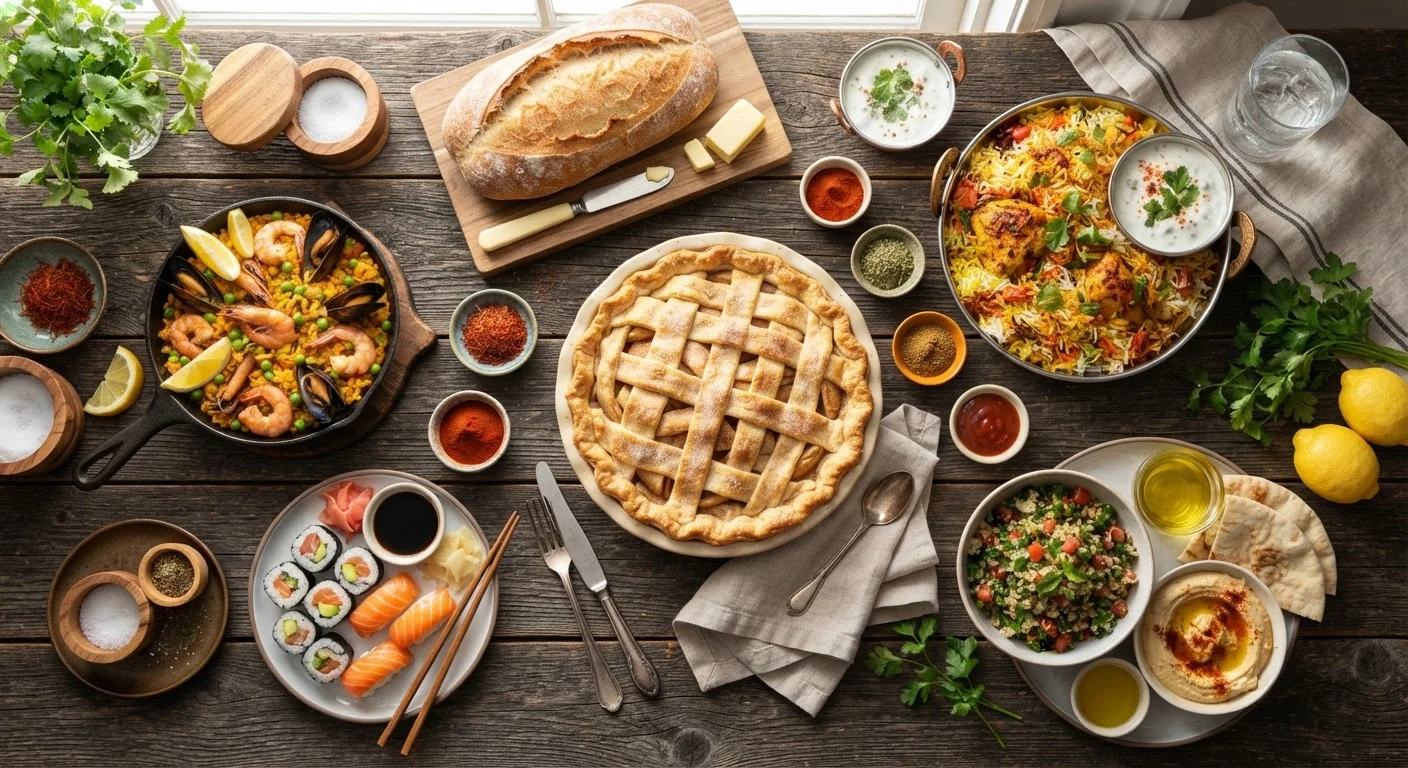
Photo: QuickAdvisor.net editorial
Key Takeaways
- National food symbols are almost always shaped by migration, trade, and cultural blending.
- Governments and media actively promote certain foods to reinforce national identity.
- The foods a society elevates often reflect its values around agriculture, tradition, and class.
- Culinary nationalism can both unite communities and erase the contributions of minority cultures.
- Personal and collective memory play powerful roles in giving food its symbolic meaning.
How Foods Earn Their Symbolic Status
Not every dish becomes a national symbol - and the ones that do usually arrived at that status through a combination of historical accident, political promotion, and repeated cultural storytelling. A food earns symbolic weight when enough people, over enough time, associate eating it with shared experience.
Take apple pie in the United States. The phrase "as American as apple pie" implies deep native roots, yet apples were introduced to North America by European colonists, and pie pastry traditions came with them. What made it American wasn't origin - it was adoption. By the 20th century, the dish had been eaten across social classes, celebrated in literature, and even invoked by soldiers abroad as a shorthand for home. Repetition and narrative did the rest.
This pattern repeats globally. France's baguette, Japan's rice, Mexico's corn tortilla - all carry national meaning that was constructed as much as it was inherited. Food becomes symbolic when it maps onto a society's self-image: its land, its labor, its values.
“Food is not just fuel. It is information. It talks to your DNA and tells it what to do. The most powerful tool you have to change your health is your fork - but it is also one of the most powerful tools a culture has to define itself.”
— Michael Pollan, Author and journalist specializing in food culture and the American diet
The Role of History, Migration, and Agriculture
Geography and farming history shape which foods become central to national identity. Societies that depended on a staple crop - rice across much of Asia, corn in Mesoamerica, wheat across Europe - built entire cuisines, rituals, and economies around it. That deep agricultural dependency created cultural attachment long before modern notions of nationalism existed.
Migration complicates the story in productive ways. As communities moved, they carried seeds, techniques, and recipes with them - adapting to new environments while preserving something familiar. The result is that most foods people consider distinctly "ours" are actually the product of cross-cultural exchange. Immigrant dishes that became American staples like pizza and tacos illustrate how foods can travel, transform, and eventually be claimed as local without anyone quite noticing the transition.
195+
Countries with a recognized 'national dish'
Food historians and cultural organizations have documented that virtually every nation promotes at least one dish as representative of its culinary identity, though many designations are informal.
~10,000 years
Age of agricultural-based food culture
Anthropologists trace the roots of food-as-identity to the development of agriculture, which tied communities to specific crops and land - forming the foundation for culinary traditions that persist today.
600+
UNESCO-recognized food heritage traditions
As of recent years, UNESCO's Intangible Cultural Heritage list includes hundreds of culinary practices from around the world, reflecting the global recognition of food as a form of living cultural heritage.
This history matters because it means national food identity is never static. It's always being renegotiated as societies change, receive new communities, and debate who belongs in the national story.
Politics, Media, and the Making of Culinary Nationalism
Food symbols don't emerge in a vacuum - they're often actively manufactured. Governments have long understood the power of edible symbolism. "National dish" designations, food-themed tourism campaigns, state banquets featuring local cuisine, and school curricula that teach traditional recipes all serve a political purpose: they tell citizens and outsiders what a country stands for.
Media amplifies this. Cookbooks, food television, and advertising have historically promoted certain dishes as authentically national while marginalizing others. Fast food's cultural footprint shows how commercial food culture shapes collective memory just as powerfully as traditional cuisine - the golden arches became a symbol of American life not through government decree but through sheer ubiquity.
The tension here is real. When a food is held up as the national standard, it often reflects a dominant group's preferences - erasing the contributions of communities whose dishes were equally formative. Recognizing culinary nationalism critically means asking: whose food is being celebrated, and whose is being overlooked?
Memory, Emotion, and the Personal Dimension
Beyond politics and history, food becomes tied to national identity through individual memory - the accumulated experience of eating certain things at certain moments. Holiday tables, street festivals, school lunches, family recipes passed across generations: all of these create emotional anchors that get projected outward onto broader cultural belonging.
Psychologists and food researchers note that flavor and smell are unusually effective at triggering autobiographical memory, which means food can evoke not just personal nostalgia but a felt sense of connection to a larger community. What comfort food reveals about memory and identity explores this psychological dimension in depth - how the personal and the cultural intertwine in what we choose to eat and why.
This emotional layer is what makes culinary nationalism so durable. Intellectual arguments about a dish's true origins rarely override the felt experience of eating something that tastes like home. Understanding that doesn't mean uncritically accepting every food myth - but it does explain why these symbols are so persistent and so powerful.
The language around food carries its own coded meanings - and those vocabularies, too, shape which foods get elevated and which remain invisible in the national story.
Frequently Asked Questions
The content on this site is for informational purposes only and is not a substitute for professional advice. Always consult a qualified professional for guidance specific to your situation.