
Hydration and Food: How Much of Your Water Intake Comes from Eating

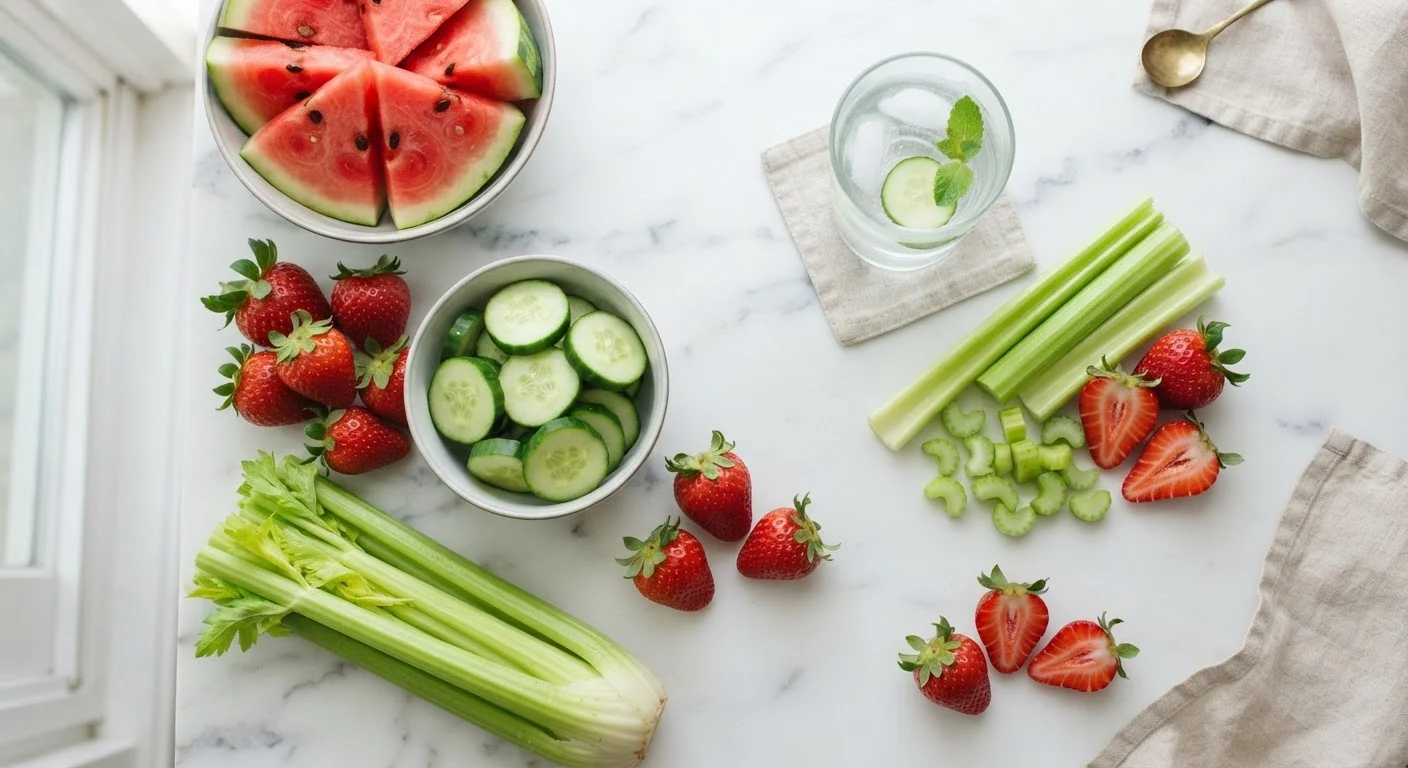
Photo: QuickAdvisor.net editorial
Key Takeaways
- Roughly 20 percent of daily fluid intake for most Americans comes from food, not beverages.
- Fruits and vegetables are the most significant food sources of water, often containing over 90 percent water by weight.
- The "8 glasses a day" rule is a simplification - total fluid needs vary by individual and diet.
- Eating water-rich foods also delivers electrolytes and nutrients that support hydration efficiency.
- Processed and dry foods contribute very little to fluid intake compared to whole produce.
The Hidden Fluid in Your Meals
Most Americans think of hydration as a beverage problem - drink more water, carry a bottle, hit a daily target. But a meaningful portion of the fluid your body uses every day arrives not through a straw, but on a fork. Nutrition researchers generally estimate that food contributes roughly 20 percent of total daily fluid intake for the average adult, though that figure shifts considerably based on what a person actually eats.
This isn't a minor footnote. For someone eating a diet rich in whole produce, that food-based water can meaningfully reduce how much they need to drink to stay in balance. For someone whose meals skew toward processed, shelf-stable foods, the contribution is far smaller - and the gap has to be made up somewhere else.
Understanding where that water comes from, and how your body uses it, is a practical piece of nutrition knowledge that rarely gets the attention it deserves. As you build a more informed approach to eating, it's worth looking at how small dietary shifts can improve nutritional quality across the board.
~20%
Daily fluid intake typically from food
Nutrition researchers broadly estimate that solid foods account for around one-fifth of total daily fluid consumption for average adults.
96%
Water content of cucumber by weight
Cucumbers rank among the highest water-content foods available, alongside lettuce, celery, and other raw vegetables.
90%+
Water content in watermelon and strawberries
Common fruits like watermelon and strawberries are composed of more than 90 percent water, making them significant contributors to fluid intake.
Which Foods Deliver the Most Water
Water content varies dramatically across the food supply. At the high end, many raw fruits and vegetables are 90 to 96 percent water by weight. Cucumbers, lettuce, celery, radishes, zucchini, and tomatoes all fall into this category. Watermelon and strawberries are similarly high, making them genuine contributors to fluid intake - not just sweet treats. Cooked oatmeal, yogurt, and eggs land in the 70 to 85 percent range. Cooked legumes and starchy vegetables contribute moderately.
At the opposite end of the spectrum, crackers, chips, dried fruits, nuts, and most processed snack foods contain very little water - often under 10 percent. Eating a meal built around these foods instead of whole produce can meaningfully increase how much you need to drink separately to compensate.
Soups and broths occupy a unique place: they are essentially water with dissolved nutrients and flavoring, and a bowl of vegetable soup can contribute a cup or more of fluid directly. This is one reason traditional cuisines around the world incorporate broth-based dishes so prominently - it is efficient, flavorful hydration.
Why Hydration Is a Nutrition Issue, Not Just a Thirst Issue
Hydration intersects with nutrition in ways that go beyond simply feeling thirsty. Water-rich whole foods - particularly vegetables and fruits - also deliver electrolytes like potassium and magnesium, which support how efficiently the body absorbs and retains fluid. This is one reason that drinking water alone is not always as effective as eating water alongside nutrients.
Fiber is another connection worth noting. Many of the foods highest in water content are also high in dietary fiber, which absorbs water in the digestive tract and supports gut function. The pairing is not coincidental - whole plant foods are built around water and structural plant matter working together. For more on why fiber deserves attention in its own right, see why most Americans fall short on dietary fiber.
Mild, chronic dehydration is common and can impair concentration, digestion, and energy levels before obvious thirst signals appear. Eating more water-rich whole foods is one practical, food-first strategy for maintaining baseline hydration - one that also delivers vitamins, minerals, and fiber as part of the same package.
“We tend to think about hydration and nutrition as separate concerns, but they are deeply connected. The foods we eat - particularly whole plants - are themselves water delivery systems.”
— Nutrition Science Consensus, Summary of established understanding in human nutrition research
This article is for general informational and educational purposes only and is not a substitute for personalized medical or nutrition advice. Consult a qualified healthcare professional for guidance specific to your health needs.
Frequently Asked Questions
The content on this site is for informational purposes only and is not a substitute for professional advice. Always consult a qualified professional for guidance specific to your situation.