
Plant Protein vs. Animal Protein: What the Research Actually Shows

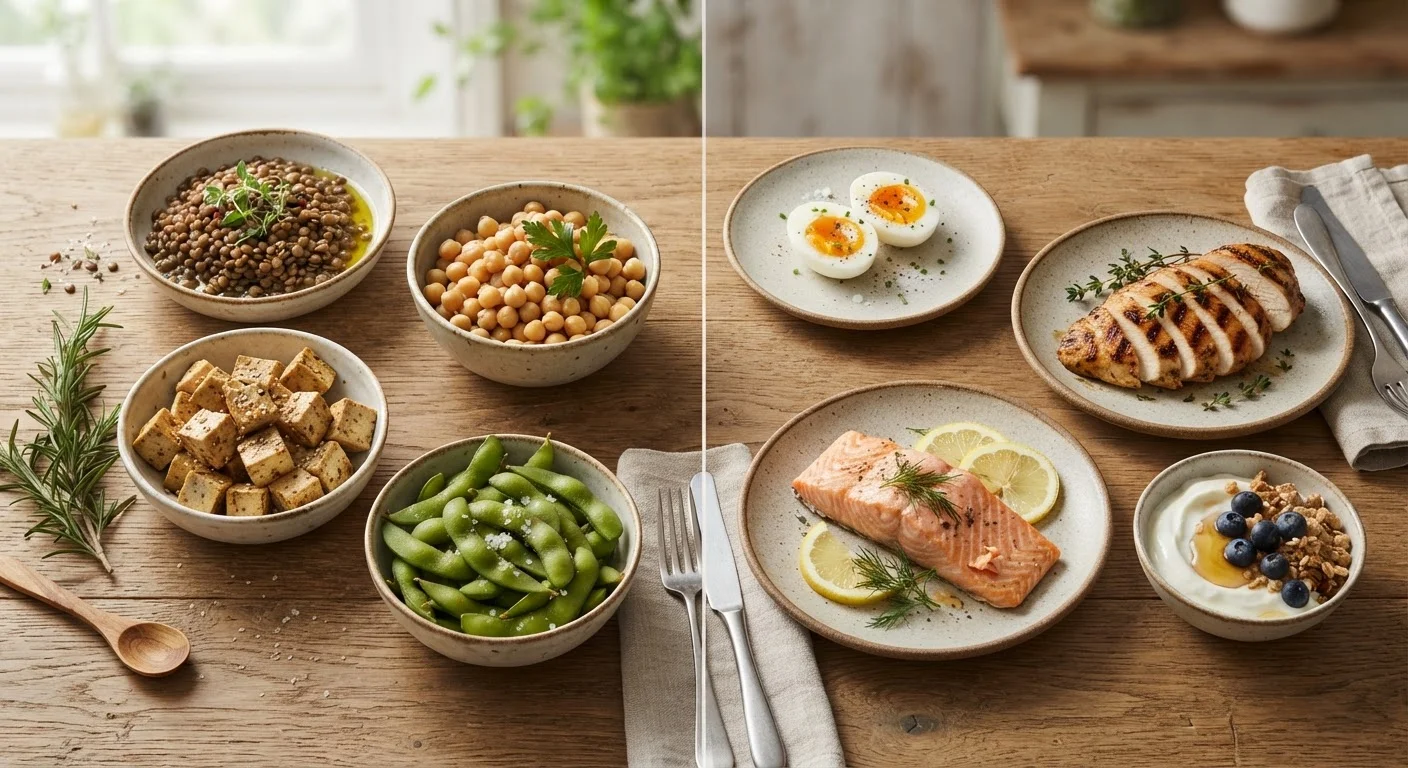
Photo: QuickAdvisor.net editorial
Key Takeaways
- Animal proteins are 'complete,' meaning they contain all nine essential amino acids in adequate amounts.
- Most plant proteins are 'incomplete,' but combining a variety of plant foods across the day covers all essential amino acids.
- Bioavailability - how much protein the body actually absorbs - is generally higher for animal sources than plant sources.
- Large observational studies associate high red and processed meat intake with increased cardiovascular and colorectal cancer risk.
- Plant-heavy eating patterns are consistently linked to lower rates of chronic disease in population-level research.
- Protein source matters less than overall diet quality, variety, and what the protein food brings with it nutritionally.
The Core Difference: Amino Acid Completeness
Protein is built from 20 amino acids, nine of which the body cannot make on its own. These are called essential amino acids, and they must come from food. The distinction between plant and animal protein largely comes down to how completely each source delivers them.
Animal proteins - meat, poultry, fish, eggs, and dairy - are considered complete proteins because they supply all nine essential amino acids in ratios that closely match what human tissue needs. Plant proteins are usually described as incomplete because most are low in at least one essential amino acid. Lysine is scarce in grains; methionine is limited in legumes.
However, calling a plant protein "incomplete" doesn't mean it's inadequate. Eating a variety of plant foods throughout the day - grains, legumes, nuts, vegetables - reliably supplies all essential amino acids. You don't need to carefully combine foods at every meal; variety over the course of a day does the work. This is the scientific consensus reflected in major nutrition organizations' dietary guidance.
| Criterion | Plant Protein | Animal Protein |
|---|---|---|
| Amino acid completeness | Usually incomplete; varies by food | Complete in a single source |
| Bioavailability (DIAAS) | Moderate (0.5-0.9); soy near 1.0 | High (≥1.0 for eggs, dairy, meat) |
| Saturated fat content | Generally low | Varies; higher in red/processed meat |
| Fiber content | Present (legumes, grains, nuts) | Absent |
| Chronic disease associations | Linked to lower risk in population studies | Mixed; red/processed meat linked to higher risk |
| Meal planning complexity | Requires variety for full amino acid coverage | Simpler - complete in single foods |
| Key accompanying nutrients | Fiber, phytonutrients, folate, potassium | B12, heme iron, zinc, omega-3s (fish) |
Bioavailability: How Much Protein Actually Gets Used
Digesting protein and actually using it are two different things. Bioavailability refers to the proportion of a nutrient that the body absorbs and puts to work. Nutritionists use a measure called the DIAAS to compare protein quality across foods.
By this measure, animal proteins generally score higher. Eggs, dairy, and most meats have DIAAS scores at or above 1.0, meaning they meet or exceed human amino acid requirements per gram. Most plant proteins score lower - often between 0.5 and 0.9. Soy is a notable exception, scoring close to animal protein on most assessments.
Practical implication: someone eating primarily plant proteins may need to consume somewhat more total protein to achieve the same physiological effect as a smaller amount of animal protein. For most people eating adequate calories from varied food sources, this gap is bridged naturally. Concerns are more relevant in settings of food insecurity or very restrictive eating patterns.
~20%
Lower all-cause mortality in plant-protein dieters
A 2016 JAMA Internal Medicine study found replacing animal protein with plant protein was associated with roughly 10-20% lower mortality risk, depending on the substitution.
Group 1
WHO carcinogen classification for processed meat
The International Agency for Research on Cancer classifies processed meat as a Group 1 carcinogen based on sufficient evidence of colorectal cancer risk in humans.
~50g
Typical additional plant protein needed to match animal protein efficiency
Due to lower bioavailability scores, plant-protein-only diets may require moderately higher total intake to match the amino acid delivery of animal sources, per nutrition modeling estimates.
What Population Research Shows About Health Outcomes
This is where the evidence is most consequential - and most nuanced. Decades of large observational studies have examined how protein source relates to long-term health, and the patterns are consistent enough to inform public health guidance, even if they can't establish direct causation.
High intakes of red meat - particularly processed forms like sausage, bacon, and deli meats - are associated with elevated risk of cardiovascular disease and colorectal cancer in major cohort studies, including research published by Harvard's School of Public Health. The World Health Organization classifies processed meat as a Group 1 carcinogen (evidence of cancer-causing potential in humans) and red meat as Group 2A (probably carcinogenic). These classifications are based on the strength of epidemiological evidence, not absolute risk levels.
Fish and poultry show a more neutral or modestly favorable health profile in most research. Dairy's associations are mixed and depend heavily on the specific product and population studied.
Plant-based dietary patterns - where legumes, nuts, seeds, and whole grains anchor protein intake - are consistently linked to lower rates of type 2 diabetes, heart disease, and all-cause mortality. Whether this is driven by the protein itself, the fiber, the phytonutrients, or the absence of saturated fat is difficult to disentangle, which is a key limitation of this research. For a broader look at eating patterns with strong evidence behind them, see our guide to evidence-backed dietary patterns.
This article is for general informational and educational purposes only. It is not medical or dietary advice. Consult a qualified healthcare professional or registered dietitian for guidance specific to your health situation.
Making Smarter Choices in Practice
The framing of plant versus animal protein as an either/or debate doesn't reflect how most people eat - or how most nutrition scientists think about diet quality. The meaningful question is: what else does your protein food bring to the table?
A serving of lentils delivers protein alongside fiber, folate, potassium, and iron. A serving of grilled salmon brings protein alongside omega-3 fatty acids and vitamin D. A serving of processed deli meat brings protein alongside sodium, preservatives, and saturated fat. The protein gram count can be similar; the nutritional context is not.
For readers looking to get more from their meals without overhauling their diet, a useful starting point is shifting the proportion of plant proteins upward - adding beans to soups, swapping one meat-based meal for a legume-based one - without requiring a wholesale dietary change. And understanding how overall food processing affects nutritional quality is equally important; the contrast explored in whole foods vs. ultra-processed foods applies directly to protein choices as well.
The research doesn't support rigid exclusion of animal proteins for healthy adults, nor does it support unlimited consumption of all animal foods equally. What it does support, consistently, is a dietary pattern where plant proteins play a substantial role, animal proteins are chosen thoughtfully, and variety remains the foundation.
The content on this site is for informational purposes only and is not a substitute for professional advice. Always consult a qualified professional for guidance specific to your situation.