
Popular Nutrition Myths That Persist Despite the Evidence

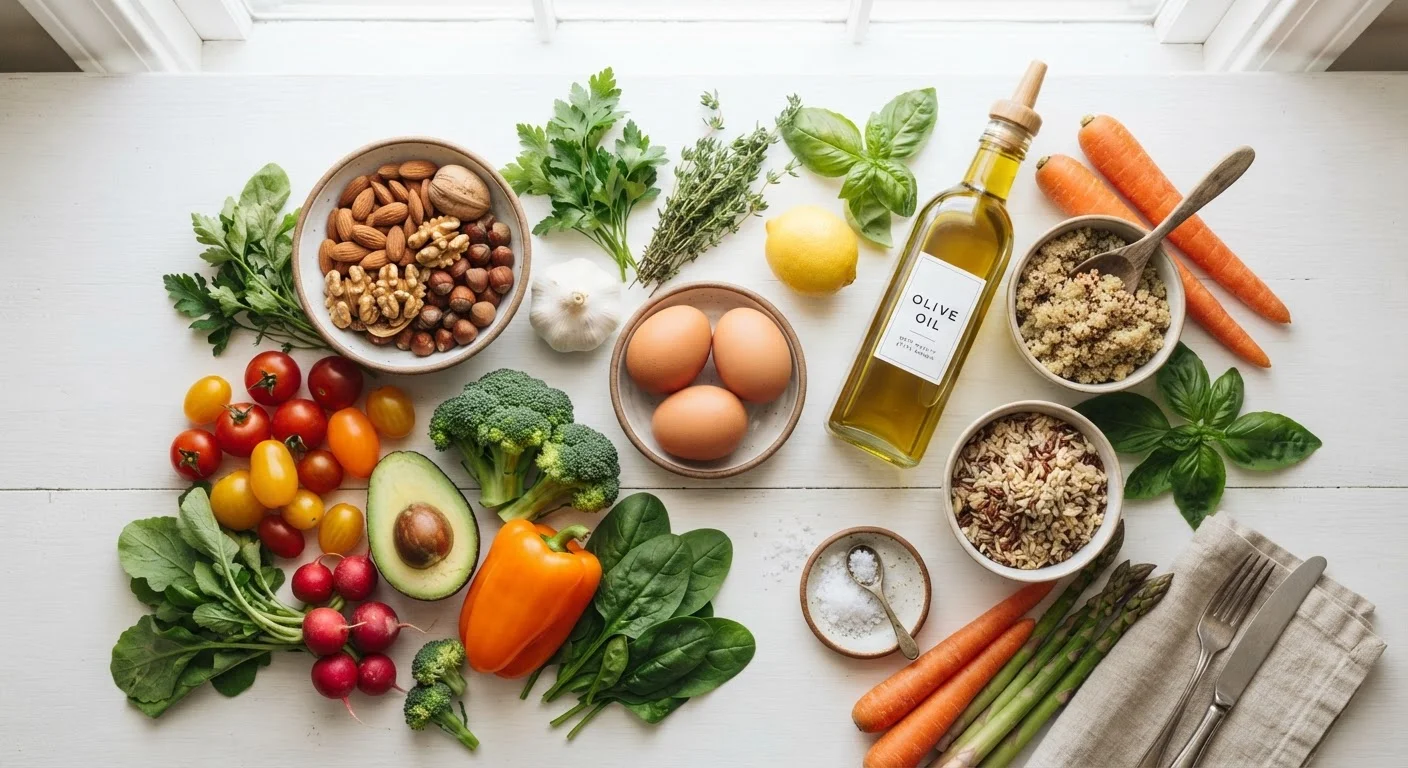
Photo: QuickAdvisor.net editorial
Key Takeaways
- Dietary fat does not directly cause body fat gain - total calorie balance and food quality matter more.
- No commercial detox product can outperform what your liver and kidneys already do naturally.
- Skipping meals does not reliably boost metabolism; it can make hunger harder to manage.
- Organic produce is not nutritionally superior to conventionally grown produce, research shows.
- Protein needs vary by individual; more is not always better and excess carries trade-offs.
Why Nutrition Myths Stick Around
Nutrition is one of the most contested fields in public health - and one of the easiest to misunderstand. Studies are misquoted, headlines strip away nuance, and social media amplifies whatever sounds most dramatic. The result is a landscape where half-truths and outright myths circulate alongside solid science, sometimes for decades.
Understanding why these myths persist is the first step toward seeing through them. Many contain a kernel of truth that gets stretched well beyond what the evidence supports. Others survive because they align with what people want to believe - that one simple change will unlock better health. The reality of nutrition science is more complex, and more interesting, than any single rule can capture.
For a broader look at stubborn misconceptions in the field, see our companion piece on nutrition myths that just won't die.
Myth
Eating fat makes you fat.
Fact
Dietary fat does not directly translate to body fat. Weight gain is driven by overall energy intake relative to expenditure, not by fat consumption alone.
This myth gained mainstream traction in the 1980s when low-fat dietary guidelines were promoted widely. Food manufacturers responded by producing low-fat products - often loaded with added sugar to compensate for flavor. Research since then has consistently shown that healthy fats from sources like nuts, avocados, olive oil, and fatty fish support heart health, hormone function, and satiety. Removing fat from the diet while increasing refined carbohydrates and sugar does not improve health outcomes and may worsen them. What matters most is the type of fat and the overall quality of the diet. See our overview of whole foods versus ultra-processed foods for more context.
Myth
Detox diets and cleanses flush toxins from your body.
Fact
The liver, kidneys, and digestive system continuously filter and remove waste products. No commercial cleanse meaningfully improves upon this process.
The word "detox" in consumer wellness products is largely a marketing term rather than a medical one. Your body has sophisticated, continuous detoxification systems: the liver neutralizes harmful compounds, the kidneys filter waste from blood, and the digestive system eliminates what isn't absorbed. Proponents of juice cleanses or supplement-based detox programs have not produced credible clinical evidence that these products remove specific toxins or deliver health benefits beyond what a balanced diet provides. If you genuinely have concerns about toxin exposure, that conversation belongs with a physician - not a product label.
Myth
Skipping breakfast boosts your metabolism.
Fact
Meal timing has a modest effect on metabolic rate at best. Missing meals does not meaningfully accelerate calorie burning and can increase hunger later in the day.
The idea that skipping breakfast or other meals "fires up" the metabolism reflects a misunderstanding of how metabolism works. Your basal metabolic rate - the energy your body expends at rest - is primarily determined by body size, muscle mass, age, and genetics, not by meal frequency. While some research into intermittent fasting shows potential benefits for certain individuals in specific contexts, it does not do so by "boosting" metabolism in the dramatic way often claimed. Skipping meals can also make it harder to manage hunger, sometimes leading to larger portion sizes at subsequent meals.
Myth
Organic produce is significantly more nutritious than conventionally grown.
Fact
Multiple large reviews have found no consistent, meaningful nutritional difference between organic and conventionally grown fruits and vegetables.
Organic farming practices differ from conventional ones in terms of pesticide use and soil management, but these differences do not reliably produce food with substantially higher levels of vitamins, minerals, or antioxidants. A systematic review published in the Annals of Internal Medicine found limited evidence that organic foods are significantly more nutritious. Pesticide residue levels on conventionally grown produce sold in the U.S. are regulated and generally remain well below safety thresholds established by the EPA. Choosing organic may reflect environmental or personal values, but it does not guarantee a nutritionally superior product. Eating more produce - in any form - remains the stronger evidence-based priority for most Americans.
Myth
You need to eat large amounts of protein to build muscle or stay healthy.
Fact
Protein needs are real, but most Americans already consume adequate amounts. Excessive protein intake carries trade-offs and is not proven to deliver proportionally greater benefits.
Protein is essential for muscle repair, immune function, enzyme production, and dozens of other physiological processes. But the relationship between protein intake and outcomes like muscle gain is not linear - there is a threshold beyond which additional protein provides diminishing returns. Current evidence suggests that protein needs vary by age, activity level, and health status, and that distribution across meals may matter as much as total daily intake. Our detailed look at protein science examines the evidence carefully. Very high protein diets can also crowd out fiber-rich plant foods - a nutrient most Americans already fall short on, as explored in our fiber intake guide.
What the Evidence Actually Supports
Cutting through nutrition noise requires looking at the overall pattern of evidence rather than any single study. Dietary research is inherently difficult to conduct - people eat complex combinations of foods across years and decades, making controlled trials challenging. That said, decades of large-scale research have produced reliable consensus on several core principles.
95%
Americans falling short of daily fiber recommendations
According to data cited by the American Society for Nutrition, approximately 95% of U.S. adults do not meet recommended daily fiber intake.
57%
of U.S. calorie intake from ultra-processed foods
Research published in the journal BMJ Open found that ultra-processed foods account for more than half of the average American's daily calorie consumption.
2x
Increase in low-fat product sales after 1980s guidelines
Following the widespread adoption of low-fat dietary guidelines in the 1980s, the market for reduced-fat packaged foods expanded dramatically - often substituting sugar for fat.
A diet built around mostly whole, minimally processed foods - varied vegetables, legumes, whole grains, lean proteins, and healthy fats - consistently shows up as beneficial across populations and study designs. No single food is a miracle, and no single food is purely poison in realistic portions. For a deeper dive into how macronutrients each contribute, our macronutrient explainer breaks it down clearly.
No Single Food or Rule Defines a Healthy Diet
The best dietary pattern is one you can sustain. Extreme restrictions fueled by myth rather than evidence tend to backfire - both nutritionally and psychologically. Our guide to evidence-backed eating patterns offers a grounded starting point free of fad-diet spin.
This article is for general informational and educational purposes only and is not a substitute for personalized medical or nutritional advice. Consult a qualified healthcare professional or registered dietitian for guidance specific to your health needs.
The content on this site is for informational purposes only and is not a substitute for professional advice. Always consult a qualified professional for guidance specific to your situation.