
Nutrition Science Myths That Just Won't Die

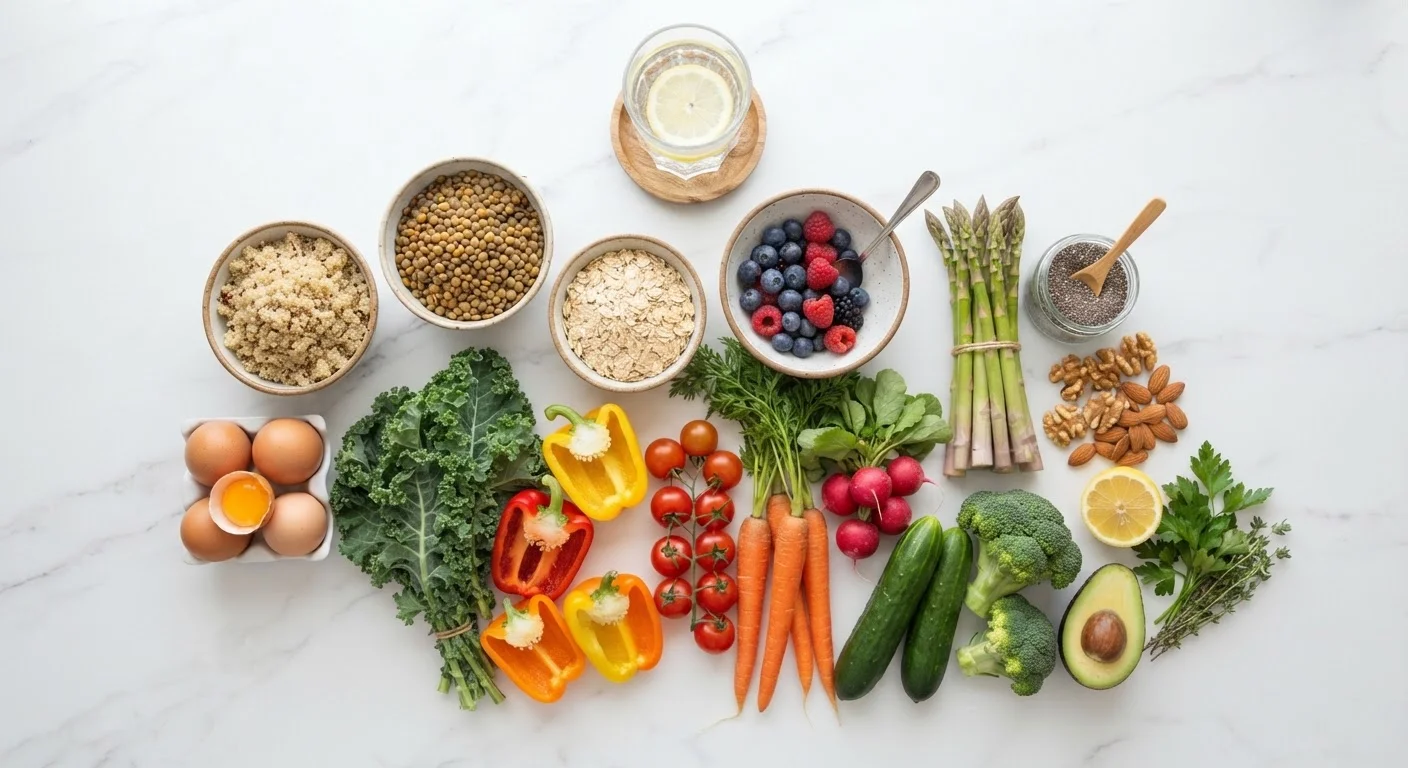
Photo: QuickAdvisor.net editorial
Key Takeaways
- Carbohydrates are not inherently fattening - overall calorie balance and food quality matter more.
- The '8 glasses of water a day' rule lacks scientific basis; hydration needs vary by individual.
- Eating fat does not directly cause body fat gain; dietary fat type and total calories are what matter.
- Skipping breakfast has no universal metabolic benefit or drawback - it depends on the individual.
- Organic produce is not nutritionally superior to conventional produce based on current evidence.
- High-protein diets are not dangerous for healthy kidneys, though special populations should consult a doctor.
Why Nutrition Myths Are So Stubborn
Few areas of public health are as tangled with misinformation as nutrition. Dietary advice shifts with food trends, media headlines, and industry messaging - making it genuinely hard to separate what the evidence supports from what has simply been repeated often enough to feel true. The result is a landscape where myths survive for decades, shaping real food choices and sometimes real health consequences.
This article works through some of the most persistent nutrition misconceptions, examines what the research actually shows, and offers grounded, practical context. As always, this is general health information, not personal medical advice - if you have specific dietary concerns or conditions, a registered dietitian or physician is your best resource.
For a broader look at related misconceptions, see our coverage of popular nutrition myths that persist despite the evidence.
Myth
Carbs make you fat.
Fact
Excess calories from any source contribute to weight gain - carbohydrates themselves are not uniquely fattening.
The idea that carbohydrates are uniquely responsible for weight gain became mainstream during the low-carb diet wave, but the physiology doesn't support a carb-specific blame. Body weight is largely governed by overall energy balance - calories consumed versus calories expended. Research published in journals including Cell Metabolism and reviews by the National Institutes of Health have found that when calories and protein are held equal, low-fat and low-carbohydrate diets produce similar weight outcomes. The quality of carbohydrates matters considerably: whole grains, legumes, and vegetables behave very differently in the body than refined sugars and white flour. Cutting heavily processed carbs can support better health - but that benefit is about food quality, not the macronutrient category itself. For a deeper look at dietary fiber - the carbohydrate component most Americans fall short on - see dietary fiber and what the science says.
Myth
You need to drink eight glasses of water every day.
Fact
There is no universal scientific basis for the 'eight glasses' rule; individual hydration needs vary based on body size, activity, climate, and diet.
The eight-glasses-a-day guideline is one of nutrition's most durable myths. It appears to trace back to a 1945 U.S. Food and Nutrition Board recommendation that was widely misread - the original text noted that most of the recommended fluid intake is contained in food. The Institute of Medicine (now the National Academy of Medicine) sets general adequate intake levels for total water, which include fluids from all beverages and food sources combined - not eight glasses of plain water. Thirst is a reliable hydration cue for most healthy adults. Urine color (pale yellow generally indicates adequate hydration) is a more individualized and practical guide than a fixed glass count.
Myth
Eating fat makes you fat.
Fact
Dietary fat does not directly translate to body fat; total calorie intake, fat type, and overall dietary pattern are what influence body composition.
The low-fat diet movement of the 1980s and 1990s entrenched the idea that eating fat causes weight gain, but evidence since then has substantially revised that picture. Dietary fat is calorie-dense - at 9 calories per gram compared to 4 for carbohydrates and protein - so high-fat foods can make it easier to overconsume calories. But the fat itself is not metabolically problematic in moderate amounts. In fact, unsaturated fats found in foods like olive oil, avocados, nuts, and fatty fish are associated with cardiovascular benefits in numerous large studies. Trans fats (now largely removed from the food supply) and excess saturated fat carry more documented risk. The low-fat food trend also had an unintended consequence: manufacturers replaced fat with added sugar, which may have worsened metabolic health outcomes. See our coverage of eating fat makes you fat and other persistent myths for more context.
Myth
Breakfast is the most important meal of the day and skipping it slows your metabolism.
Fact
Evidence does not support breakfast as universally critical; its benefit depends heavily on the individual and their overall dietary pattern.
The claim that breakfast is metabolically essential has been repeated so often it feels like settled science - but the research is more nuanced. Several large randomized controlled trials, including one published in The BMJ, found that recommending breakfast for weight loss did not produce the expected results and that skipping breakfast did not meaningfully slow resting metabolism in healthy adults. Intermittent fasting approaches, which often involve skipping breakfast, have shown neutral-to-positive outcomes in some populations. That said, breakfast may benefit children, athletes, and people with blood sugar regulation concerns. The key variable is what a person eats across the full day, not the timing of the first meal.
Myth
Organic produce is significantly more nutritious than conventionally grown produce.
Fact
Current evidence does not consistently show meaningful nutritional differences between organic and conventional produce.
Organic food carries associations with health and purity, which has led many consumers to assume it is nutritionally superior. However, systematic reviews - including a widely cited 2012 analysis from Stanford University published in the Annals of Internal Medicine - found little evidence that organic foods are significantly more nutritious than their conventional counterparts in terms of vitamins, minerals, and other nutrients. Pesticide residue differences do exist, though regulatory agencies set limits for conventional produce based on safety thresholds. Whether those residue differences translate to measurable health outcomes in the general population remains an open question in research. Choosing organic may be a reasonable personal preference, but the assumption that it delivers substantially better nutrition is not well-supported by current evidence.
Myth
High-protein diets damage healthy kidneys.
Fact
For people with normal kidney function, higher protein intake has not been shown to cause kidney damage in research studies.
Concern about protein and kidney health stems from the legitimate fact that people with existing chronic kidney disease (CKD) are often advised to moderate protein intake, because impaired kidneys struggle to process nitrogen waste produced during protein metabolism. However, this clinical recommendation has been incorrectly generalized to healthy individuals. Studies in people without kidney disease - including those following high-protein diets - have not demonstrated kidney damage or accelerated decline in kidney function. Major nutrition bodies, including the Academy of Nutrition and Dietetics, note that higher protein intake is safe for healthy adults. Anyone with a history of kidney issues should discuss dietary protein with their nephrologist or physician before making changes. For a broader evidence review, see what the science actually supports about protein intake.
What the Evidence Actually Supports
The through-line across most debunked nutrition myths is the same: oversimplification. Human metabolism is complex, individual variation is real, and single-nutrient thinking - blaming one food component for all health problems - rarely holds up. What decades of nutrition research does consistently support is a dietary pattern rich in minimally processed foods, vegetables, legumes, whole grains, and lean proteins, with moderate flexibility around everything else.
~5%
Americans meeting daily fiber recommendations
According to research published in the American Journal of Lifestyle Medicine, fewer than 5% of Americans consume the recommended amount of dietary fiber daily.
20-30%
Daily fluid intake from food sources
The National Academy of Medicine estimates that approximately 20-30% of daily fluid intake in the U.S. comes from solid food, not beverages.
2x
Calorie density of fat vs. carbs or protein
Dietary fat provides roughly 9 calories per gram, approximately twice the caloric density of carbohydrates or protein at 4 calories per gram each.
Hydration is another area where myth and evidence diverge. Food contributes meaningfully to daily fluid intake - learn how much of your water intake actually comes from eating rather than drinking alone. And for readers curious about protein specifically, what the science actually supports about protein offers a grounded look at needs, sources, and timing. Similarly, nutrition intersects with movement - explore how fitness myths that won't die can compound the confusion when diet and exercise advice collide.
Consult a Professional for Personal Dietary Decisions
This article is for informational purposes only and does not constitute medical or dietary advice. Consult a qualified healthcare professional before making significant changes to your diet, especially if you have an existing health condition.
The content on this site is for informational purposes only and is not a substitute for professional advice. Always consult a qualified professional for guidance specific to your situation.