
The Sugar Confusion: Natural, Added, and Free Sugars Are Not the Same Thing

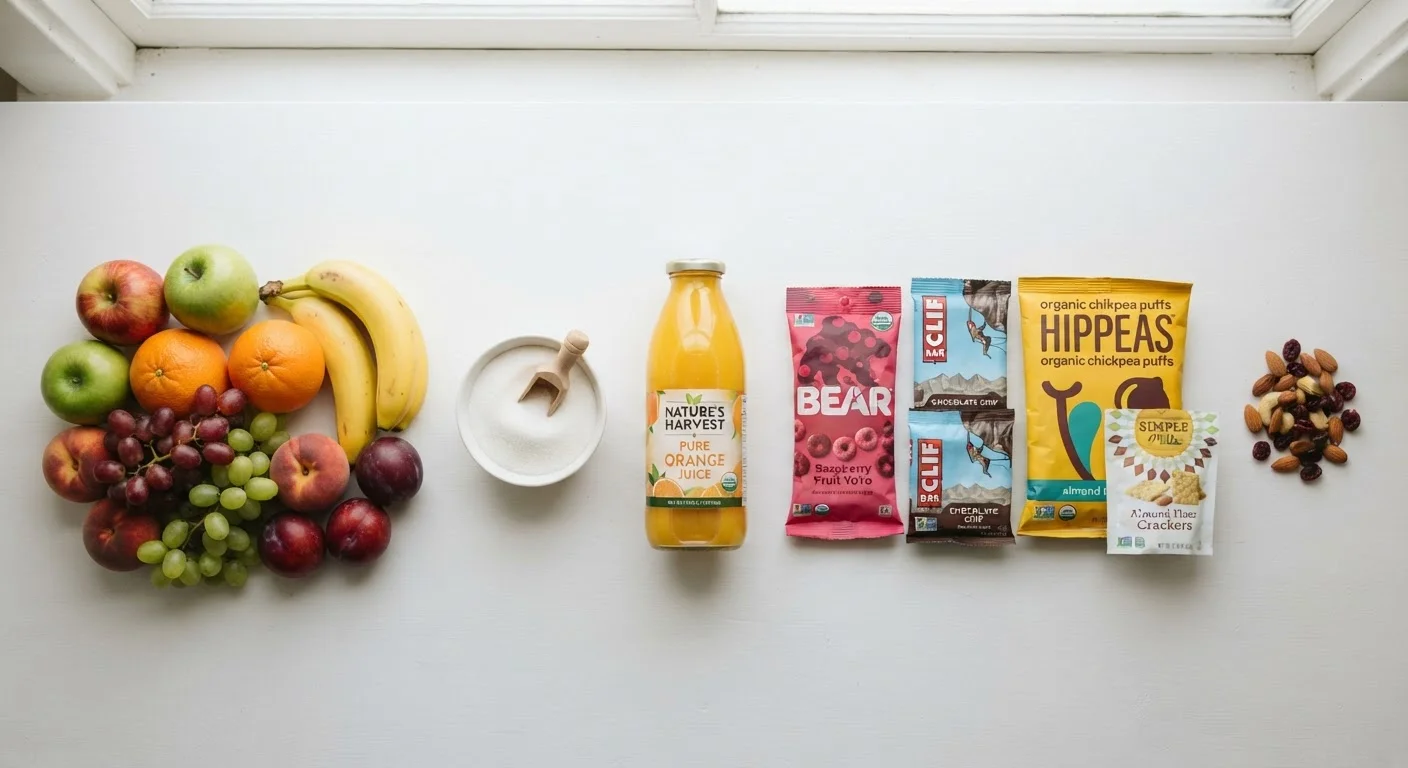
Photo: QuickAdvisor.net editorial
Key Takeaways
- Natural, added, and free sugars are defined differently by health authorities and mean different things nutritionally.
- Whole fruit contains natural sugar locked inside fiber-rich cells, which slows digestion and supports satiety.
- Added sugars - listed on U.S. Nutrition Facts labels - include any sugars or syrups put into food during processing or preparation.
- Free sugars, the WHO's broader term, also include juice and puréed-fruit sugars that are no longer protected by plant cell walls.
- The food matrix surrounding sugar - fiber, water, protein - shapes how the body processes it, not just the sugar molecule itself.
- Current U.S. dietary guidelines recommend limiting added sugars to less than 10% of total daily calories.
Why the Distinctions Actually Matter
Few nutrition topics generate more confusion than sugar. Headlines swing between 'fruit sugar is fine' and 'all sugar is toxic,' leaving many readers unsure what to believe. The confusion is partly justified - different health organizations use different terminology, and food labels only capture part of the picture.
Understanding the three main sugar categories - natural, added, and free - helps you cut through that noise and read both labels and research with more confidence. The distinctions aren't arbitrary; they reflect real differences in how the body encounters and processes sugar.
U.S. Labels vs. WHO Guidelines
See how these sugar concepts connect to broader food quality questions in our explainer on whole foods vs. ultra-processed foods.
Natural Sugars: The Food Matrix Makes the Difference
Natural sugars are those found intact inside plant or animal cells - fructose and glucose in a whole apple, or lactose in a glass of milk. What separates them from other sugars isn't their chemical structure but the environment they travel with. Whole fruit, for example, delivers sugar embedded in dietary fiber, water, and plant compounds. That matrix slows digestion, moderates blood sugar response, and promotes a feeling of fullness.
This is why public health guidance consistently encourages eating whole fruit rather than restricting it. The fiber effectively changes the rate at which sugar enters the bloodstream. Compare that to drinking an equal amount of calories from juice, where most of the fiber has been removed and the sugar behaves quite differently.
17 tsp
Average daily added sugar intake for U.S. adults
According to CDC analysis of national dietary survey data, American adults consume roughly 17 teaspoons of added sugar per day - well above the recommended 12 teaspoons.
10%
Recommended added sugar limit (% of daily calories)
The 2020-2025 U.S. Dietary Guidelines for Americans advise that added sugars make up less than 10% of total daily caloric intake.
~50%
Share of added sugar from beverages in U.S. diets
CDC data indicates that sugar-sweetened beverages - including sodas, energy drinks, and sweetened coffees - account for roughly half of all added sugar consumed by U.S. adults.
Added Sugars: What Your Nutrition Label Is Measuring
Added sugars are any sugars or syrups introduced to a food during processing or preparation. This includes the obvious sources - table sugar stirred into coffee, high-fructose corn syrup in sodas - but also honey drizzled on yogurt, fruit juice concentrate used to sweeten packaged goods, and maple syrup in salad dressing.
Since 2020, U.S. Nutrition Facts labels are required to list added sugars separately from total sugars. This is genuinely useful: it lets you see how much of a food's sugar content came from processing rather than from natural ingredients. A plain yogurt might show 12 grams of total sugars (all from lactose) and 0 grams added. A flavored version might show 24 grams total with 12 grams added. Same category, very different product. For a practical walkthrough of reading these labels, see how to decode a Nutrition Facts panel.
Free Sugars: The WHO's Broader Framework
The World Health Organization uses the term free sugars in its global dietary guidelines - a category that is deliberately wider than 'added sugars.' Free sugars include everything covered by the added sugars definition, but also sugars in honey, syrups, and fruit juices, even 100% unsweetened juice.
The reasoning: once fruit is juiced or puréed, sugar is released from the plant cell walls that originally slowed its absorption. Structurally, that released sugar behaves more like added sugar than like the sugar in whole fruit. This is why the WHO recommends limiting free sugars rather than simply added sugars - the distinction captures a wider range of foods that can deliver rapid, concentrated doses of sugar without the protective food matrix.
Understanding blood sugar response more broadly? Our piece on the glycemic index and its limits adds useful context.
This article is for general informational and educational purposes only and is not a substitute for advice from a qualified healthcare professional or registered dietitian.
Frequently Asked Questions
The content on this site is for informational purposes only and is not a substitute for professional advice. Always consult a qualified professional for guidance specific to your situation.