
Eating Well on a Budget: Practical Strategies Grounded in Nutrition Science

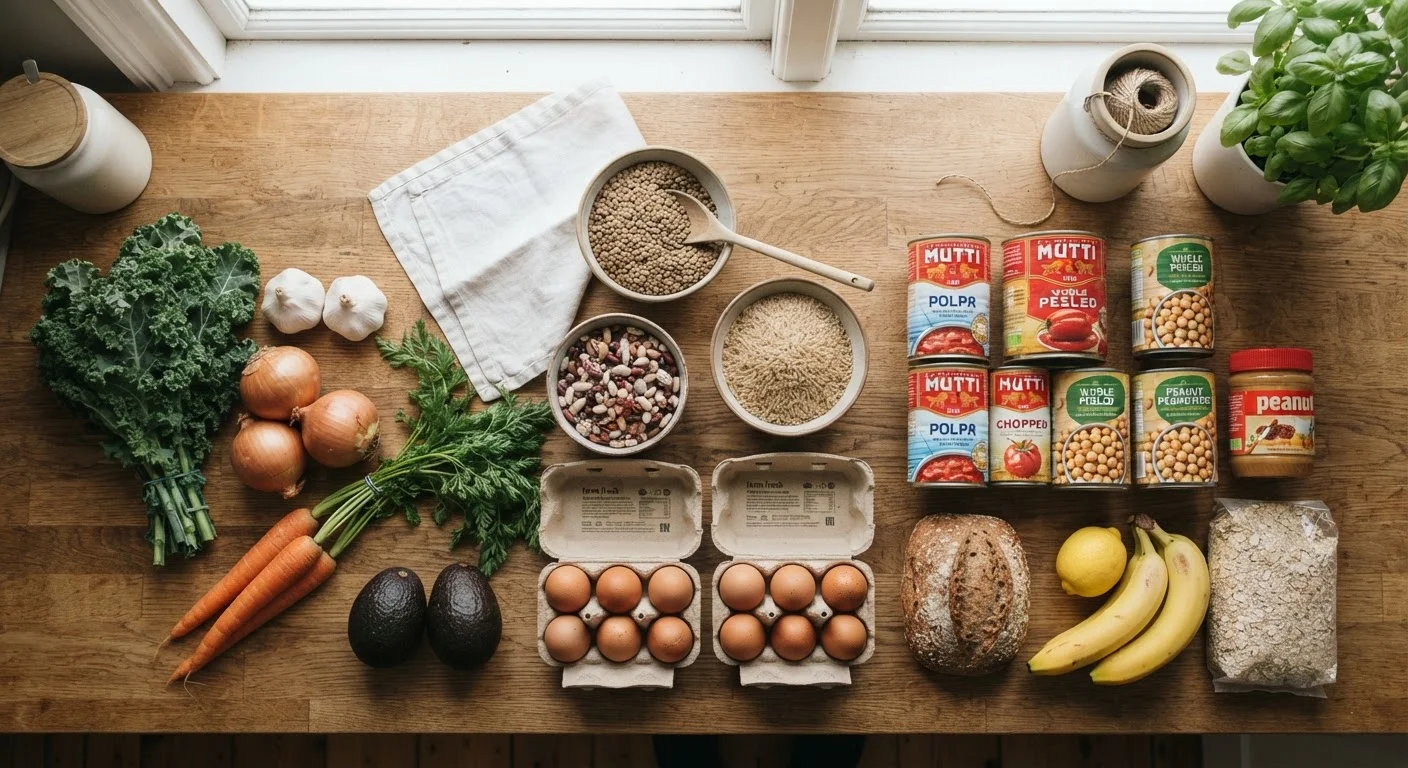
Photo: QuickAdvisor.net editorial
Key Takeaways
- Whole grains, legumes, eggs, and frozen vegetables consistently deliver strong nutrition at low cost per serving.
- Planning meals before shopping reduces impulse purchases and food waste, stretching your budget further.
- Cooking staple ingredients from scratch - like dried beans - costs a fraction of convenience alternatives.
- Frozen and canned produce can match or exceed fresh options in key nutrients when processed at peak ripeness.
- Protein doesn't have to mean expensive meat - plant-based sources provide comparable nutrition for less money.
Why Budget Eating Has a Bad Reputation - and Why It's Undeserved
A persistent myth in nutrition culture is that eating well costs more. While premium packaged health foods and trendy superfoods can be expensive, the scientific foundation of a nutritious diet - vegetables, legumes, whole grains, and lean proteins - is built largely from affordable, widely available ingredients. Researchers at the Harvard T.H. Chan School of Public Health have found that the healthiest dietary patterns don't necessarily require the highest spending; what matters more is food selection and preparation habits.
Understanding what your body actually needs cuts through marketing noise. For a grounded look at how major dietary patterns are structured and what evidence supports them, see our overview of research-backed eating patterns. The short version: whole foods, variety, and balance - none of which demand a premium grocery budget.
Best Practices for Eating Well Without Overspending
The following strategies are grounded in nutrition science and practical household economics. Apply the ones that fit your situation - even a few can meaningfully improve both your diet quality and your grocery bill.
Build your weekly meals around a short list of versatile staple ingredients.
Choose frozen and canned produce without hesitation.
Shift protein sources toward plant-based and lower-cost animal options.
Plan meals and write a specific shopping list before every grocery trip.
Buy in bulk for shelf-stable staples, using unit price math to verify savings.
Quick Actions You Can Take This Week
Changing your entire shopping routine overnight is rarely sustainable. Instead, start with a handful of concrete moves that produce results immediately.
If you want to dig deeper into budgeting principles that apply beyond the grocery aisle, this beginner's guide to budgeting covers the core concepts without assuming any prior financial knowledge.
Getting More Nutrition from What You Already Buy
$1.50
Average cost per serving of dried lentils
USDA data indicates dried lentils are among the least expensive per-serving protein and fiber sources available in U.S. grocery stores.
~30%
Reduction in food waste from meal planning
Research published in the American Journal of Preventive Medicine found that households using structured meal plans wasted significantly less food than those that did not.
2-3×
Cost difference: fresh vs. frozen vegetables
Seasonal and regional pricing data consistently show frozen vegetables cost a fraction of fresh equivalents, with comparable or better nutrient retention in many cases.
Even modest changes in how you store, prepare, and combine foods can improve their nutritional yield. Cooking dried legumes from scratch rather than buying canned saves money and allows you to control sodium. Roasting or steaming vegetables rather than boiling them preserves more water-soluble vitamins like vitamin C and folate. Pairing iron-rich plant foods - such as lentils - with a small amount of vitamin C (a squeeze of lemon, a handful of bell pepper) meaningfully improves iron absorption.
Protein choices also affect your budget significantly. The science on protein needs shows that eggs, canned fish, tofu, and legumes can meet daily requirements at a fraction of the cost of fresh meat. For a flexible framework on assembling balanced meals without rigid rules, see building a balanced plate without following a strict diet.
“The best diet is one that emphasizes whole, minimally processed foods - vegetables, fruits, legumes, whole grains, and lean proteins. These foods have been affordable for most of human history. The challenge isn't access to the science; it's cutting through the noise around it.”
— Walter Willett, Professor of Epidemiology and Nutrition, Harvard T.H. Chan School of Public Health
This article is for general informational and educational purposes only and does not constitute medical or dietary advice. Consult a qualified healthcare professional or registered dietitian for guidance tailored to your individual health needs.
The content on this site is for informational purposes only and is not a substitute for professional advice. Always consult a qualified professional for guidance specific to your situation.