
Why Protein Gets So Much Attention - and What the Science Actually Supports

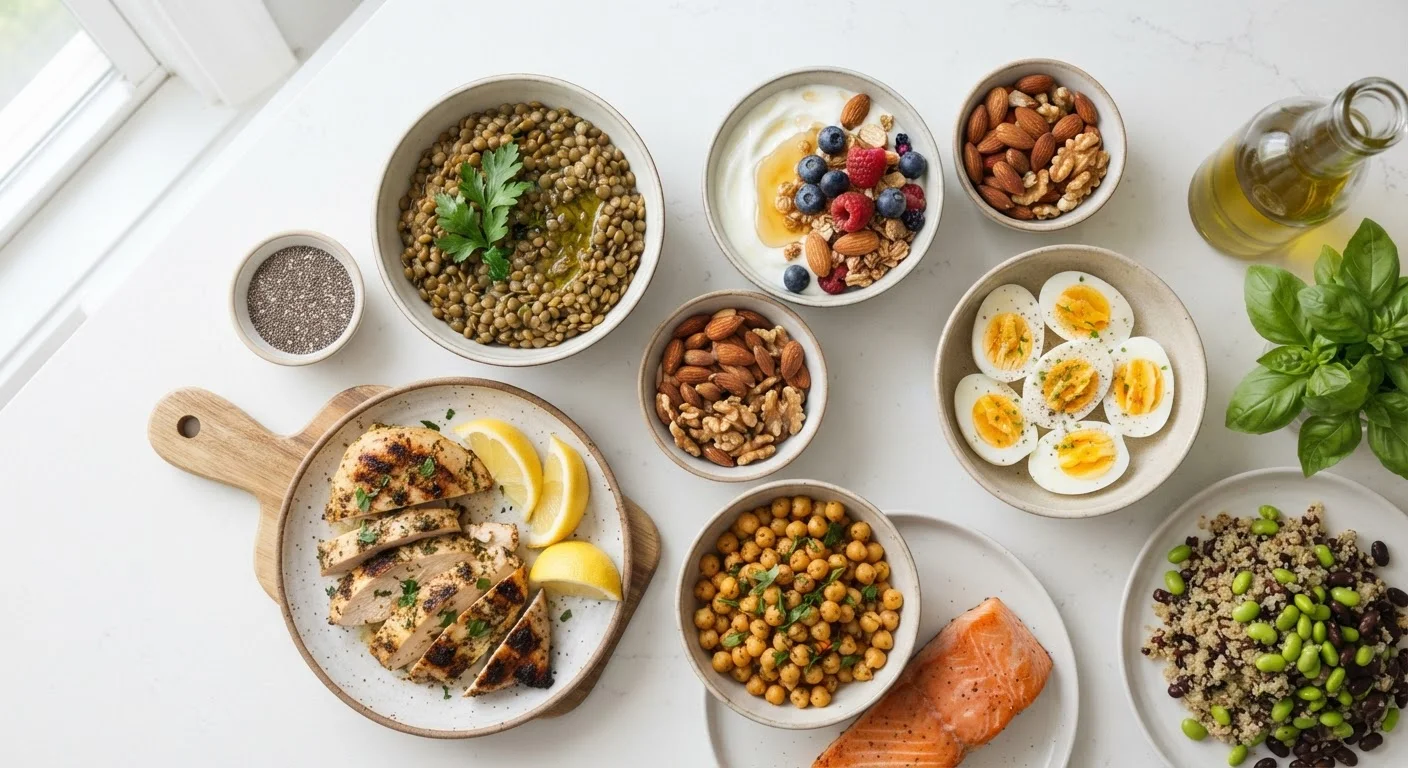
Photo: QuickAdvisor.net editorial
Key Takeaways
- Most healthy adults need far less protein than popular fitness culture suggests.
- Protein timing matters somewhat, but total daily intake is a bigger factor for most people.
- Plant and animal proteins both support health when consumed as part of a balanced diet.
- High-protein diets are generally safe for healthy kidneys, but research has limits.
- Whole food protein sources offer nutrients protein powders cannot fully replicate.
Why Protein Dominates the Nutrition Conversation
Walk down any grocery aisle and the word "protein" appears on everything from yogurt to pasta to water. Protein has become nutritional shorthand for healthy, filling, and fitness-forward. But the science behind protein is more nuanced than most marketing suggests - and several widely held beliefs don't hold up under scrutiny.
Protein is genuinely essential. It provides the amino acids your body uses to build muscle tissue, produce enzymes and hormones, and support immune function. What's contested - and often distorted - is how much you need, when you need it, and where it should come from.
This article cuts through the noise by examining the most common protein myths alongside what peer-reviewed evidence actually supports. For a deeper look at how different sources compare, see what the research says about plant vs. animal protein.
Myth
You need at least 1 gram of protein per pound of body weight to build muscle.
Fact
Research suggests 0.7-1 gram per pound of body weight is sufficient even for serious strength athletes, and lower amounts support muscle growth for most active people.
The "1 gram per pound" rule is a gym-culture heuristic, not a figure grounded in controlled research. Multiple systematic reviews and meta-analyses, including a widely cited 2018 analysis published in the British Journal of Sports Medicine, found that protein intakes beyond roughly 0.7 grams per pound of body weight provided no additional benefit for muscle gain in people doing resistance training. Consuming more protein than your body can use for synthesis is simply oxidized for energy or converted to other compounds - it doesn't automatically become extra muscle.
Myth
You must consume protein within 30 minutes of working out or you'll miss the muscle-building window.
Fact
The post-workout "anabolic window" is real but considerably wider than 30 minutes - and pre-workout protein intake also counts.
The idea of a narrow post-exercise window has been overstated. Research indicates that muscle protein synthesis remains elevated for several hours after training, and that total daily protein intake is a stronger predictor of muscle adaptation than precise timing. A 2013 review in the Journal of the International Society of Sports Nutrition concluded that timing matters most for people who train fasted; for most who eat regular meals, the urgency to rush a shake immediately post-workout is not supported by evidence.
Myth
High-protein diets damage your kidneys.
Fact
For people with healthy kidney function, higher protein intakes do not appear to cause kidney damage, though evidence in people with existing kidney disease is different.
This myth likely originated from the fact that people with chronic kidney disease (CKD) are typically advised to limit protein because impaired kidneys struggle to process its metabolic byproducts. However, that clinical recommendation does not translate to people with normal kidney function. Studies in healthy adults - including athletes consuming high protein intakes over extended periods - have not found evidence of kidney harm. Anyone with a known kidney condition should consult their healthcare provider before adjusting protein intake significantly.
Myth
Plant proteins are inferior and can't support muscle building.
Fact
Plant proteins can support muscle development, though some require combining sources or consuming slightly larger amounts to account for lower digestibility.
Animal proteins are considered "complete" because they contain all nine essential amino acids in proportions that closely match human needs, while most plant proteins have lower amounts of one or more essential amino acids. However, eating a varied plant-based diet throughout the day - combining sources like legumes, grains, nuts, and seeds - provides a complete amino acid profile. Research has found that plant-based athletes can achieve comparable muscle protein synthesis outcomes to omnivores when total protein and leucine intake are adequate. The research on plant vs. animal protein explores these differences in more detail.
Myth
Protein shakes and powders are necessary for anyone exercising regularly.
Fact
Protein supplements are convenient but not necessary; most people can meet their needs through whole foods.
The supplement industry has successfully positioned protein powders as essential for anyone active - but they are tools for convenience, not nutritional requirements. Whole food sources like eggs, Greek yogurt, cottage cheese, chicken, legumes, and fish provide protein alongside micronutrients, fiber, and other beneficial compounds that isolated powders lack. For people who struggle to meet protein needs through food alone - due to schedule, appetite, or dietary restrictions - supplements can be a practical option, but they are not inherently superior to food-first approaches.
What the Evidence Supports for Everyday Eating
The current Recommended Dietary Allowance (RDA) for protein is 0.8 grams per kilogram of body weight per day for sedentary adults - a figure that represents a minimum to prevent deficiency, not an optimal target for active people. Research does support somewhat higher intakes for those doing regular resistance training or who are older adults trying to preserve muscle mass, though exact targets vary across studies.
What the evidence consistently shows is that protein distribution across meals matters more than many people think. Studies suggest that muscle protein synthesis is better stimulated when protein is spread across meals rather than concentrated in a single sitting - though for most people, this is a modest refinement rather than a make-or-break issue.
0.8 g/kg
Minimum daily protein RDA for sedentary adults
The U.S. Dietary Reference Intakes establish this as the minimum to prevent deficiency, not a universal optimal target.
~1.6 g/kg
Protein intake linked to maximal muscle gains
A 2018 meta-analysis in the British Journal of Sports Medicine found intakes beyond this threshold provided no additional muscle-building benefit.
30%+
Of Americans exceed daily protein recommendations
USDA dietary data indicates many American adults already consume protein above the RDA, particularly from animal sources.
Equally important is the broader nutritional context. Whole food protein sources - legumes, eggs, dairy, fish, poultry, meat, tofu, tempeh - come packaged with fiber, vitamins, minerals, and healthy fats that isolated protein supplements can't replicate. Eating well on a budget is very achievable through beans, lentils, eggs, and canned fish - all strong protein sources without a premium price tag.
If you're navigating specific health conditions, older age, pregnancy, or intensive athletic training, protein needs can shift meaningfully. In those cases, personalized guidance from a registered dietitian is far more useful than any general rule of thumb. For a broader look at nutrition claims worth questioning, see nutrition science myths that just won't die.
Protein Needs Vary Significantly by Individual
This article is for general informational and educational purposes only and is not a substitute for personalized medical or nutrition advice. Consult a qualified healthcare professional or registered dietitian before making significant changes to your diet.
The content on this site is for informational purposes only and is not a substitute for professional advice. Always consult a qualified professional for guidance specific to your situation.