
Building a Balanced Plate Without Following a Strict Diet

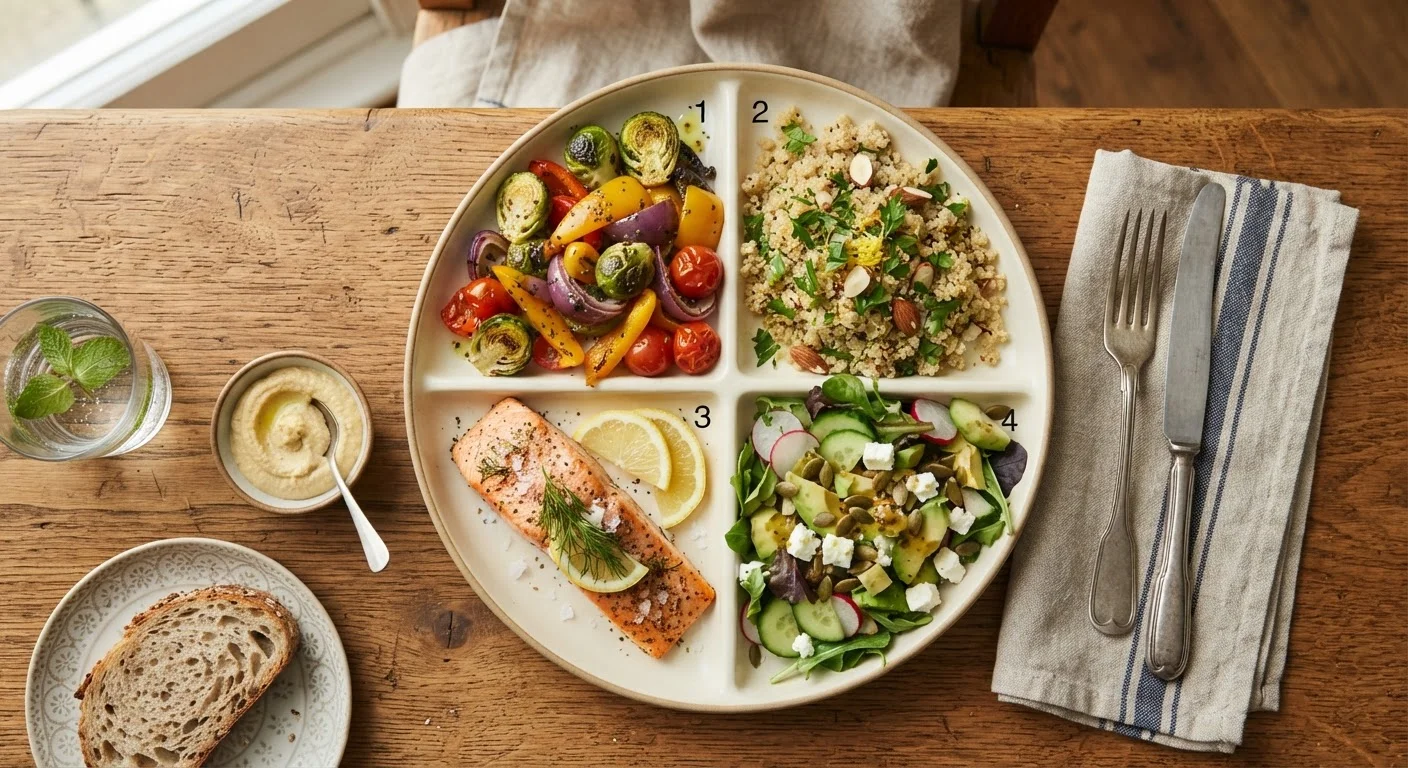
Photo: QuickAdvisor.net editorial
Key Takeaways
- Half your plate filled with vegetables and fruit covers most micronutrient needs.
- You don't need to count calories to eat well - food proportions matter more than math.
- Protein, fiber, and healthy fat at each meal help sustain energy and reduce overeating.
- Flexibility and consistency over time outperform any short-term strict diet.
- Small structural shifts in how you build meals can make a significant nutritional difference.
Why Plate Structure Works Better Than Diets for Most People
Restrictive diets create rules, and rules eventually break. Plate-building principles, by contrast, give you a flexible architecture that adapts to cuisines, budgets, schedules, and preferences - without requiring you to start over when life intervenes. This approach draws on the same evidence base that informs tools like the USDA's MyPlate and the Harvard Healthy Eating Plate, both of which emphasize food group proportions over calorie arithmetic.
The practical upside is real: when you structure meals around vegetables, protein, whole grains, and healthy fat, you're naturally crowding out the ultra-processed foods that dominate many American diets - not through willpower or elimination, but through substitution. For a deeper look at what the calorie-counting model gets right and where it falls short, see why calories in, calories out tells only part of the story.
If you want to understand the broader landscape of evidence-backed eating patterns - Mediterranean, DASH, plant-based - this overview of research-backed dietary patterns provides useful context without fad-diet spin.
What you will need
What You Need Before You Start
No special equipment or pantry overhaul is necessary. The plate method works with whatever food is available to you. That said, two things help: a visual reference (your plate itself) and a rough sense of which food groups you typically underuse. Most Americans consistently undershoot vegetables, fiber, and legumes, and overshoot refined grains and added sugars.
A standard dinner plate (9-10 inches)
Used as a visual portioning guide - no measuring cups or food scale needed.
Grocery list or notes app
Helps you plan which food groups to include before shopping so gaps are filled at the store, not after.
For practical strategies on stocking a nutritious kitchen without overspending, eating well on a budget offers evidence-grounded guidance. Once you're comfortable with plate structure, small shifts that boost nutrient density shows how to extract more from foods you're already eating.
Step-by-Step: Building Your Balanced Plate
The five steps below translate the principles above into a repeatable meal-building habit. They apply equally to a home-cooked dinner, a packed lunch, or a restaurant order. The sequence isn't rigid - work with whatever you're preparing.
Fill half your plate with vegetables and fruit
This is the single most impactful structural move you can make. Vegetables and fruit provide fiber, vitamins, minerals, and antioxidants - all at relatively low calorie density, meaning you get more nutritional value per bite. Aim for variety in color across your week: dark leafy greens, orange root vegetables, red peppers, and berries each contribute different micronutrient profiles.
Fresh, frozen, and canned vegetables all count. Frozen produce is picked at peak ripeness and retains most nutrients through the freezing process.
Dedicate one quarter to quality protein
Protein supports muscle maintenance, immune function, and satiety - the feeling of fullness that carries you through to the next meal. A quarter of your plate is a practical target. Sources include legumes (beans, lentils, chickpeas), eggs, fish, poultry, tofu, tempeh, and lean cuts of meat.
Plant proteins tend to come packaged with fiber, which adds further benefit. Mixing plant and animal sources across the day (if you eat both) helps cover the full spectrum of essential amino acids without requiring precise tracking.
Fill the remaining quarter with whole or minimally processed grains
The last quarter of your plate should anchor the meal with energy-sustaining carbohydrates. Choose whole grains - brown rice, quinoa, farro, whole-wheat pasta, oats, or corn tortillas - over their refined counterparts when possible. Whole grains retain their bran and germ layers, which means more fiber, B vitamins, and minerals in every serving.
This isn't about eliminating white rice or regular pasta. It's about making whole grains the default, so your fiber intake stays consistent without conscious effort.
Add a source of healthy fat
Fat is not the enemy of a balanced plate - it's essential for absorbing fat-soluble vitamins (A, D, E, and K) and for sustained energy. Small additions make a big difference: a drizzle of olive oil, a few slices of avocado, a handful of nuts or seeds, or a piece of fatty fish like salmon or sardines.
The goal is inclusion, not excess. Healthy fats are calorie-dense, so they naturally fit as a complement rather than a centerpiece.
Choose water or low-sugar beverages as your default drink
What you drink alongside a meal contributes to how balanced that meal actually is. Sweetened drinks add significant sugar with little nutritional return. Water, sparkling water, unsweetened tea, and black coffee are sound defaults. Dairy milk and fortified plant milks offer additional protein and calcium when that fits your needs.
This step doesn't require cutting out all other beverages - it just makes hydration the easy default choice rather than an afterthought.
Once these steps feel automatic, you'll find that nutritious eating becomes a matter of habit rather than discipline. For a broader foundation in nutrition thinking, starting to eat better covers the core concepts and mindset shifts that support long-term change.
Applying This Across Different Meals and Cuisines
The plate framework isn't limited to the standard American dinner format. A grain bowl, a stir-fry over rice, a taco plate, or a Mediterranean mezze spread can all meet the same structural criteria. The goal is proportionality, not uniformity.
Breakfast often gets less structural attention, but the same logic applies: eggs or yogurt for protein, fruit or sautéed greens for produce, whole-grain toast or oats for carbohydrate, and a drizzle of nut butter or avocado for fat. Even meals that don't map neatly onto a plate - soups, stews, sandwiches - can be evaluated by asking: does this meal have protein, fiber-rich vegetables or legumes, a whole-grain component, and a small source of healthy fat?
Consistency Beats Perfection Every Time
If you're cooking from recipes and want to get better at adapting them nutritionally, reading a recipe like a cook helps you understand the structure of a dish well enough to make smart substitutions. More resources on foundational kitchen skills are available in the Cooking Basics hub.
This article is for general informational and educational purposes only and is not a substitute for personalized nutrition advice from a qualified healthcare professional or registered dietitian.
The content on this site is for informational purposes only and is not a substitute for professional advice. Always consult a qualified professional for guidance specific to your situation.