
Pressure Points: What Air Pressure Actually Does to Your Body and World

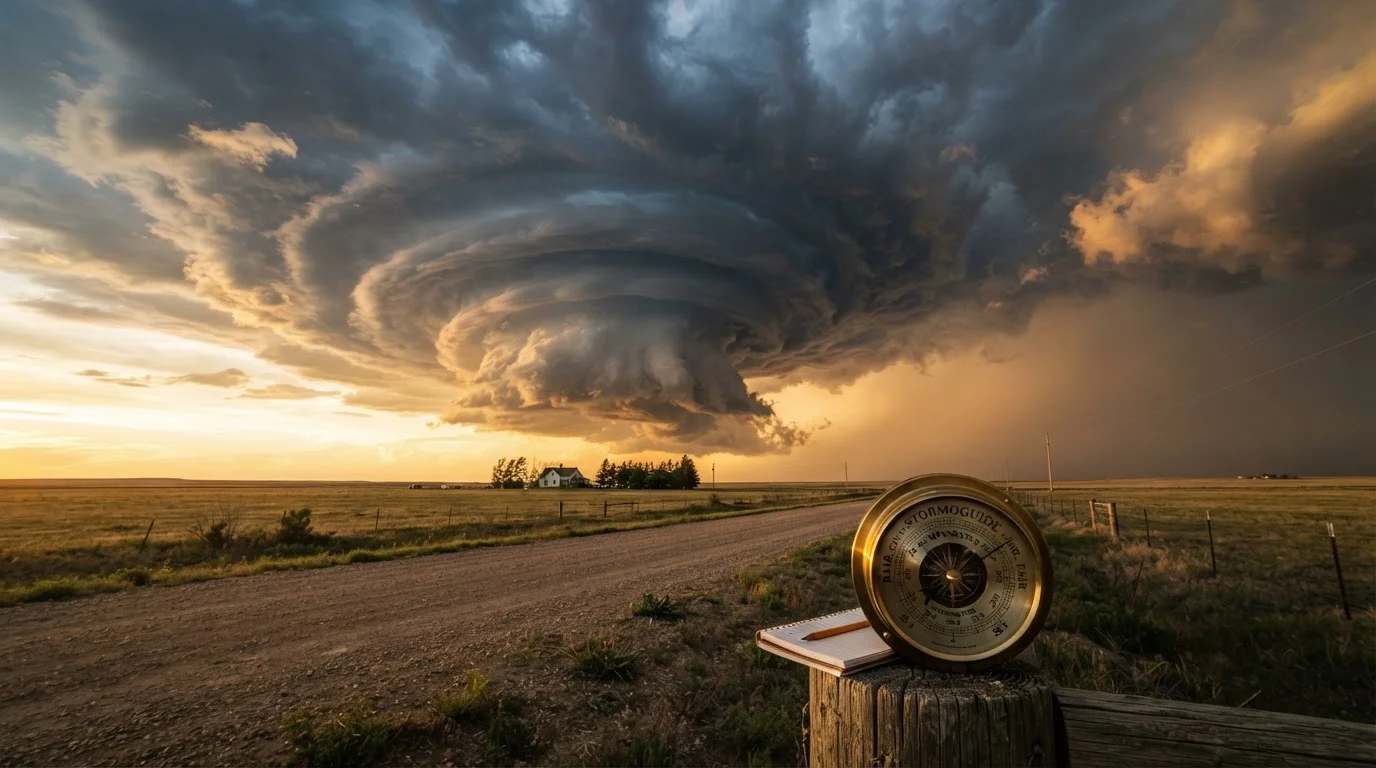
Photo: QuickAdvisor.net editorial
Key Takeaways
- Air pressure results from the weight of the entire atmosphere stacked above any given point.
- Pressure decreases with altitude because less air sits overhead - which is why mountain tops have thinner air.
- Your body is constantly balanced against external atmospheric pressure through internal fluid and gas pressure.
- Changes in air pressure drive weather systems: low pressure brings storms, high pressure brings clear skies.
- Rapid pressure changes - like ascending in a plane - can cause physical symptoms such as ear discomfort.
The Invisible Weight You're Always Carrying
Right now, roughly 14.7 pounds of force press against every square inch of your body. You don't feel it because your internal fluids and gases push outward with the same force, creating a perfect balance. This equilibrium is atmospheric pressure - and it's one of the most consequential invisible forces in your daily life.
The pressure comes from weight. Earth's atmosphere is a thick envelope of gas held in place by gravity. Every molecule of nitrogen, oxygen, argon, and trace gases stacked above you contributes to a cumulative downward force. At sea level, that column of air above a single square inch weighs about 14.7 pounds. Higher up a mountain, less air sits overhead, so pressure drops. That's why the air feels 'thin' at altitude - there genuinely is less of it pressing down around you.
Pressure is measured in several units depending on the context. Meteorologists use millibars (mb) or hectopascals (hPa), physicists use pascals (Pa), and some fields still use atmospheres (atm) or inches of mercury (inHg). All describe the same fundamental quantity: force divided by area.
14.7 psi
Atmospheric pressure at sea level
This is the standard baseline measurement - equivalent to 101,325 pascals or 1,013.25 millibars - used in physics, engineering, and meteorology worldwide.
~50%
Pressure reduction by 18,000 feet altitude
At roughly 18,000 feet (5,500 meters) above sea level, atmospheric pressure is about half of what it is at sea level, according to standard atmospheric models.
870 mb
Lowest Atlantic hurricane pressure on record
Hurricane Wilma (2005) recorded a central pressure of 882 mb, one of the lowest ever measured in the Atlantic basin, illustrating the extreme pressure drops in major storms.
How Pressure Drives Weather
Weather maps are essentially pressure maps. Air naturally flows from regions of high pressure toward regions of low pressure - the atmosphere is always trying to even itself out, much like water flowing downhill. This movement is wind, and the steeper the pressure gradient between two zones, the stronger the wind.
Low-pressure systems are where the atmosphere's drama lives. When air pressure drops in a region, air rushes in from surrounding areas and rises. As it rises, it cools, and water vapor condenses into clouds and precipitation. Hurricanes, thunderstorms, and nor'easters are all extreme low-pressure events. High-pressure systems work in the opposite direction: air sinks, warms as it descends, and discourages cloud formation - hence the clear skies that follow a departing storm.
Warm air rising is directly tied to pressure: warm air is less dense than cool air, so it exerts lower pressure and naturally ascends, triggering the cycle of convection that powers everything from afternoon thunderstorms to sea breezes.
“The atmosphere is not simply background - it is an active, dynamic fluid whose pressure gradients are the engine of virtually all weather phenomena we observe at the surface.”
— National Weather Service, U.S. federal agency for weather forecasting and atmospheric science
What Pressure Changes Do Inside Your Body
Your body manages pressure differences constantly, most noticeably in your ears. The middle ear is a sealed air-filled space connected to the outside only through the Eustachian tube. When cabin pressure drops as a plane climbs, the air inside your middle ear is briefly at higher pressure than the cabin. The resulting pressure differential pushes on your eardrum - that uncomfortable fullness - until the tube opens and equalizes the difference.
Pressure also matters in your cardiovascular system. Blood is a fluid, and fluids transmit pressure throughout a closed system. Altitude affects how efficiently your lungs extract oxygen: lower atmospheric pressure means fewer oxygen molecules per breath, which is why acclimatization takes time at high elevations. The body responds by producing more red blood cells over days and weeks to compensate.
For a very different example of how distributed pressure affects physical comfort, consider how your body interacts with surfaces. Pressure distribution - the same principle that governs atmospheric science - determines whether your mattress creates pressure points or supports you evenly through the night.
This article is for general informational purposes only and does not constitute medical advice. Consult a qualified healthcare professional for any health concerns related to pressure changes or altitude exposure.
Everyday Moments That Are Really Pressure in Action
Once you know what atmospheric pressure does, you start seeing it everywhere. A drinking straw works because you reduce pressure in your mouth, and the higher atmospheric pressure outside pushes liquid up into the straw - not because you're sucking. Suction cups stick to walls because pressing them flat removes air, and the outside pressure holds them in place. Your car tires are pressurized above atmospheric levels specifically to support the vehicle's weight by pushing outward against it.
Vacuum-sealed food packaging works by removing the air (and thus the pressure differential that would force outside air and moisture in), extending shelf life dramatically. Even the way a weather front makes your joints ache - a complaint many people report - may be linked to pressure changes affecting fluids and gases in joint cavities, though research on this is still developing and individual experiences vary.
Pressure is not abstract physics. It's the reason storms form, ears pop, and straws work. Understanding it gives you a more accurate model of the physical world you navigate every single day.
Frequently Asked Questions
The content on this site is for informational purposes only and is not a substitute for professional advice. Always consult a qualified professional for guidance specific to your situation.