
Goosebumps, Shivers, and Chills: What Your Skin Is Actually Signaling

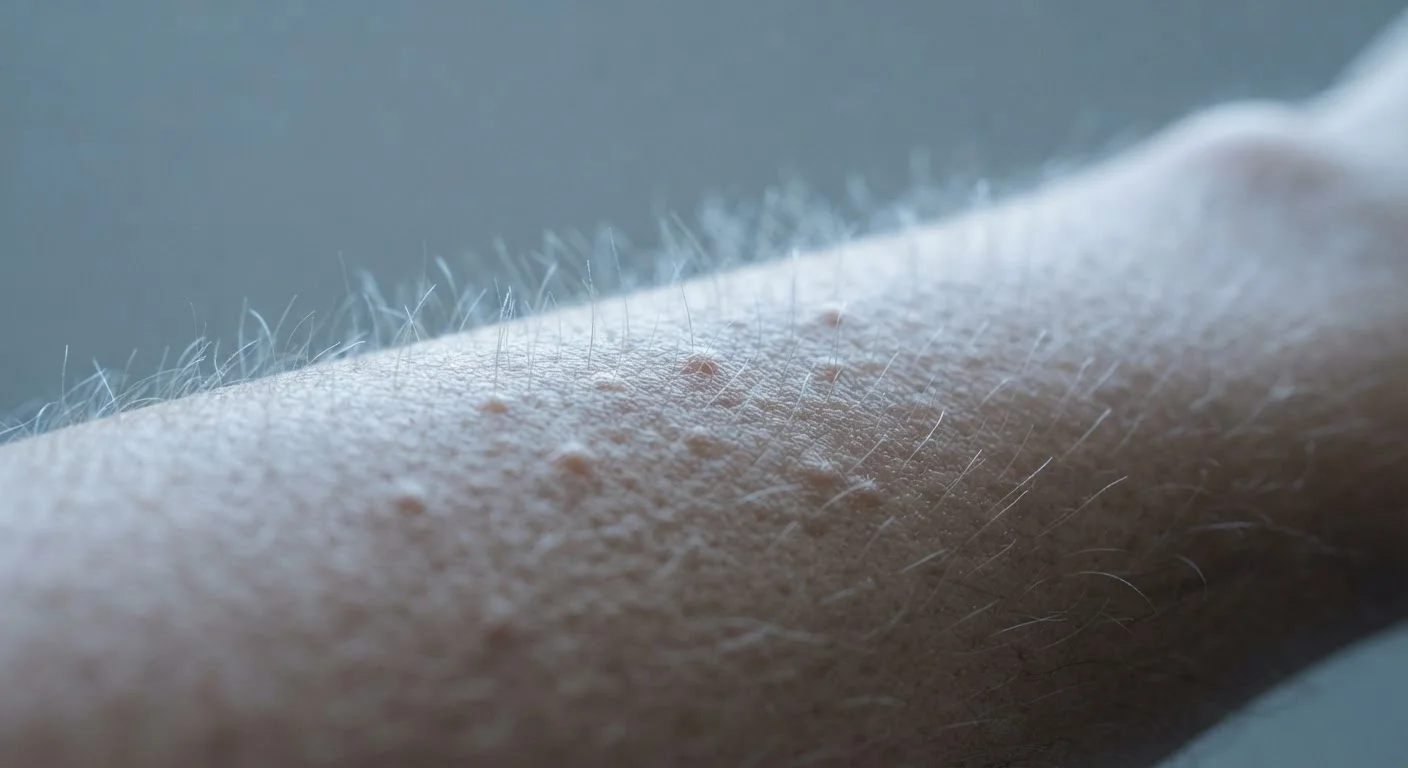
Photo: QuickAdvisor.net editorial
Key Takeaways
- Goosebumps are caused by tiny muscles around hair follicles contracting in response to nervous system signals.
- Cold, fear, and emotional awe all trigger goosebumps, but through slightly different neural pathways.
- In modern humans, goosebumps serve little practical insulating purpose - they're largely an evolutionary leftover.
- Shivers and chills are closely related but biologically distinct from goosebumps.
- Some people experience "frisson" - chills from music or beauty - tied to dopamine release in the brain.
- Persistent, unexplained chills unrelated to temperature or emotion should be evaluated by a healthcare professional.
The Mechanics: What's Actually Happening in Your Skin
Each hair on your body sits inside a small pocket called a follicle. Attached to that follicle is a tiny muscle - the arrector pili - capable of pulling the hair upright. When your sympathetic nervous system fires a signal, these muscles contract simultaneously across large areas of skin. The result: rows of small bumps, hair standing on end, and that unmistakable prickling sensation.
The sympathetic nervous system handles involuntary, fast-response functions - you don't decide to get goosebumps any more than you decide to have your pupils dilate in dim light. The signal originates from the hypothalamus, the brain region that also coordinates temperature regulation and stress responses. See how this connects to the broader picture in our guide to how the body regulates temperature from the inside out.
~55-86%
People who experience music-induced frisson
Research published in the journal Psychology of Music estimates that a substantial portion of the population reports experiencing chills or goosebumps from music, though estimates vary across studies.
0.1 sec
Speed of sympathetic nervous system activation
The sympathetic nervous system can trigger widespread physiological responses - including goosebumps - within a fraction of a second of perceiving a threat or shock.
200+
Arrector pili muscles per square inch of skin
The skin contains a dense network of these tiny muscles, each individually attached to a hair follicle and capable of independent or coordinated contraction.
Cold vs. Fear vs. Awe: Three Triggers, One Reflex
The same physical outcome - goosebumps - can arise from very different situations. Understanding why each trigger produces this response reveals how interconnected the nervous system truly is.
Cold Temperatures
When skin temperature drops, thermoreceptors in the skin relay that information to the hypothalamus, which signals the arrector pili muscles to contract. In most mammals, this raises fur and traps an insulating layer of warm air close to the body. In humans, our relatively sparse, fine body hair makes this nearly ineffective - but the reflex fires anyway.
Fear and Stress
Emotional threats trigger the classic fight-or-flight response, flooding the body with adrenaline (epinephrine). Among its many downstream effects, adrenaline activates the same sympathetic pathways that cause goosebumps. In animals with thick coats, appearing physically larger can deter a predator - a reflex humans inherited but rarely need.
Emotional Awe and Music
Perhaps the most fascinating trigger is a strong positive emotion - hearing a soaring orchestral passage, witnessing something deeply moving, or experiencing a moment of awe. Researchers call this frisson (from the French for "shiver"). Studies using neuroimaging suggest frisson correlates with activity in the brain's reward pathways, including dopamine release. Not everyone experiences frisson equally; some research indicates it may be more common in people who score high in the personality trait of "openness to experience."
“Frisson seems to be tied to the brain's ability to anticipate and predict musical structure. When something violates or fulfills that expectation in a powerful way, the emotional and reward systems respond - sometimes viscerally.”
— Matthew Sachs, Neuroscience researcher, University of Southern California
Shivers vs. Chills: Closely Related but Distinct
Goosebumps are often lumped together with shivers and chills, but these are biologically separate phenomena worth distinguishing.
- Shivering involves rapid, rhythmic skeletal muscle contractions - not the arrector pili. The body uses this muscular activity to generate heat when core temperature drops.
- Chills is a broader subjective sensation of coldness, often accompanied by shivering and goosebumps simultaneously. During a fever, chills occur because the brain's internal thermostat has been reset higher by the immune response, making normal body temperature feel cold.
- Goosebumps are specifically the visible skin response from arrector pili contraction.
All three can appear together - especially during illness or sudden cold exposure - but each has a distinct mechanism. Part of understanding your body's signals means recognizing these overlaps. For a broader look at common physical sensations, the Reading Your Own Body guide covers many frequently misunderstood responses.
This article is for general informational purposes only and is not medical advice. If you experience persistent or unexplained chills, fever, or other symptoms, consult a qualified healthcare professional.
Frequently Asked Questions
The content on this site is for informational purposes only and is not a substitute for professional advice. Always consult a qualified professional for guidance specific to your situation.