
How the Body Regulates Temperature From the Inside Out

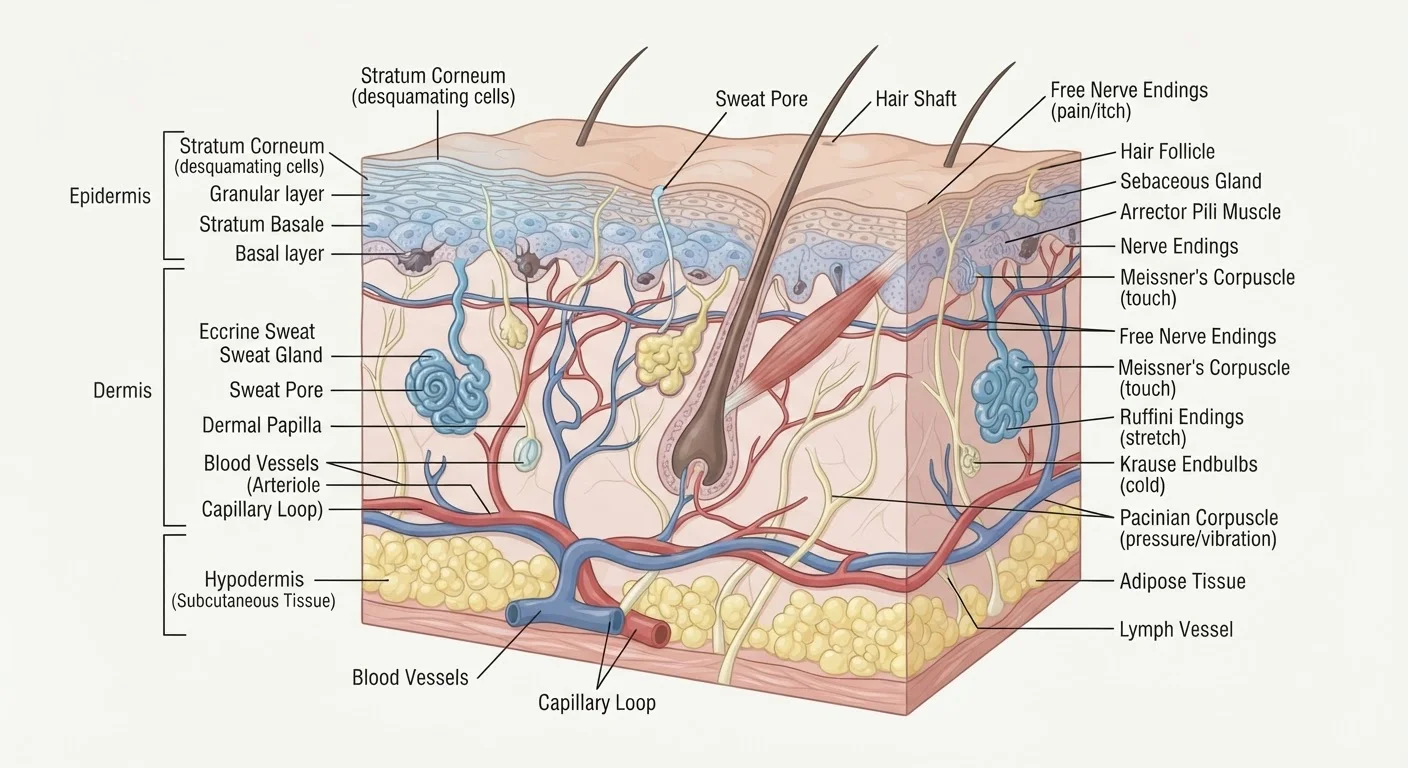
Photo: QuickAdvisor.net editorial
Key Takeaways
- The hypothalamus acts as the brain's thermostat, detecting temperature changes and triggering responses.
- Sweating cools the body through evaporation, while blood vessel dilation moves heat toward the skin surface.
- Shivering generates heat through rapid, involuntary muscle contractions.
- Core temperature is maintained within a narrow range of roughly 97-99°F (36.1-37.2°C).
- Age, hydration, fitness level, and certain medications can all affect how efficiently the body regulates temperature.
- Heat exhaustion and hypothermia occur when thermoregulation is overwhelmed by environmental extremes.
What Thermoregulation Actually Means
The human body is a warm-blooded machine - technically speaking, a homeotherm. Unlike reptiles that rely on external sun and shade to manage body temperature, humans maintain a stable internal temperature regardless of whether they're standing in a snowstorm or a sauna. This process is called thermoregulation.
Core body temperature typically sits between 97°F and 99°F (36.1°C to 37.2°C), with 98.6°F (37°C) often cited as the classic average. Enzymes, proteins, and cellular processes throughout the body are optimized for this narrow window. Even a deviation of a few degrees - in either direction - can impair biological function. A fever of 104°F (40°C) can cause confusion; temperatures above 107°F (41.7°C) become life-threatening. Thermoregulation is not incidental biology - it's foundational to survival.
Normal Temperature Varies More Than You Think
The Hypothalamus: Your Internal Thermostat
At the center of temperature regulation is a small but powerful region of the brain called the hypothalamus. Located just above the brainstem, it functions as a biological thermostat with a built-in set point. It continuously receives signals from two types of thermal receptors: peripheral thermoreceptors in the skin that detect surface temperature, and central thermoreceptors within the hypothalamus itself that monitor blood temperature directly.
When either set of sensors detects a deviation from the set point, the hypothalamus dispatches corrective commands through the nervous system and hormonal pathways. It coordinates everything from sweat secretion to muscle shivering - all without any conscious effort on your part. Think of it as a control room running silently in the background, every hour of every day.
Drinking cool water before you feel thirsty during exercise gives your thermoregulatory system more fluid to work with before sweating depletes reserves.
If you're heading into a hot environment for the first time - a vacation, a new outdoor job - allow roughly 10 to 14 days for your body to acclimatize before pushing physical limits.
How the Body Sheds Excess Heat
When core temperature rises - during exercise, illness, or exposure to heat - the body deploys several mechanisms to cool down.
- Sweating (evaporative cooling): Eccrine sweat glands across the skin surface secrete water and electrolytes onto the skin. As sweat evaporates, it draws heat away from the body. This is the most effective cooling mechanism humans have, and it's why humidity makes heat feel so oppressive: high ambient moisture reduces evaporation efficiency.
- Vasodilation: Blood vessels near the skin surface widen, allowing more blood - and therefore more heat - to flow toward the skin, where it can radiate outward into the environment. This is why skin often appears flushed during exercise or in hot conditions.
- Behavioral responses: Moving into shade, drinking cold water, and removing layers are conscious behaviors the brain prompts to assist physiological cooling.
For more on what skin signals like flushing and goosebumps communicate, see what your skin is actually signaling.
How the Body Conserves and Generates Heat
When temperature drops, the hypothalamus shifts into heat-retention mode through an equally coordinated set of responses.
- Vasoconstriction: Blood vessels near the skin narrow, reducing blood flow to the surface and retaining heat in the core where vital organs are located.
- Shivering: Skeletal muscles contract rapidly and rhythmically, generating heat through metabolic activity. It's essentially forced exercise - the body burning fuel to stay warm. The biology of shivers and chills involves more nuance than most people realize.
- Non-shivering thermogenesis: Particularly in infants and in people who have been cold-adapted, brown adipose tissue (brown fat) burns stored fat to produce heat without muscle movement. Adults retain small deposits of brown fat, primarily around the neck and upper back.
- Hormonal responses: The thyroid gland and adrenal glands can increase metabolic rate over longer timescales, generating more baseline heat.
2-4 L/hr
Peak sweat rate during intense exercise
Research in sports physiology indicates highly trained athletes can sweat at rates exceeding 2 liters per hour in hot conditions.
97-99°F
Normal core body temperature range
Studies reviewing large population datasets show average oral temperatures vary within this range, with 98.6°F being a widely cited midpoint.
~20%
Of adults over 65 at elevated heat-illness risk
The CDC notes older adults are disproportionately represented in heat-related emergency department visits due to reduced thermoregulatory efficiency.
When Thermoregulation Is Pushed to Its Limits
The body's temperature-regulating system is robust but not unlimited. Environmental extremes or physiological disruptions can overwhelm it.
Heat exhaustion occurs when sweating and vasodilation are insufficient to keep core temperature from climbing. Symptoms include heavy sweating, weakness, and nausea. Left unchecked, it can progress to heat stroke - a medical emergency in which core temperature exceeds 104°F (40°C) and the thermoregulatory system itself begins to fail.
Hypothermia develops when heat loss outpaces production, driving core temperature below 95°F (35°C). Shivering stops at severely low temperatures - a dangerous sign that the body can no longer generate sufficient heat through that mechanism.
Stopping Shivering Isn't Always Recovery
Understanding these signals connects naturally to broader awareness of what the body communicates. Reading common physical sensations provides further context on interpreting what the body is telling you.
Factors That Influence Temperature Regulation
Thermoregulation is not identical for every person. Several factors affect how efficiently the system operates:
- Age
- Older adults have reduced sweat gland activity and less sensitive thermal receptors, making them more vulnerable to heat- and cold-related illness.
- Hydration
- Sweat is mostly water. Dehydration limits sweating capacity and therefore heat dissipation.
- Physical fitness
- Trained athletes begin sweating earlier and produce more sweat per minute, allowing more efficient cooling during exertion.
- Medications and medical conditions
- Certain medications - including some antihistamines, diuretics, and antipsychotics - can impair sweating or alter vascular response. Conditions such as diabetes can affect both nerve signaling and sweat gland function.
- Acclimatization
- Repeated heat exposure over one to two weeks prompts physiological adaptations: increased plasma volume, earlier sweat onset, and reduced salt loss in sweat. The body learns to cope more efficiently.
This article is for general informational and educational purposes only and is not medical advice. If you have concerns about how your body responds to heat or cold, or if you experience symptoms of heat illness or hypothermia, consult a qualified healthcare professional promptly.
The content on this site is for informational purposes only and is not a substitute for professional advice. Always consult a qualified professional for guidance specific to your situation.