
Nine Body Processes Most People Attribute to the Wrong Organ

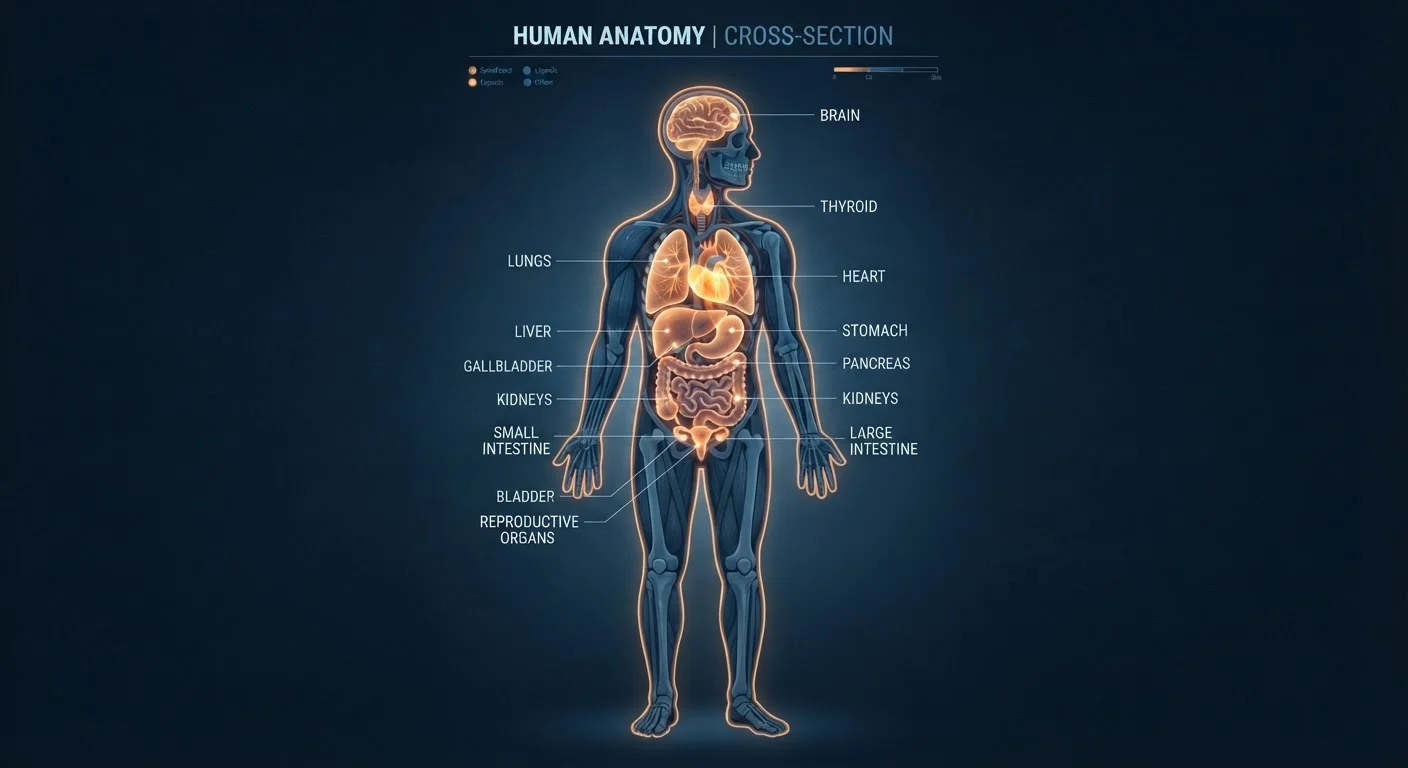
Photo: QuickAdvisor.net editorial
Key Takeaways
- The heart does not generate emotions - the brain's limbic system is the true driver of feelings.
- Blood sugar regulation is primarily a pancreas function, not a liver function as many assume.
- The gut contains roughly 100 million neurons and plays a major role in mood and cognition.
- The kidneys, not the liver, are the main blood-filtering organs that remove waste from circulation.
- Several everyday sensations - butterflies, gut feelings - originate in organs most people overlook.
- Understanding which organ does what helps people recognize genuine warning signs in their bodies.
The Organ Confusion Problem
Most of us learned just enough anatomy to get things half right. We know the heart pumps blood and the lungs breathe air - but beyond those basics, the mental map gets murky. Ask someone where emotions come from and they'll point to their chest. Ask about blood filtering and most will guess the liver. These assumptions feel intuitive, but they don't align with how the body actually works.
The consequences of this confusion aren't just academic. Misunderstanding which organ does what can lead people to overlook genuine symptoms or misread what their body is signaling. For a fuller picture of how physical sensations map to biology, see our guide on reading your own body. The nine entries below correct the most common organ mix-ups, grounded in established physiology.
Emotions - Heart vs. Brain
People have pointed to the heart as the seat of emotion for millennia, and the sensation makes sense: your heart races when you're anxious or excited. But the generation of emotion - fear, joy, grief, love - occurs in the brain's limbic system, particularly structures like the amygdala and prefrontal cortex. The heart's response is downstream: it reacts to neurochemical signals the brain has already sent.
Emotions are generated in the brain's limbic system; the heart merely reacts to those signals.
Blood Filtering - Liver vs. Kidneys
The liver gets enormous credit for detoxification, and it does metabolize drugs and alcohol. But the primary job of filtering waste products from the bloodstream - removing urea, excess salts, and metabolic byproducts - belongs to the kidneys. They process roughly 200 liters of blood per day, producing urine as the waste output. The liver processes; the kidneys filter.
Kidneys filter around 200 liters of blood daily - a task most people mistakenly assign to the liver.
Blood Sugar Regulation - Liver vs. Pancreas
While the liver does store glycogen and release glucose into the blood, the organ that regulates blood sugar levels is the pancreas. Its beta cells produce insulin, and its alpha cells produce glucagon - the two hormones that keep blood glucose in a healthy range. Conditions like type 1 and type 2 diabetes are fundamentally disorders of pancreatic function, not liver function.
The pancreas - not the liver - produces the hormones insulin and glucagon that regulate blood sugar.
Gut Feelings - Vague Intuition vs. Enteric Nervous System
"Trust your gut" sounds like folk wisdom, but there's real biology behind it. The gastrointestinal tract contains the enteric nervous system - approximately 100 million neurons lining the gut wall. This system operates semi-independently of the brain, detects environmental signals, and communicates upward via the vagus nerve. The physical sensation of a "gut feeling" reflects genuine neural activity, not just a metaphor.
The gut's 100 million neurons make it a genuine sensing organ, not just a digestion machine.
Breathing Control - Lungs vs. Brain Stem
The lungs do the mechanical work of breathing, but they don't decide when to breathe. That control resides in the brain stem, specifically in the medulla oblongata and pons, which monitor carbon dioxide levels in the blood and send rhythmic signals to the diaphragm and chest muscles. This is why breathing continues during sleep and why a brain stem injury - not lung damage - can stop breathing altogether.
The brain stem, not the lungs, controls the timing and rhythm of every breath you take.
Immune Memory - Blood vs. Bone Marrow and Lymph Nodes
White blood cells circulate in the blood, so it's natural to think of blood as the home of immunity. But immune memory - the ability to recognize a pathogen you've encountered before - is maintained by specialized cells housed primarily in bone marrow and lymph nodes. Memory B cells and T cells reside in lymphatic tissue, not in circulating blood. Blood is a transport highway; the immune system's library is elsewhere.
Immune memory lives in bone marrow and lymph nodes, not in the blood that carries immune cells.
Hormone Production - Brain vs. Endocrine Glands
Many people assume the brain produces hormones like estrogen, testosterone, and cortisol. In fact, the brain's hypothalamus issues chemical instructions, but the actual production of sex hormones occurs in the gonads, and cortisol is made by the adrenal glands sitting atop the kidneys. The brain orchestrates; specialized glands manufacture. This distinction matters when understanding conditions like adrenal insufficiency or hormonal imbalances.
Hormones like cortisol and estrogen are manufactured by glands, not by the brain that signals them.
Storing Vitamins - Kidneys vs. Liver
Here the liver actually does get the credit it deserves - but many people don't realize it. The liver is the primary storage site for fat-soluble vitamins A, D, E, and K, as well as vitamin B12. This is why liver from animals is so nutrient-dense. It also explains why liver disease can lead to vitamin deficiencies even when diet is adequate: the storage organ is impaired.
The liver stores fat-soluble vitamins and B12 - a nutritional role that often goes unrecognized.
Sound Processing - Ears vs. Auditory Cortex
The ears detect and transmit sound vibrations, but they don't interpret what you hear. Sound becomes meaningful - a voice, a melody, a warning siren - only when signals reach the auditory cortex in the brain's temporal lobe. This is why cochlear implants, which bypass damaged hair cells in the inner ear, can restore some hearing: the brain's processing centers remain intact. Hearing is ultimately a brain event.
Sound only becomes meaningful when it reaches the brain's auditory cortex - hearing happens in your head.
What This Means for How You Understand Yourself
Correcting these organ attributions isn't just trivia - it reframes how you interpret your own experience. When your gut clenches before a stressful meeting, that's a sophisticated nervous system response, not a vague metaphor. When you feel emotionally overwhelmed, the processing is happening in your brain's limbic circuitry, not your chest. Our coverage of the gut-brain axis explores one of the most striking examples of this cross-organ communication in depth.
Biology is full of counterintuitive partnerships. If these nine corrections surprised you, the popular myths about the brain that science has corrected takes the same approach to neurological misconceptions. The body rewards curiosity - the more accurately you understand it, the better equipped you are to notice when something is genuinely wrong.
When Organ Confusion Matters Clinically
The content on this site is for informational purposes only and is not a substitute for professional advice. Always consult a qualified professional for guidance specific to your situation.