
Key Terms Every Space Enthusiast Should Know

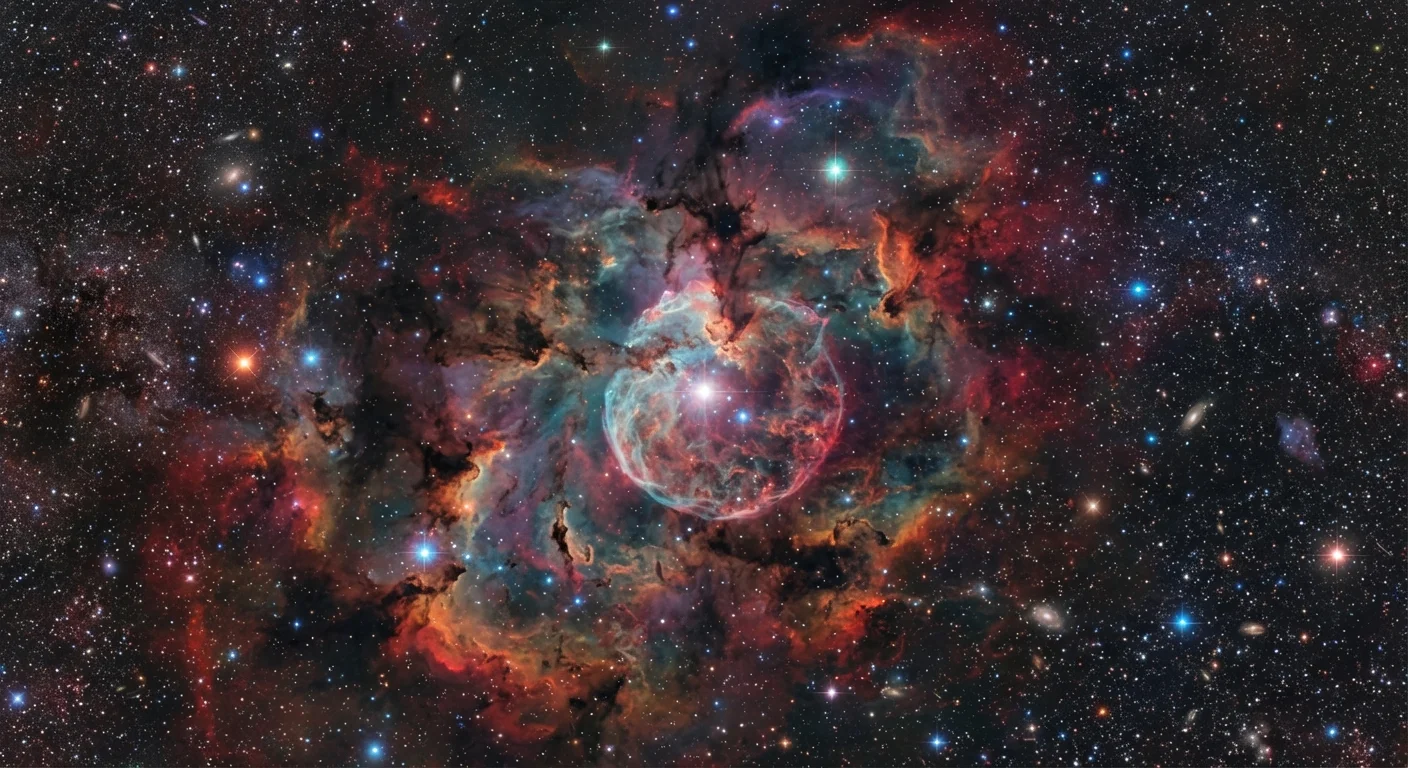
Photo: QuickAdvisor.net editorial
Why Astronomical Vocabulary Matters
Space science has a reputation for impenetrable jargon. Terms like parsec, redshift, and accretion disk appear constantly in documentaries, news articles, and science podcasts - yet they're rarely explained from the ground up. That gap between curiosity and comprehension is exactly what this reference is designed to close.
Whether you're watching a NASA livestream, reading about the James Webb Space Telescope, or exploring the difference between a solar system and a galaxy, the vocabulary below will help the concepts land. Think of it as a field guide to the language astronomers use every day.
Light-year
The distance light travels in one Earth year, approximately 5.88 trillion miles (9.46 trillion kilometers). It is a unit of distance, not time, despite the word 'year' in its name.
Parsec
A unit of distance equal to about 3.26 light-years, or roughly 19 trillion miles. Astronomers use parsecs when discussing distances between stars and galaxies.
Redshift
The stretching of light waves as a source moves away from an observer, shifting the light toward the red end of the spectrum. It is used to measure how fast galaxies are receding and to confirm the universe's expansion.
Nebula
A vast cloud of gas and dust in space. Nebulae serve as stellar nurseries where new stars are born, and some are the remnants of stars that have died.
Black hole
A region in space where gravity is so extreme that nothing - including light - can escape. Black holes form when very massive stars collapse at the end of their lives.
Accretion disk
A rotating disk of gas and dust that spirals into a massive object such as a black hole or neutron star. Friction within the disk generates intense heat and radiation.
Pulsar
A rapidly rotating neutron star that emits beams of electromagnetic radiation. As it spins, these beams sweep past Earth like a cosmic lighthouse, producing detectable pulses.
Cosmic Microwave Background (CMB)
The faint thermal radiation permeating the universe, left over from the Big Bang approximately 380,000 years after that event. The CMB is one of the primary pieces of evidence supporting the Big Bang model.
Astronomical Unit (AU)
The average distance between Earth and the Sun, approximately 93 million miles (150 million kilometers). It is the standard unit for measuring distances within our solar system.
Event horizon
The boundary surrounding a black hole beyond which nothing can escape its gravitational pull. It is not a physical surface but rather a point of no return for matter and light.
Core Measurements and Distance
Space is almost incomprehensibly large, so astronomers use specialized units to keep the numbers manageable. A light-year is the distance light travels in one Earth year - roughly 5.88 trillion miles. The parsec (about 3.26 light-years) is used for distances between stars and galaxies. The astronomical unit (AU) measures distances within our solar system: one AU is the average distance from Earth to the Sun, approximately 93 million miles.
These units reflect a universe operating at scales our intuitions weren't built to handle. When astronomers talk about Proxima Centauri being 4.24 light-years away, they mean light left that star more than four years before it reached your eye. Distance in space is inseparable from time - a concept that leads directly into some of the most fascinating terms in cosmology.
| Distance: 1 Light-year | ~5.88 trillion miles (International Astronomical Union) |
| Distance: 1 Parsec | ~3.26 light-years (International Astronomical Union) |
| Distance: 1 Astronomical Unit | ~93 million miles (Earth-Sun) (NASA Jet Propulsion Laboratory) |
| Speed of light | ~186,000 miles per second (NIST physical constants) |
| CMB temperature | ~2.725 Kelvin (−454.8°F) (NASA WMAP mission data) |
| Nearest star to the Sun | Proxima Centauri, ~4.24 light-years (ESA Hipparcos catalogue) |
Light, Motion, and the Expanding Universe
Redshift is one of the most powerful tools in astronomy. When a light source moves away from an observer, its light waves stretch, shifting toward the red end of the spectrum. Astronomers use redshift to determine how fast galaxies are receding and, by extension, to map the expansion of the universe itself. The reverse - blueshift - occurs when objects move toward us, compressing light waves to shorter wavelengths.
Closely related is the Doppler effect, the same phenomenon behind a passing ambulance siren that rises in pitch as it approaches and drops as it retreats. Light behaves analogously. Measuring redshift and blueshift has allowed scientists to confirm that the universe is expanding in every direction - a discovery rooted in Edwin Hubble's observations in the 1920s and explored further in milestones that shaped our understanding of the cosmos.
The concept of the cosmic microwave background (CMB) takes this further: it is the faint thermal radiation left over from the Big Bang, detectable across the entire sky and considered one of the strongest pieces of evidence for the Big Bang model.
Stars, Black Holes, and What Lies Between
A nebula is a cloud of gas and dust in space - the birthplace of stars and the graveyard of some massive ones. When a massive star exhausts its nuclear fuel, it can collapse into a neutron star (an incredibly dense remnant) or, if massive enough, a black hole - a region where gravity is so intense that nothing, not even light, can escape its event horizon.
Surrounding many black holes is an accretion disk: a swirling ring of gas and dust spiraling inward. Friction heats this material to extreme temperatures, making accretion disks among the brightest structures in the known universe. The interstellar medium - the gas, dust, and energy that fills the space between stars - plays a key role in how these structures form, as explored in our article on the surprising stuff between the stars.
A pulsar is a rapidly rotating neutron star that emits beams of electromagnetic radiation. From Earth, these beams appear as regular pulses - some so precise they rival atomic clocks. Understanding these objects deepens our grasp of the everyday physics that governs matter under extreme conditions.
These Terms Are a Starting Point
The content on this site is for informational purposes only and is not a substitute for professional advice. Always consult a qualified professional for guidance specific to your situation.