
Space Is Not Empty: The Surprising Stuff Between the Stars

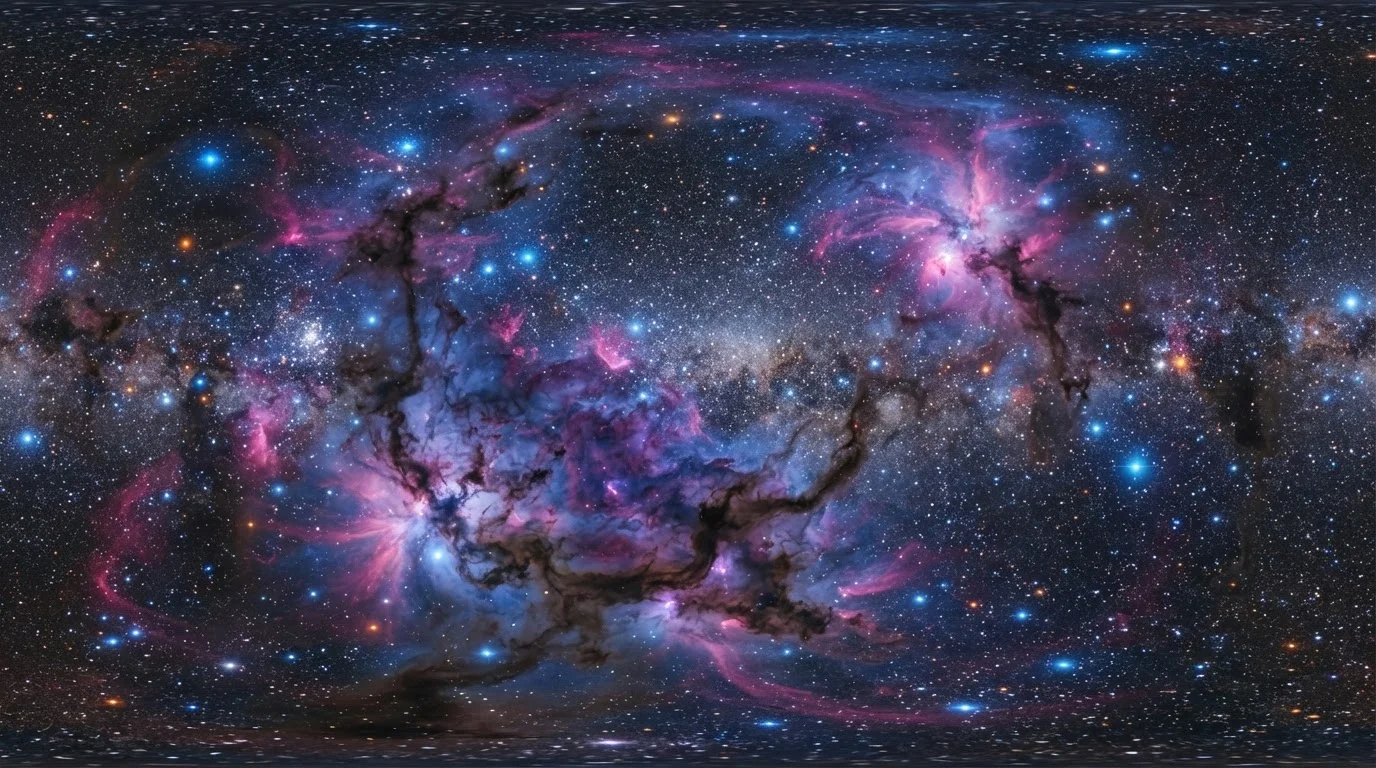
Photo: QuickAdvisor.net editorial
Key Takeaways
- The space between stars contains gas, dust, magnetic fields, and cosmic rays - it is never truly empty.
- Hydrogen is the dominant component of the interstellar medium, accounting for roughly 90% of its atoms.
- Dense pockets of the ISM called molecular clouds are the birthplaces of new stars.
- Supernova explosions scatter heavy elements into the ISM, seeding future generations of stars and planets.
- The ISM is not uniform - it ranges from extremely hot plasma to cold, dense clouds of molecules.
The Myth of the Empty Void
Ask most people what lies between the stars, and the answer is almost always the same: nothing. Empty space. A vast, dark vacuum. This intuition is understandable - when you look up at the night sky, the gaps between stars seem featureless. But this picture is fundamentally wrong.
The universe between stars is occupied by a complex, dynamic mixture of material called the interstellar medium (ISM). It is extraordinarily thin by any earthly standard - the densest parts of it are still far emptier than the best laboratory vacuum humans can produce - but it is never truly nothing. And over cosmic timescales, even this gossamer material drives some of the most dramatic events in the universe.
Understanding what fills interstellar space helps explain how galaxies evolve, how stars are born and die, and ultimately how the atoms in your body came to exist. For more on how those stellar births and deaths play out, see our article on stellar remnants like black holes and neutron stars.
What the Interstellar Medium Is Actually Made Of
The ISM has several distinct ingredients, each playing a different role.
Gas
Gas dominates the ISM by mass. Roughly 90% of its atoms are hydrogen, with helium making up most of the rest, and trace amounts of heavier elements scattered throughout. That hydrogen exists in three different states depending on local conditions: as neutral atoms, as molecules (paired into H₂), or as ionized plasma where electrons have been stripped away by intense radiation from nearby stars.
Dust
Interstellar dust grains are tiny - typically less than one micrometer across - and are composed of silicates, carbon compounds, and ice. Despite being a minor component by mass, dust has outsized effects. It absorbs and scatters starlight, reddens distant stars (similar to how Earth's atmosphere makes sunsets look red), and provides surfaces on which molecules can form in the cold depths of space.
Magnetic Fields and Cosmic Rays
The ISM is threaded with weak but pervasive magnetic fields that influence how gas clouds move and collapse. Alongside them travel cosmic rays - high-energy protons and atomic nuclei accelerated to near the speed of light, largely by supernova shock waves. These particles carry significant energy across the galaxy and influence the chemistry and dynamics of the ISM.
~1 atom/cm³
Average density of interstellar gas
The ISM averages roughly one hydrogen atom per cubic centimeter - far less dense than the best vacuum achievable in a laboratory on Earth.
~99%
ISM mass fraction that is gas
Approximately 99% of the interstellar medium's mass is gas, with dust accounting for the remaining roughly 1%, according to standard astrophysical estimates.
10,000-1,000,000 K
Temperature of hot ionized ISM plasma
The hottest phase of the interstellar medium - the hot ionized medium - reaches temperatures between tens of thousands and millions of Kelvin, sustained by supernova shock waves.
Nurseries, Explosions, and Recycling
The ISM is not a passive backdrop. It is where stars are born and where their deaths leave lasting marks.
The coldest, densest regions of the ISM are called molecular clouds - vast reservoirs of hydrogen molecules and dust that can stretch hundreds of light-years across. When a region within a molecular cloud becomes massive enough, gravity overwhelms the internal pressure holding the gas apart, and it begins to collapse. Over millions of years, that collapsing pocket of gas heats up and ignites nuclear fusion: a new star is born.
When massive stars end their lives in supernova explosions, they do more than just leave behind exotic remnants. They blast enormous quantities of newly forged elements - carbon, oxygen, iron, and more - back into the surrounding ISM. That enriched material mixes with the existing gas and dust and eventually finds its way into the next generation of stars and planets. The iron in your blood and the calcium in your bones passed through this interstellar recycling system before the Sun ever formed. This cycle of stellar birth and enrichment is also intertwined with common misconceptions about the Big Bang and how the early universe's composition has evolved over time.
The ISM Is Not Uniform
The ISM also interacts with phenomena we are still working to understand. The total mass of ordinary matter - including all the gas and dust in the ISM - accounts for only a small fraction of the universe's content. For context on what makes up the rest, see our explainer on dark matter and dark energy.
Why This Matters Beyond the Abstract
The interstellar medium is not merely a scientific curiosity. It is the raw material of cosmic history.
Astronomers study the ISM using radio telescopes (which detect hydrogen's characteristic 21-centimeter emission), infrared observatories (which pierce through dust clouds), and X-ray satellites (which reveal the hottest plasma). Each window reveals a different phase of this layered, multitemperature environment.
“The nitrogen in our DNA, the calcium in our teeth, the iron in our blood, the carbon in our apple pies were made in the interiors of collapsing stars. We are made of starstuff.”
— Carl Sagan, Astronomer and science communicator, author of Cosmos
For everyday readers, the key insight is this: the universe does not waste space. Every seemingly empty gap between stars is threaded with fields, particles, and molecules that are quietly doing the work of building tomorrow's stars, planets, and - perhaps - new forms of complexity. The cosmos between the stars is not a void. It is an ongoing process.
Frequently Asked Questions
The content on this site is for informational purposes only and is not a substitute for professional advice. Always consult a qualified professional for guidance specific to your situation.