
Customer Reviews vs. Expert Reviews: Which Should You Trust?

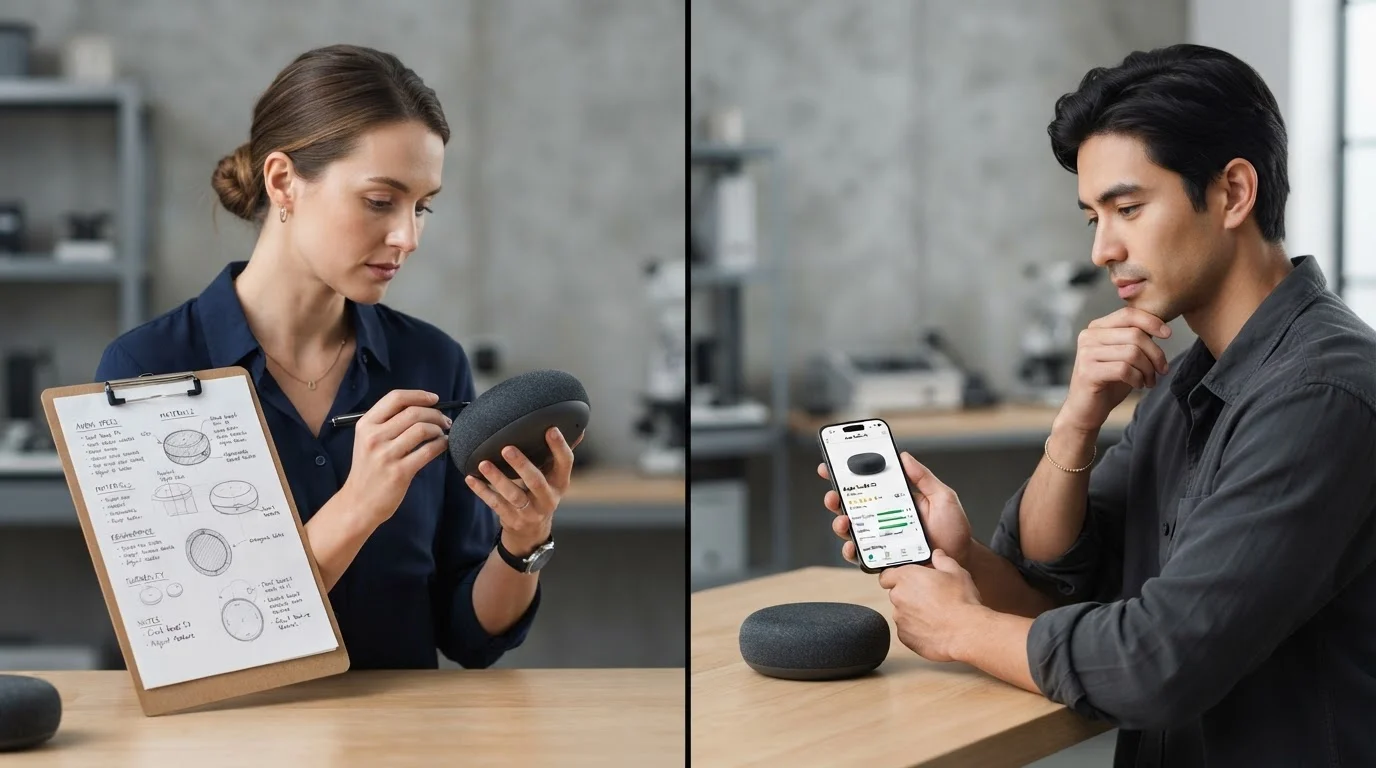
Photo: QuickAdvisor.net editorial
Key Takeaways
- Customer reviews reflect real-world use patterns but are vulnerable to manipulation and selection bias.
- Expert reviews apply consistent methodology but may not reflect how typical users interact with a product.
- Volume and recency of customer reviews matter as much as the star rating itself.
- Expert credibility depends heavily on how transparent a publication is about its testing process and funding.
- The most reliable purchasing decisions combine both review types rather than relying on either alone.
What Each Review Type Actually Measures
Customer reviews and expert reviews are not competing answers to the same question - they answer different questions entirely. Understanding that distinction is the first step to using them well.
Customer reviews aggregate the lived experience of many buyers. When hundreds of people independently report that a blender lid cracks after three months or that a shoe runs a half-size small, that pattern carries genuine signal. Volume is the engine: one complaint is noise; the same complaint appearing in dozens of reviews is a warning flag worth taking seriously.
Expert reviews are structured evaluations conducted under defined conditions. A good expert review describes the testing methodology - how many hours the product ran, what measurements were taken, how it was compared to alternatives. The value is repeatability and objectivity, not personal opinion. See our guide to decoding product spec sheets for context on how technical claims in both expert reviews and manufacturer materials can be interpreted accurately.
| Criterion | Customer Reviews | Expert Reviews |
|---|---|---|
| What they measure | Real-world user experience over time | Performance under defined test conditions |
| Sample size | Potentially thousands of users | Typically one or a few testers |
| Manipulation risk | High - fake and incentivized reviews exist | Lower - but conflicts of interest possible |
| Long-term durability insight | Strong, especially for older products | Weak - most tests are short-term |
| Technical accuracy | Variable - depends on reviewer knowledge | Strong - benchmarks are measurable |
| Best for subjective factors | Yes - comfort, feel, taste, lifestyle fit | No - hard to standardize subjective traits |
Where Each Type Falls Short
Neither source is free of problems, and trusting either uncritically is a mistake.
Customer reviews are vulnerable to manipulation. Fake reviews - both artificially positive and, less commonly, artificially negative - are a documented problem on major retail platforms. Incentivized reviews (where customers receive discounts in exchange for feedback) can skew ratings upward even when the reviewer genuinely liked the product but had limited experience with the category. Review-gating, where only satisfied customers are prompted to leave feedback, compounds this. Always look at the distribution of ratings, not just the average. A product with a 4.2-star average built from mostly 5-star and 1-star reviews tells a very different story than one with consistently 4-star ratings.
Expert reviews carry their own risks. Short testing windows miss durability issues that emerge only after extended use. Some publications accept manufacturer-supplied samples or advertising revenue from the same companies they evaluate - a clear conflict of interest. Reader-funded or independently operated publications tend to be more transparent. Before trusting an expert review, check whether the publication discloses how it funds its testing and whether it purchased products independently.
When You Can't Find Expert Reviews
For a structured approach that incorporates both sources alongside your own inspection, see our product evaluation framework.
How to Use Both Together
The practical answer is not to choose one over the other but to use them in sequence. Start with expert reviews to establish a baseline: does the product meet its advertised specifications? Does it perform competitively within its category? Then cross-reference with customer reviews to understand real-world patterns over time - what breaks, what delights, what the manufacturer's marketing glossed over.
Pay attention to the recency of reviews in both categories. Products change - manufacturers quietly alter components, reformulate materials, or shift production overseas. A glowing expert review from three years ago may not reflect the current version of a product. Similarly, a flood of recent one-star customer reviews on a previously well-rated item is a meaningful signal worth investigating.
For high-stakes purchases, run both sources through the pre-purchase assessment checklist before committing. And if you want to develop the broader skill of evaluating products critically - not just reading what others say - getting started as a discerning shopper walks through the core habits every informed buyer should build.
82%
Consumers who read online reviews before purchasing
According to research from BrightLocal's annual consumer review survey, the vast majority of shoppers consult online reviews as part of their decision process.
~30%
Estimated share of online reviews that may be fake
Analysis by review-integrity researchers has estimated that a significant portion of reviews on major retail platforms show signals consistent with inauthentic activity.
The content on this site is for informational purposes only and is not a substitute for professional advice. Always consult a qualified professional for guidance specific to your situation.