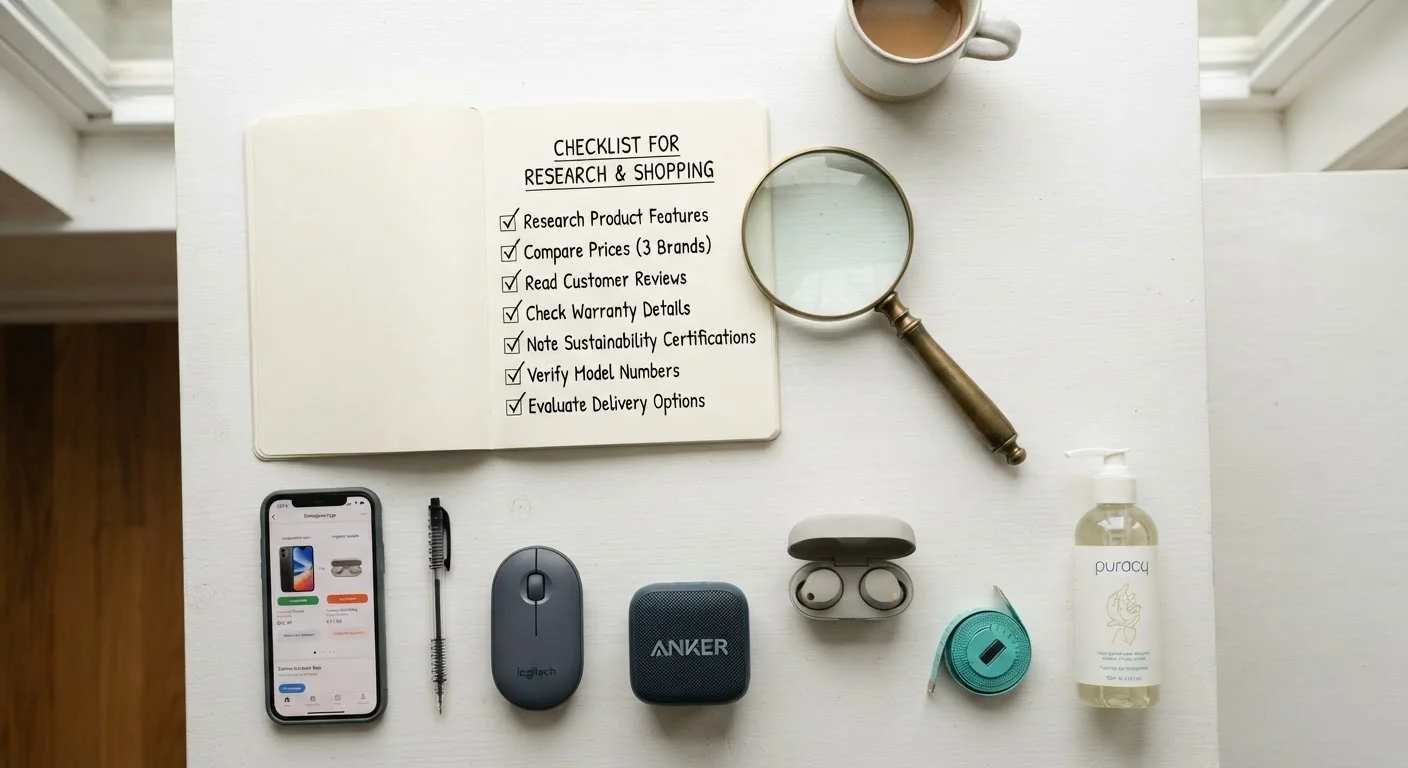
Run through this checklist before buying anything significant to make sure you've covered quality, value, and fit for your needs.
Key Takeaways
Clarifying your actual need before researching prevents you from buying features you'll never use.
Total cost of ownership often exceeds the sticker price when you factor in maintenance, accessories, and replacements.
Independent reviews and verified buyer feedback together give a more accurate picture than either source alone.
Build quality can be assessed without specialized equipment using simple hands-on checks.
Checking return and warranty terms before purchase protects you if the product underdelivers.
Why a Structured Checklist Beats Gut Instinct
Most purchase regrets follow a predictable pattern: a compelling product page, a moment of excitement, and a commitment made before the obvious questions were asked. A structured checklist interrupts that cycle. It doesn't slow down smart purchases - it only slows down avoidable mistakes.
This checklist is designed for any significant purchase, whether you're evaluating a $150 kitchen appliance or a $2,000 piece of outdoor gear. The categories below mirror the evaluation framework covered in depth in Before You Buy: A Framework for Evaluating Any Product. Use both together for the most thorough review. If you're newer to thinking critically about what you buy, Getting Started as a Discerning Shopper provides the foundational mindset behind these checks.
Marketing Language Can Obscure Real Specifications
Terms like 'professional-grade,' 'military-spec,' and 'advanced technology' are marketing phrases, not verified standards. Always look past the headline claims to find actual measurable specifications - dimensions, materials, tested ratings, and certifications. If a product page can't substantiate its claims with specifics, treat that as a signal worth investigating before you commit.
The Checklist
Work through each group in order. Items marked must are non-negotiable before committing. Should items are strongly recommended. Nice to have items add confidence but aren't always feasible for every purchase.
Define Your Need
Write down the specific problem you're solving or job this product must perform - one sentence.Must
Confirm you don't already own something that handles this need adequately.Must
Identify any constraints upfront: space, compatibility, skill level, or physical requirements.Should
Research & Reviews
Find at least two independent, non-sponsored reviews from credible sources (consumer organizations, specialist publications).Must
Read verified buyer reviews specifically mentioning long-term use - not just first-impression ratings.Must
Check for patterns in negative reviews: recurring complaints about the same flaw carry more weight than isolated one-star posts.Must
Look up the manufacturer's track record for product support, recalls, or known defect history.Should
Quality & Fit Assessment
Verify that the product's specifications match your actual use case - not the aspirational version of how you'd use it.Must
If possible, handle or test the item in person before purchasing.Should
Check materials, finish, and construction details against what's described - look for vague language like 'premium feel' with no substantiation.Should
Assess whether the feature set is appropriate for your needs or inflated beyond what you'll realistically use.Should
True Cost Evaluation
Calculate the total cost of ownership: add consumables, required accessories, maintenance, and expected replacement costs to the sticker price.Must
Confirm what is and isn't included in the base price - cables, batteries, installation, and setup services are often sold separately.Must
Check whether the category is prone to rapid price changes or model refreshes that may affect resale or parts availability.Nice to have
Warranty, Returns & Support
Read the warranty terms before purchasing - note what's covered, what voids it, and the claims process.Must
Confirm the return window and any restocking fees or conditions that apply.Must
Verify that customer support is reachable and responsive, particularly for technical or complex products.Should
For high-value purchases, research whether extended protection plans represent genuine value or duplicate existing coverage.Nice to have
Final Decision Gate
Wait at least 24 hours after completing research before finalizing a significant purchase - impulse pressure fades quickly.Must
Confirm that buying this now is the right timing - not driven by artificial urgency, scarcity messaging, or a sale deadline.Must
Check whether your broader spending picture supports this purchase without creating financial strain.Should
The final decision gate - pausing for at least 24 hours - is the most frequently skipped step and the one most likely to prevent a costly mistake. Urgency cues (countdown timers, 'only 2 left' notices, limited-time framing) are sales tools designed to compress your decision window. None of the other checklist work matters if you override it with an impulsive final click. For broader strategies on managing spending decisions under pressure, the Smarter Spending hub covers practical frameworks in depth.
Smart Shopping Editorial Team is the collective byline for our editorial team and contributor network. Articles published under this byline or an editorial pen name are researched, written, and reviewed according to our editorial standards for clarity, consistency, and independence before publication.
The content on this site is for informational purposes only and is not a substitute for professional advice. Always consult a qualified professional for guidance specific to your situation.