
Anchoring, Scarcity, and Social Proof: The Retail Tactics Behind Every Price Tag

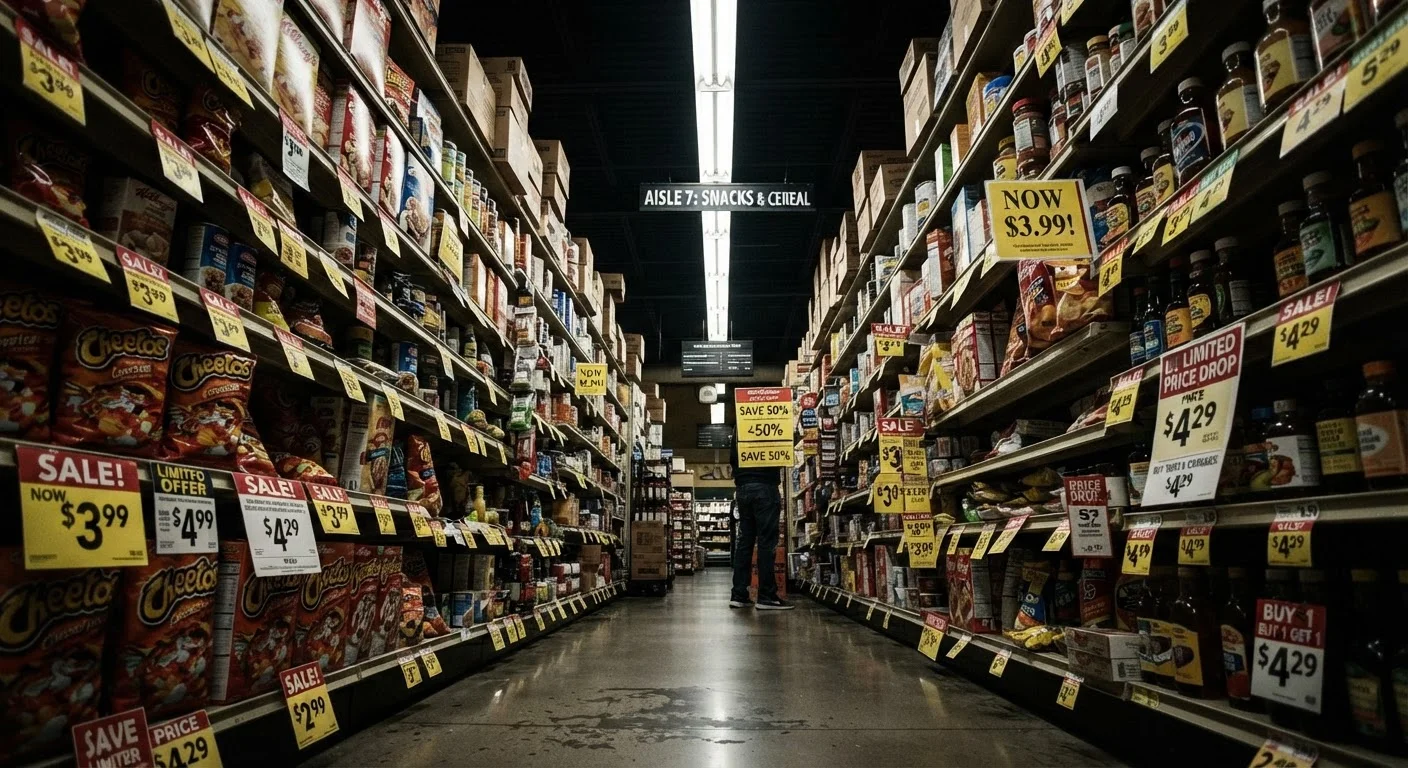
Photo: QuickAdvisor.net editorial
Key Takeaways
- Anchoring uses a high reference price to make the actual price feel like a bargain, regardless of real value.
- Artificial scarcity and countdown timers pressure decisions before you've had time to think clearly.
- Social proof signals like review counts can be manufactured or selectively displayed to nudge purchases.
- Charm pricing and decoy options are structural tricks embedded in how prices are presented.
- Knowing these tactics by name is the first line of defense against them.
Why Retailers Don't Leave Pricing to Chance
Every price you see in a store or on a website was designed - not just calculated. Retailers and their marketing teams draw on decades of behavioral economics research to structure choices in ways that make spending feel rational, even when it isn't. The result is a system engineered to move products, not to help you decide whether you actually need them.
These aren't secret tricks or conspiracy theories. They are well-documented psychological phenomena, studied in peer-reviewed research and openly discussed in marketing textbooks. What's less common is giving consumers a plain-language breakdown of how each one works. That's what this list does. Understanding the psychology behind impulse buying is the foundation - but it helps to know the individual plays retailers run.
Price Anchoring
Anchoring is the tendency to rely heavily on the first number you encounter when making a judgment. In retail, this means displaying a high "original" or "compare at" price prominently alongside the actual selling price. Your brain treats that first number as a reference point - so $49.99 feels like a deal when $120 is crossed out next to it, even if the item was never widely sold at $120.
The anchor doesn't have to be real or recent to have effect. Studies on anchoring - including foundational work by behavioral economists Amos Tversky and Daniel Kahneman - show that arbitrary high numbers reliably shift people's willingness to pay upward. To counter it, ask yourself: what would I think this item was worth if I saw no reference price at all?
The crossed-out price doesn't need to be real to shift what you're willing to pay.
Artificial Scarcity
"Only 3 left in stock." "Sale ends in 02:47:09." These messages create a sense of urgency by implying that delay carries a cost. The underlying mechanism is loss aversion - the well-documented tendency to feel potential losses more sharply than equivalent gains. Missing out on a deal feels worse than not getting a deal in the first place.
What retailers don't advertise: stock levels and countdown timers are frequently reset, and "limited" inventory claims are rarely verifiable. The urgency is real only if the underlying scarcity is real, which you often cannot confirm. A useful test: if you walked away and came back tomorrow, would the "opportunity" genuinely be gone? For staple goods, the answer is almost always no.
Countdown timers create urgency - but most are designed to restart, not expire.
Social Proof Signals
Social proof is the principle that people look to others' behavior to guide their own, especially under uncertainty. In retail, this manifests as review counts, star ratings, "bestseller" badges, and "X people are viewing this right now" notifications. The implication is that popularity signals quality.
The problem: star ratings can reflect volume of reviews rather than product quality, reviews can be incentivized or selectively displayed, and "bestseller" designations are sometimes category-specific in ways that flatter a product without meaningful comparison. Ratings are useful data - but treat them as a starting point, not a verdict. Look for patterns in written reviews, pay attention to review dates, and consider the total number of ratings relative to the score.
A "bestseller" badge tells you a product sold well - not that it performed well.
Charm Pricing and the Left-Digit Effect
Prices ending in .99 or .95 are so pervasive that shoppers rarely pause to ask why. The answer is the left-digit effect: because we read numbers left to right, the first digit dominates our perception. $29.99 registers cognitively closer to $29 than $30, even though the actual difference is one cent.
Research published in marketing and consumer behavior journals has repeatedly confirmed this effect across product categories and price ranges. It's not a trick that only works on inattentive shoppers - it works on most people, most of the time, because of how numerical cognition functions. Rounding prices up mentally before comparing them is a simple habit that partially neutralizes this effect.
Your brain reads $29.99 as closer to $29 than $30 - by design, not accident.
Decoy Pricing
When retailers offer three versions of a product - small, medium, and large - the middle option is often priced to make the large look like obvious value. This is the decoy effect (also called the asymmetric dominance effect): a third, strategically inferior option is introduced not because it's a good deal, but because it makes another option appear more attractive by comparison.
You see this in subscription tiers, combo meals, and product bundles. The decoy option is rarely the right choice for anyone; its job is structural - to reshape how you perceive the other options. When facing a tiered pricing structure, evaluate each option independently against your actual needs rather than letting the comparison drive the decision.
The middle option in a three-tier menu often exists to make the largest look like a bargain.
Bundling and Partitioned Pricing
Bundling groups items together so that the combined price feels lower than the sum of the parts - often because it's harder to evaluate individual item value when they're packaged together. Partitioned pricing works in the opposite direction: displaying a base price prominently while fees (shipping, handling, service charges) are added later in the checkout process. Both techniques obscure the true cost of a transaction.
For bundles, determine whether you would actually use every included item before calculating the savings. For partitioned pricing, always factor in the total cost at checkout - not the headline price - before making a decision. The Federal Trade Commission has addressed drip pricing practices in commercial contexts, acknowledging that late-disclosed fees affect consumer decision-making. Understanding how to evaluate purchases critically helps you see through both structures.
Bundled items feel cheaper because comparing individual values is harder - that's the point.
Making These Insights Work for You
Awareness is a real countermeasure. Research in consumer psychology consistently finds that people who can name a persuasion tactic are less susceptible to it. That doesn't mean you'll never feel the pull - these techniques work because they tap into genuine cognitive patterns, not because shoppers are careless. But naming what's happening creates a pause, and a pause is often enough.
The 24-Hour Rule Is Evidence-Based
A few habits reinforce this awareness in practice: set a specific budget before browsing, give yourself a 24-hour waiting period on non-essential purchases, and check unit prices independently rather than trusting the retailer's comparison math. For a deeper look at reading product claims critically, see our guide on misleading product claims. These aren't revolutionary habits - they're just harder for a price tag to override.
The content on this site is for informational purposes only and is not a substitute for professional advice. Always consult a qualified professional for guidance specific to your situation.