
The Psychology Behind Impulse Buying (And Why It's So Hard to Resist)

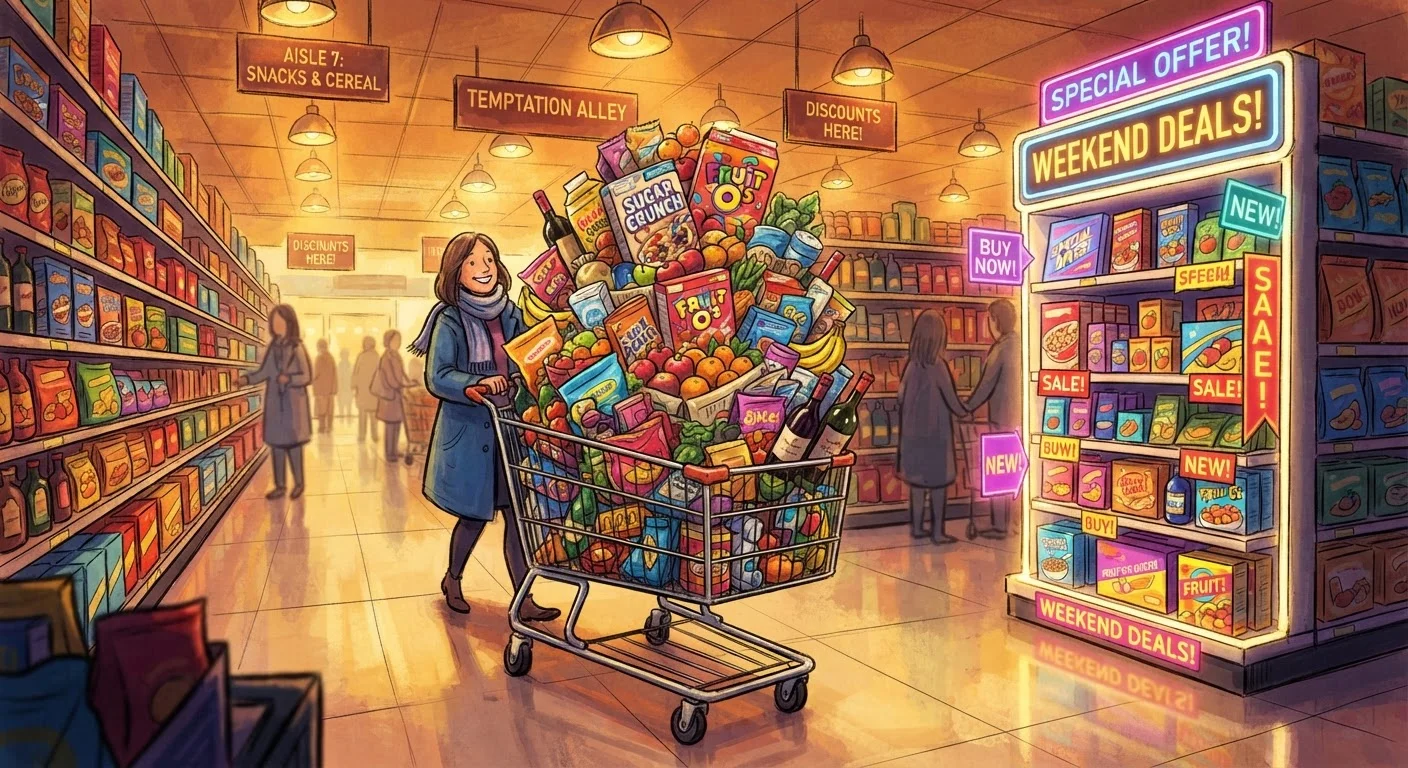
Photo: QuickAdvisor.net editorial
Key Takeaways
- Impulse buying is engineered by retailers, not just a personal willpower failure.
- Emotional states like stress, boredom, or excitement significantly increase unplanned spending.
- Payment method affects how much people spend - physical cash creates more psychological friction.
- A brief pause between desire and purchase is one of the most effective countermeasures.
- Recognizing the specific tactics retailers use makes you a harder target.
Why Your Brain Is Wired for the Unplanned Purchase
The human brain did not evolve for supermarkets or e-commerce. It evolved to act quickly on available opportunities - food, shelter, social connection - before they disappeared. Retailers have spent decades studying exactly how to exploit that wiring.
When you spot something appealing, the brain's reward system releases dopamine - a chemical associated with anticipation and pleasure - before you've made any purchase decision. That anticipatory hit is a large part of what makes temptation so hard to dismiss. The feeling of wanting is itself rewarding, which is why window shopping can be genuinely pleasurable even without buying anything.
Decision fatigue compounds the problem. After a long day of choices - what to eat, how to respond to emails, which route to take home - the mental resources needed for careful evaluation are depleted. Late-night online shopping and after-work grocery runs are particularly vulnerable windows because willpower is a finite resource, not a fixed character trait.
Decision Fatigue Is Real - and Predictable
The Retail Environment Is Not Neutral
Physical stores and digital platforms are engineered environments. Nothing about their layout, lighting, or pricing displays is accidental. Understanding a few of the most common techniques changes how you experience them.
Scarcity and urgency signals - "Only 3 left," countdown timers, flash sale banners - activate loss aversion, a well-documented bias where the pain of losing something outweighs the pleasure of gaining it. Shoppers who believe they might miss out make faster, less deliberate decisions.
Product placement and sensory cues work in physical retail: the smell of fresh bread near a grocery store entrance, impulse items clustered near checkout lanes, and eye-level shelf positioning for higher-margin products are all deliberate friction-reducers between you and a purchase.
Frictionless digital checkout - saved credit cards, one-click buying, autofill forms - removes the natural pause that used to exist when you had to locate your wallet. That pause, brief as it was, created a moment of reconsideration that e-commerce has largely eliminated. For a deeper look at specific retailer tactics, see how anchoring, scarcity, and social proof shape pricing.
Emotional Spending: The Underlying Driver
A significant portion of impulse purchases are not really about the product at all - they're about managing an emotional state. Retail therapy is a real phenomenon: buying something provides a brief sense of control, reward, or relief that temporarily soothes stress, boredom, or sadness.
Social triggers matter too. Seeing a peer's purchase, receiving a personalized product recommendation, or browsing a curated social media feed can create a felt gap between what you have and what others seem to enjoy. That gap produces a low-grade discomfort that a purchase momentarily resolves.
These emotional purchases rarely address the underlying feeling. And over time, small recurring unplanned purchases compound into significant budget drain - even when each individual transaction felt minor in the moment.
“The best way to understand consumer decision-making is to accept that most decisions are not made rationally after deliberation, but are instead shaped by context, emotion, and the immediate environment far more than people realize.”
— Richard Thaler, Nobel Prize-winning behavioral economist, University of Chicago Booth School of Business
Practical Ways to Create Purchase Friction
The goal isn't to stop enjoying shopping - it's to make sure your spending reflects your actual priorities rather than a retailer's agenda. A few friction-building habits make a meaningful difference:
- Impose a waiting period. A 24-hour rule for non-essential items lets the initial emotional activation fade. Many people find the urge evaporates entirely.
- Shop from a list. A pre-committed list shifts the default from open-ended browsing to purposeful retrieval. Items not on the list require conscious justification to add.
- Change your payment method. Paying with physical cash creates psychological friction that digital payments remove. Research on payment method and spending suggests that how you pay shapes how much you spend.
- Audit your triggers. Notice the emotional states and environments where unplanned purchases cluster for you personally. Awareness of your own pattern is a prerequisite for changing it.
- Build evaluation skills. Becoming a more deliberate evaluator of products - assessing need, quality, and value - is itself a habit. Getting started as a discerning shopper outlines a practical framework for doing exactly that.
None of these strategies require perfect willpower. They work by changing the conditions under which decisions get made - not by demanding that you simply want less.
Frequently Asked Questions
The content on this site is for informational purposes only and is not a substitute for professional advice. Always consult a qualified professional for guidance specific to your situation.