
The Anatomy of a Misleading Product Claim

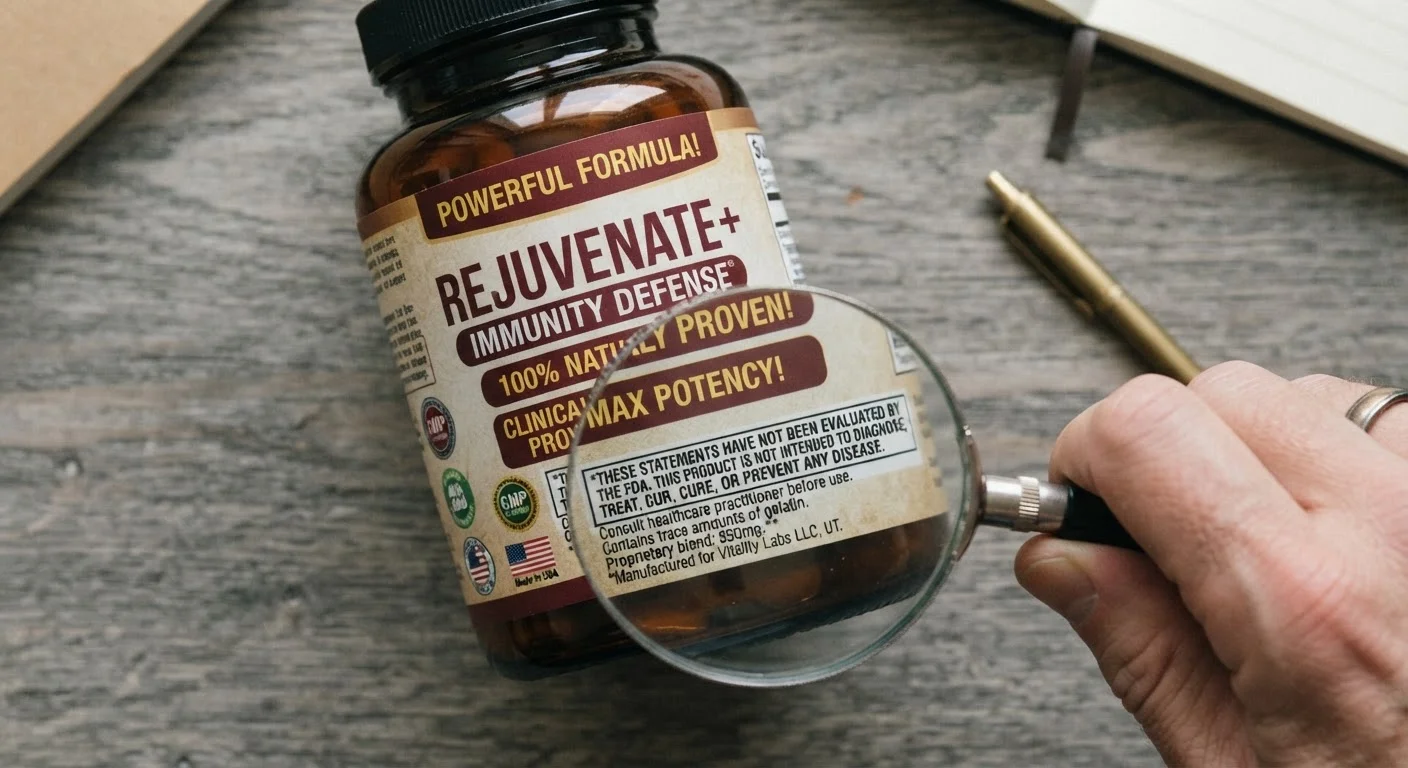
Photo: QuickAdvisor.net editorial
Key Takeaways
- Vague modifiers like 'up to' and 'clinically shown' are legal shields, not meaningful guarantees.
- Cherry-picked statistics can be technically true while creating a deeply misleading impression.
- Certifications and seals vary widely in credibility - always check who issues them.
- Understanding common claim structures helps you ask the right questions before any purchase.
Why Marketing Language Is Built to Impress, Not Inform
Every product claim you encounter has been drafted, tested, and legally reviewed. The goal is persuasion within the boundaries of what regulators will allow - and those boundaries are wider than most shoppers realize. The Federal Trade Commission (FTC) requires that advertising claims be truthful and non-deceptive, but "non-deceptive" carries a lot of wiggle room when wording is carefully engineered.
What you see on packaging or in ads isn't raw information - it's a curated selection designed to make the product look as good as possible while committing to as little as possible. Recognizing the patterns that make this possible is the first practical step toward evaluating what you're actually buying.
For a deeper look at how these patterns show up in technical documents, see reading between the lines of a product spec sheet.
Myth
If a product claim appears on official packaging, a regulatory body has verified it's accurate.
Fact
In the U.S., most product claims are self-certified by manufacturers before going to market; regulators typically investigate after a complaint is filed, not before.
The FTC and FDA set rules for advertising and labeling, but they do not pre-approve the majority of consumer product claims. Enforcement is reactive - meaning a misleading claim can circulate for months or years before action is taken. This puts the burden of initial scrutiny on the buyer, not the regulator.
Myth
"Clinically shown" or "scientifically proven" means the claim is backed by rigorous independent research.
Fact
These phrases have no standardized legal definition and can legally reference a single small study, an unpublished internal test, or research funded and designed by the manufacturer.
Meaningful scientific support typically requires multiple independent, peer-reviewed studies with adequate sample sizes and appropriate controls. A single sponsored survey or a preliminary pilot study does not meet that bar, yet both can legally support the phrase "studies show." When you see this language, look for the actual study citation - and check who funded it.
Myth
A product that's "natural" or "chemical-free" is inherently safer or healthier.
Fact
"Natural" has no regulated definition for most product categories, and "chemical-free" is scientifically meaningless - everything is made of chemicals, including water.
These terms function as emotional signals, not factual descriptors. Arsenic is natural; so is botulinum toxin. Synthetic compounds can be rigorously tested and safe. Evaluating safety requires looking at specific ingredients and their concentrations - not category labels. The consumer rights framework around labeling varies by product category and is worth understanding.
Myth
A high customer rating (e.g., 4.7 out of 5 stars) reliably indicates product quality.
Fact
Aggregate star ratings are susceptible to review manipulation, recency bias, selection bias, and rating incentivization - all of which can inflate scores independent of actual product quality.
Studies on e-commerce platforms have consistently found that ratings cluster artificially high, in part because dissatisfied customers often don't review at all, and because incentivized reviews (discounts in exchange for feedback) skew positive. A more useful signal is the content of critical reviews - specifically what reviewers cite as failure modes - rather than the aggregate score itself.
Myth
If a product costs significantly more, the quality difference must justify the price.
Fact
Price is a branding and positioning decision, not a reliable proxy for materials quality, durability, or performance.
Premium pricing often reflects marketing spend, retail markup, packaging, and perceived status rather than measurable functional superiority. Conversely, lower-priced products sometimes share manufacturing origins with expensive counterparts. For design-specific signals of genuine quality, markers of genuinely well-designed products offer a more grounded evaluation approach than price alone.
The Most Common Claim Structures - and What They're Hiding
Misleading claims rarely lie outright. Instead, they rely on omission, framing, and language that sounds precise but isn't. A few recurring structures account for most of what you'll encounter:
- Comparative claims with no reference point: "Better performance" - better than what? Last year's version? A competitor? A standard never defined? Without a named baseline, the comparison means nothing.
- Extreme-condition statistics: "Up to 40% faster" almost always reflects a best-case laboratory scenario that typical users won't replicate. The average real-world gain may be marginal.
- Self-issued seals and awards: "Award-winning" or "Editor's Choice" can originate from a publication or organization paid to issue such recognition. Always verify who granted the credential and how.
- Ingredient-forward phrasing: "Made with real fruit" says nothing about the proportion - it could be 2%. Similarly, "contains antioxidants" doesn't imply a therapeutically meaningful amount.
Understanding retail psychological tactics can help you recognize when these claim structures are paired with pricing or scarcity pressure to accelerate decisions.
Third-Party Seals Don't All Mean the Same Thing
Putting It Into Practice Before You Buy
Decoding a misleading claim is a habit, not a one-time insight. Train yourself to ask three questions about any claim that influences your evaluation:
- Who verified this? Internal testing, third-party testing, and independent peer review carry very different weights. If the only source is the manufacturer, treat it as a starting point, not evidence.
- What isn't being said? A claim focuses attention on a metric that favors the product. Ask which metrics are missing - durability, failure rates, energy consumption, ingredient percentages.
- Under what conditions? Performance claims almost always reflect optimal conditions. Ask whether your actual use case matches those conditions.
These questions apply whether you're evaluating a kitchen appliance or a car accessory. For a repeatable framework that works across product categories, a structured pre-purchase evaluation approach can formalize the process. And remember: more features listed on the box don't mean better value - feature overload often signals the opposite.
Your strongest tool is patience. Marketers benefit when decisions are fast and emotional. Slowing down to apply a consistent standard shifts that advantage to you.
The content on this site is for informational purposes only and is not a substitute for professional advice. Always consult a qualified professional for guidance specific to your situation.