
Reading a Football Scoreboard: Down, Distance, and the Play Clock

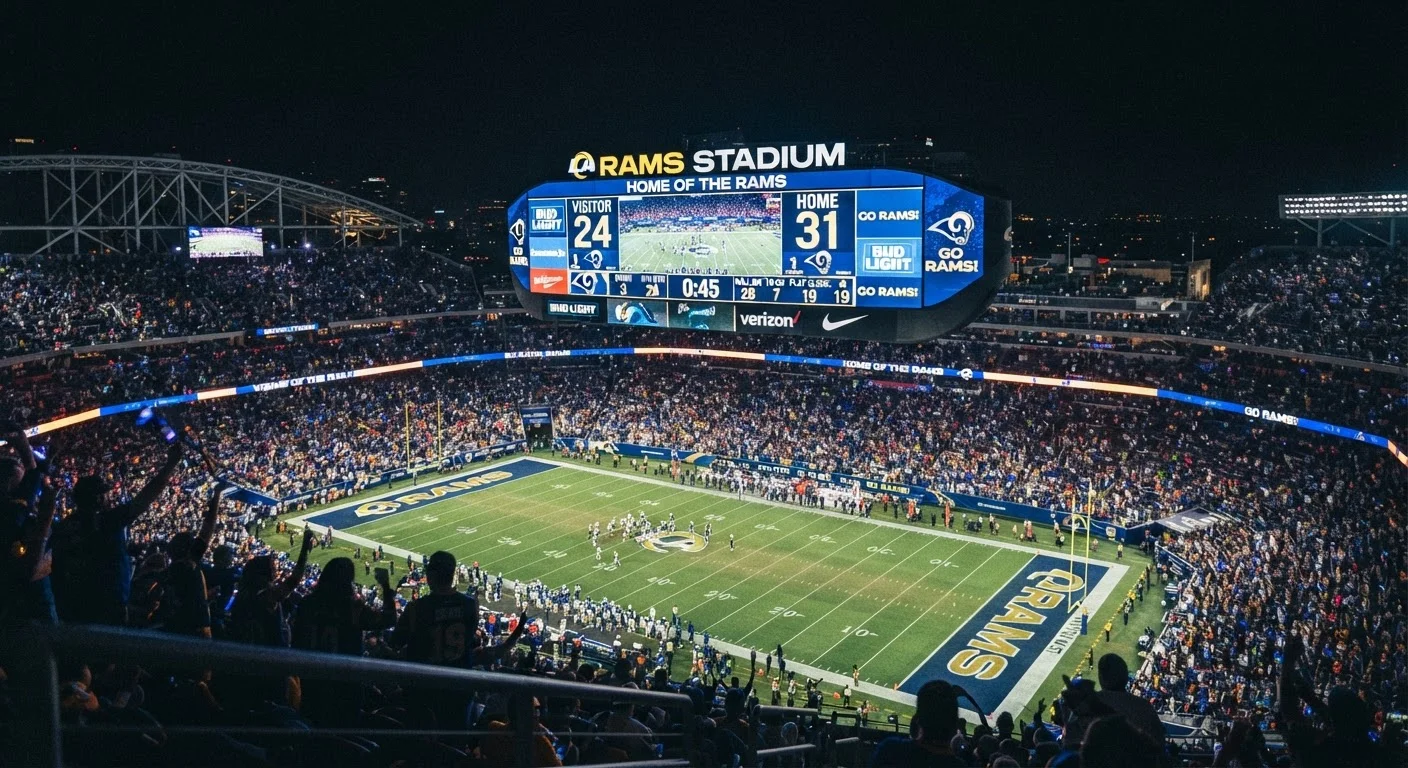
Photo: QuickAdvisor.net editorial
Key Takeaways
- The down tells you which attempt (1st through 4th) the offense is currently on.
- Distance shows how many yards the offense needs to gain to earn a new set of downs.
- The play clock (usually 40 seconds) limits how long the offense has to snap the ball.
- The game clock counts down each quarter; NFL quarters are 15 minutes each.
- Possession and field position indicators tell you which team has the ball and where.
- Understanding these elements transforms you from a passive viewer into an informed fan.
What You're Actually Looking At
A football scoreboard packs a surprising amount of information into a small space. At first glance, it can look like a jumble of numbers, abbreviations, and timers - but every element has a precise, logical purpose. Once you understand the structure, you'll be able to follow the game's momentum in real time, not just react when the crowd cheers.
The scoreboard typically displays: the score for each team, the current quarter, the game clock, the down and distance, and the play clock. Broadcasts add a graphic strip - often called the score bug - at the bottom or top of the screen that mirrors this information. In-stadium boards vary in layout, but the core data is the same.
What you will need
If you want to go deeper after mastering the scoreboard, our guide on key stats every casual NFL fan should understand explains the more advanced numbers broadcasters reference during play-by-play coverage.
Down and Distance: The Heart of Every Play
The most important - and most misunderstood - part of any football scoreboard is the down and distance indicator, typically displayed as something like 2nd & 7.
What "Down" Means
A down is simply a play attempt. The offense gets four consecutive downs to advance the ball at least 10 yards. If they gain those 10 yards before using all four downs, the count resets to 1st & 10 - a fresh set. If they fail to reach 10 yards on four tries, possession transfers to the other team.
- 1st Down: A fresh start. The offense has the most options and flexibility.
- 2nd Down: A response play, often designed to set up a manageable 3rd down.
- 3rd Down: High-stakes. Fans and defenses both know the offense usually needs to pass.
- 4th Down: A decision point - teams typically punt, attempt a field goal, or go for it.
What "Distance" Means
The number after the ampersand tells you how many yards remain to gain a new set of downs. 2nd & 7 means it's the second play attempt and the offense needs 7 more yards. A short distance (1-3 yards) is called a short-yardage situation; anything beyond 8 yards is considered long and typically favors the passing game.
Short Yardage vs. Long Yardage Situations
The Play Clock and Game Clock: Two Different Timers
Many newcomers confuse these two timers, but they measure entirely different things.
The Play Clock
In the NFL, the offense has 40 seconds from the end of the previous play to snap the ball (or 25 seconds after certain stoppages). This countdown is the play clock, usually displayed in a corner of the scoreboard or on a separate clock at each end of the field. If it hits zero before the snap, the offense is penalized for a delay of game - a 5-yard penalty that pushes the ball back and increases the distance needed.
The Game Clock
The game clock counts down each of the four 15-minute quarters in NFL play (college football uses the same quarter length). The clock stops after incomplete passes, when a player goes out of bounds, during penalties, and on timeouts - which is why a 2-minute stretch late in a game can take 15 or more real-world minutes to play out.
The Two-Minute Warning Changes Everything
For a broader look at how all these moments fit into the larger season structure, see our walkthrough of how the NFL season actually works.
Reading It All Together: A Practical Walkthrough
Here's how to synthesize everything you see in one scoreboard glance:
Identify the Score and Possession
Look at the two team abbreviations and their scores. A small arrow, triangle, or highlighted indicator typically marks which team currently has the ball - this is the possession indicator. On broadcasts, the team in possession is often listed first or highlighted in the score bug.
Check the Quarter and Game Clock
Note which quarter you're in (1st through 4th) and how much time remains. If you see OT, the game has gone to overtime. Late in the 2nd or 4th quarter, remaining time becomes critical - teams manage the clock aggressively, and each second matters.
Read the Down and Distance
Find the D & D or Down & Distance display - typically formatted as 1st & 10, 3rd & 4, etc. Ask yourself: how much pressure is the offense under? A 3rd & 1 is a manageable run situation; a 3rd & 15 almost always means a pass play is coming.
Monitor the Play Clock
Watch the play clock countdown before each snap. If it dips below 5 seconds, the offense is either running a hurry-up offense intentionally or is at risk of a delay-of-game penalty. When a quarterback calls a hard count at the line, they're trying to trick the defense into moving early before the snap - the play clock pressure makes this tactic possible.
Note Field Position and Yard Line
Many scoreboards and all TV broadcasts display the yard line where the ball is spotted. Own 20 means the offense is 20 yards from their own end zone - deep in their territory. OPP 35 (or simply 35 past midfield) means they're in reasonable field-goal range. Field position profoundly influences play-calling strategy.
After a few drives of practice, reading the scoreboard becomes automatic. You'll stop watching the players react and start anticipating what's likely to happen - which is when football genuinely becomes fun to follow.
The content on this site is for informational purposes only and is not a substitute for professional advice. Always consult a qualified professional for guidance specific to your situation.