
Cultural Etiquette Around the World: What Travelers Often Get Wrong

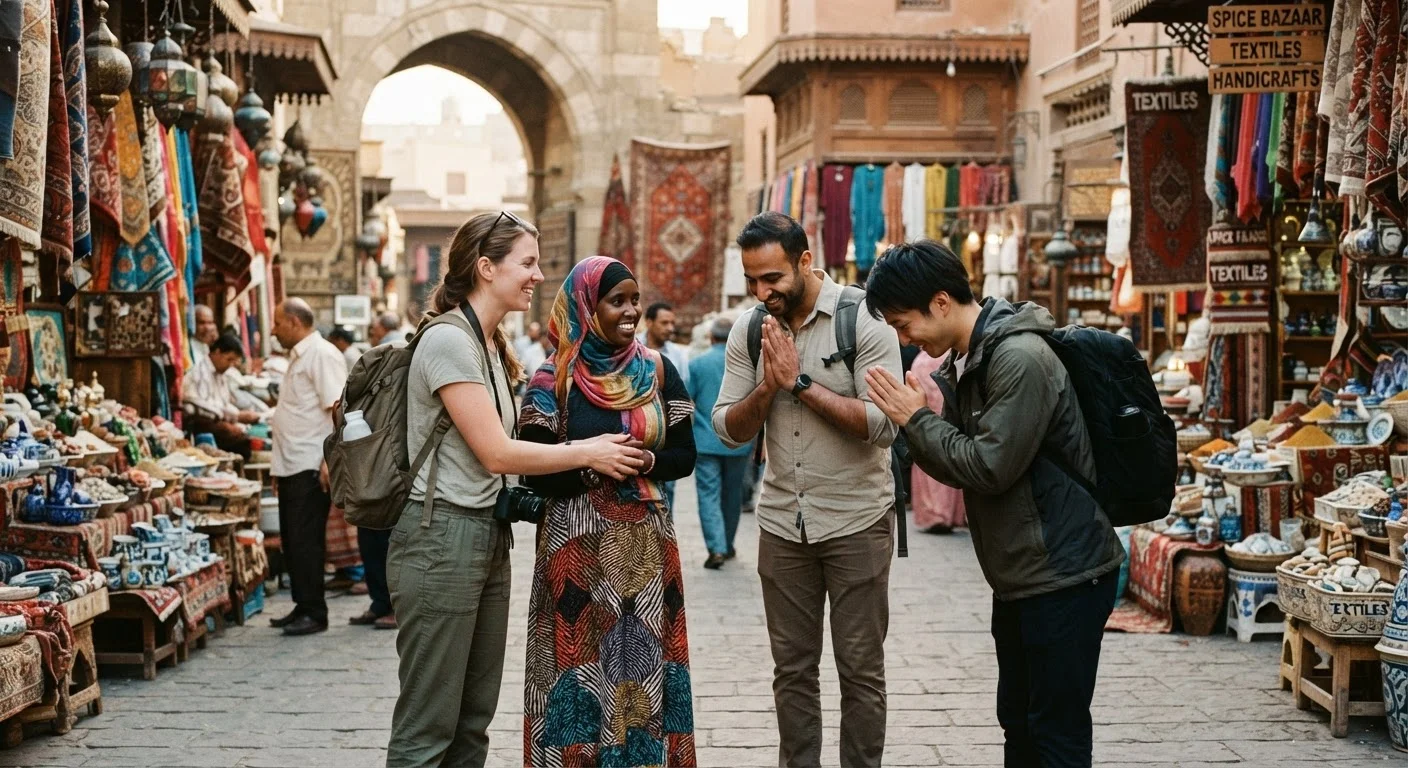
Photo: QuickAdvisor.net editorial
The Etiquette Gaps That Catch Travelers Off Guard
Knowing a destination's history and booking the right hotels is one thing. Understanding how to behave once you're there is another skill entirely - and it's one that even seasoned travelers fumble. Cultural etiquette isn't about memorizing a rulebook; it's about showing genuine respect for the place you're visiting. Getting it wrong rarely leads to serious consequences, but getting it right opens doors, earns goodwill, and makes for far richer experiences.
The gaps tend to cluster around four areas: greetings, tipping, dress, and dining. Each one plays out very differently depending on where you are - and assumptions carried over from home are usually the culprit when things go sideways. For a broader look at how pre-trip preparation affects the quality of your travels, see this complete first international trip guide.
| Countries where tipping is discouraged | Japan, South Korea, Iceland, Switzerland (General cultural consensus; norms can vary by establishment) |
| Religious sites requiring covered clothing | Most mosques, temples, and many churches worldwide (Varies by site; always verify locally) |
| Offensive gesture in Brazil | The "OK" hand sign (Widely documented cultural reference) |
| Greeting standard in Japan | A slight bow; handshakes uncommon with strangers (Japan National Tourism Organization guidance) |
| Shoe removal expected at | Most Asian homes and many religious sites globally (Cross-cultural travel etiquette consensus) |
| US standard restaurant tip | 15-20% of bill before tax (US hospitality industry standard) |
Greetings, Gestures, and Personal Space
Americans tend to default to a firm handshake and direct eye contact - signals of confidence at home, but not universally welcome abroad. In Japan, a slight bow is the standard greeting; thrusting out your hand can feel presumptuous. In many Middle Eastern countries, greetings between unacquainted men and women may be more reserved, and physical contact is often minimal until a relationship is established. In France and several other European countries, cheek kisses (called la bise) are common among acquaintances, though the number of kisses and which cheek to start on varies by region.
Gestures carry their own hazards. The thumbs-up sign reads as positive in the US but is considered offensive in parts of the Middle East and West Africa. The "OK" circle gesture is similarly interpreted negatively in Brazil and some other countries. When in doubt, keep hand gestures minimal and observe how locals communicate first.
La bise
A greeting involving light cheek kisses practiced in France and several other countries. The number of kisses and which cheek to start on varies by region and relationship.
Dress code (religious sites)
Specific clothing requirements for entering temples, mosques, churches, or shrines. These commonly include covering shoulders and knees, and removing shoes at the entrance.
Cultural etiquette
The unwritten behavioral norms and social customs considered respectful within a specific culture or country. These vary widely across regions and contexts.
Tipping norm
The locally accepted practice - or expectation - around leaving an additional payment for service staff. Norms range from obligatory to unnecessary to actively rude depending on the country.
Tipping, Dress Codes, and Table Manners
Tipping norms are wildly inconsistent globally - and misreading them cuts both ways. In the United States, tipping 15-20% for restaurant service is standard and expected. In Japan, tipping is generally considered rude; excellent service is seen as a professional standard, not something requiring a financial bonus. In many European countries, rounding up the bill or leaving a small amount is appreciated but not obligatory. Checking norms before you go prevents awkward moments at the table - and can help you budget realistically. The hidden costs of international travel guide covers tipping alongside other commonly overlooked expenses.
Dress codes at religious sites catch travelers off guard more than almost anything else. Mosques, temples, and churches in many countries require covered shoulders, covered knees, and sometimes removed shoes. Carrying a lightweight scarf in your day bag is one of the most versatile preparation moves you can make. Beyond religious sites, conservative dress expectations extend to public spaces in several countries across Southeast Asia, the Middle East, and North Africa.
At the table, slurping noodles loudly is a compliment in Japan; splitting a bill Dutch-style is perfectly normal in the Netherlands but can feel odd in cultures where one person traditionally hosts. Finishing every bite on your plate signals satisfaction in most Western countries, but in parts of China it may suggest the host didn't provide enough food. Small differences, big impressions.
71%
Travelers who research local customs before a trip
According to a 2019 Expedia Group traveler survey, nearly three-quarters of respondents said they try to learn about local etiquette before visiting a new country.
189
Countries with distinct tipping customs
Tipping norms are considered culturally distinct in virtually every country; practices range from expected to unwanted across the globe.
Building the Habit of Cultural Curiosity
The most effective approach to cultural etiquette isn't anxiety-driven fact-checking - it's cultivating genuine curiosity. Spending 20-30 minutes researching local customs before a trip pays dividends throughout. Reliable sources include official tourism websites, travel advisories from the US State Department, and peer-reviewed travel writing. Pay attention to locals once you arrive; most people will appreciate the effort even when you make mistakes, as long as your attitude is respectful rather than dismissive.
Cultural missteps rarely ruin trips, but they do shape how locals perceive you - and by extension, how openly they engage with you. For travelers who genuinely want to connect with a place rather than just photograph it, etiquette awareness is one of the highest-leverage investments you can make. Many travelers miss what makes destinations truly memorable - and cultural respect is often the key that unlocks those moments. Smart preparation, including understanding local customs, is also covered in depth in our piece on why travel plans fall apart and the habits that prevent it.
The content on this site is for informational purposes only and is not a substitute for professional advice. Always consult a qualified professional for guidance specific to your situation.