
The American Southwest: Desert Landscapes, Ancient Culture, and Open Roads

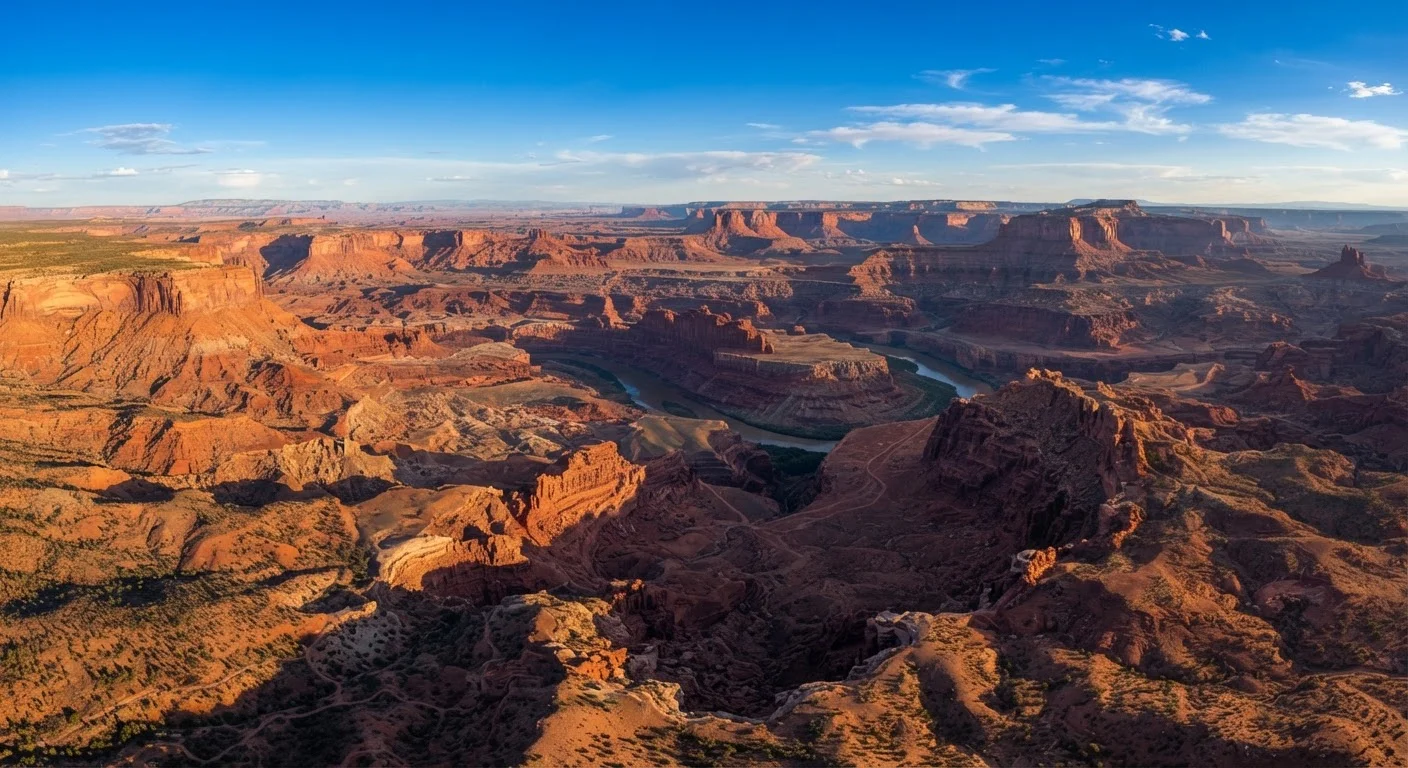
Photo: QuickAdvisor.net editorial
Key Takeaways
- The Southwest spans five states and contains more national parks per mile than any other US region.
- Indigenous cultures have shaped this region for thousands of years and remain a vital, living presence today.
- Desert conditions demand careful planning around season, hydration, and sun exposure.
- Spring and fall offer the most comfortable temperatures for outdoor exploration.
- Long driving distances between landmarks make route planning essential before you leave home.
Why the Southwest Stands Apart
Few travel regions in America punch as hard as the Southwest. Stretching across Arizona, Utah, New Mexico, Nevada, and parts of Colorado, it packs ancient cliff dwellings, surreal geological formations, vibrant Indigenous art markets, and some of the country's most legendary two-lane highways into one enormous, luminous landscape. This isn't a region you can do justice to in a weekend - it rewards repeat visitors and patient explorers who take time to slow down and look closely.
What makes the Southwest genuinely distinct isn't just scenery. It's the layering of deep geological time with equally deep human history. The same forces that carved the Grand Canyon also created the soil in which civilizations like the ancestral Puebloans built communities that endured for centuries. Understanding both dimensions makes any Southwest trip richer.
5
States spanning the Southwest region
Arizona, Utah, New Mexico, Nevada, and Colorado collectively define the American Southwest travel corridor.
277 miles
Length of the Grand Canyon along the Colorado River
According to the National Park Service, the Grand Canyon stretches 277 river miles and reaches depths of over a mile.
Over 60
Federally recognized tribes in the Southwest
The Bureau of Indian Affairs recognizes more than 60 distinct tribal nations with land or historical ties across the four-corners region.
The Landscape: Canyon Country, High Desert, and Everything Between
The Colorado Plateau - a vast elevated tableland covering parts of all four corners states - is the geological heart of the Southwest. Here, erosion has sculpted sandstone into arches, hoodoos, mesas, and slot canyons in shades ranging from pale cream to deep vermilion. Utah's Zion, Bryce Canyon, Arches, and Canyonlands national parks each present a dramatically different face of the same ancient stone.
Arizona's Sonoran Desert introduces a different visual vocabulary: saguaro cacti reaching skyward, dry washes lined with mesquite, and mountain ranges that rise abruptly from the valley floor. The Grand Canyon itself defies any single description - its scale (277 river miles long, over a mile deep) simply has to be experienced to register.
New Mexico blends high desert plains with volcanic fields and pine-forested mountains. The White Sands National Park, where gypsum dunes shift constantly across an ancient lakebed, feels genuinely otherworldly.
If you're curious how the Southwest compares to other grand American outdoor regions, our breakdown of the Pacific Northwest and Mountain West offers a useful contrast in terrain and character.
Ancient Cultures and Living Indigenous Heritage
The Southwest is home to some of the oldest continuously inhabited places in North America. Mesa Verde National Park in Colorado preserves cliff dwellings built by ancestral Puebloans around 700 years ago, while Chaco Culture National Historical Park in New Mexico holds the remains of a sophisticated society whose roads and great houses spread across a vast region. These sites are extraordinary not as ruins but as evidence of organized, enduring civilization.
Critically, Indigenous culture here is not a relic. The Navajo Nation - the largest tribal land area in the US - spans portions of Arizona, Utah, and New Mexico. The Hopi, Zuni, Acoma, and dozens of other nations maintain living communities, art traditions, and governance structures. Visitors should approach these places with genuine respect: follow posted rules, purchase directly from Indigenous artisans at sanctioned markets, and ask before photographing people or ceremonies. Many communities have specific visitor protocols worth researching ahead of your trip.
Before visiting any Indigenous community or tribal park, look up that nation's specific visitor guidelines on their official website - policies on photography, access, and purchasing vary significantly and change over time.
If you're buying Southwestern jewelry or pottery, ask the seller directly whether they made it themselves and request proof of tribal enrollment - federal law (the Indian Arts and Crafts Act) protects authentic Native-made goods, but enforcement depends on informed buyers.
Santa Fe, New Mexico, serves as an accessible entry point to this heritage. Its historic plaza, the Georgia O'Keeffe Museum, and the Indian Pueblo Cultural Center each offer context that enriches everything you'll see on the road beyond the city.
The Open Road: Driving the Southwest
The Southwest is road-trip country by nature. Distances between landmarks are long, public transit is scarce outside cities, and the views from behind the windshield are often as compelling as the destinations themselves. US Route 89 threading through Arizona and Utah, the Million Dollar Highway in Colorado, and New Mexico's Turquoise Trail each offer distinct visual rewards at manageable driving speeds.
Planning your route carefully before you leave is non-negotiable. Gas stations can be 50 or more miles apart on some stretches, and cell coverage disappears in large swaths of canyon country. For comprehensive guidance on structuring a multi-day drive, our full US road trip planning guide covers route selection, vehicle prep, and fuel budgeting in detail.
Monument Valley Navajo Tribal Park, accessed from US-163 on the Arizona-Utah border, is one of the most photographed landscapes in the world - and it genuinely earns that status. Drive the valley loop with a licensed Navajo guide to access deeper access and honest context you won't get from the roadside overlook alone.
When to Go and What to Expect
Season matters enormously in the desert Southwest. Summer temperatures at low elevations - the Grand Canyon's South Rim sits at around 7,000 feet, but the canyon floor drops far lower - can exceed 110°F (43°C), creating conditions that are genuinely dangerous for unprepared hikers. Spring (March through May) and fall (September through November) offer the most comfortable temperatures across most of the region, with crowds lower than peak summer weeks.
Winter is a legitimate option for certain destinations. Sedona, Arizona, remains mild and strikingly beautiful with occasional snow on the red rocks. At higher elevations in New Mexico and Colorado, winter means ski country, not desert hiking. Southern Arizona - Tucson and its surrounding saguaro parks - is particularly inviting from October through April.
Monsoon season, roughly July through mid-September, brings dramatic afternoon thunderstorms to much of Arizona and New Mexico. Flash flooding is a serious hazard in slot canyons and desert washes during this period. Always check weather and trail conditions with the relevant land management agency before entering narrow canyon areas. For a detailed look at desert-specific timing and preparation, our guide to desert trip planning covers the missteps that catch visitors off guard.
Practical Tips for First-Time Southwest Travelers
A few fundamentals will make a meaningful difference in how your trip goes:
- Water is not optional. Carry more than you think you need - at least one liter per hour of active hiking in warm conditions. Many trailheads have water stations, but not all, and none exist in backcountry areas.
- Book accommodations early. Gateway towns near major parks - Springdale (Zion), Moab (Arches/Canyonlands), and the South Rim Village - fill months in advance during spring and fall. Camping reservations through the National Park Service reservation system are similarly competitive.
- Respect elevation changes. You may be hiking at 8,000 feet without realizing it. Give your body a day to acclimate before attempting strenuous trails at high altitude.
- Cell coverage drops fast. Download offline maps, save emergency contact numbers for local ranger stations, and tell someone your itinerary before heading into remote areas.
- Leave No Trace principles apply everywhere. Cryptobiotic soil - the dark, bumpy biological crust found across many desert areas - takes decades to recover from a single footstep. Stay on designated trails.
The Southwest rewards travelers who come prepared and curious. It doesn't need to be rushed or ticked off a list. Take a longer route, stop when something catches your eye, and let the scale of the landscape do what it does best: make everything feel genuinely, refreshingly new.
The content on this site is for informational purposes only and is not a substitute for professional advice. Always consult a qualified professional for guidance specific to your situation.