
Your Car's Maintenance Schedule, Explained

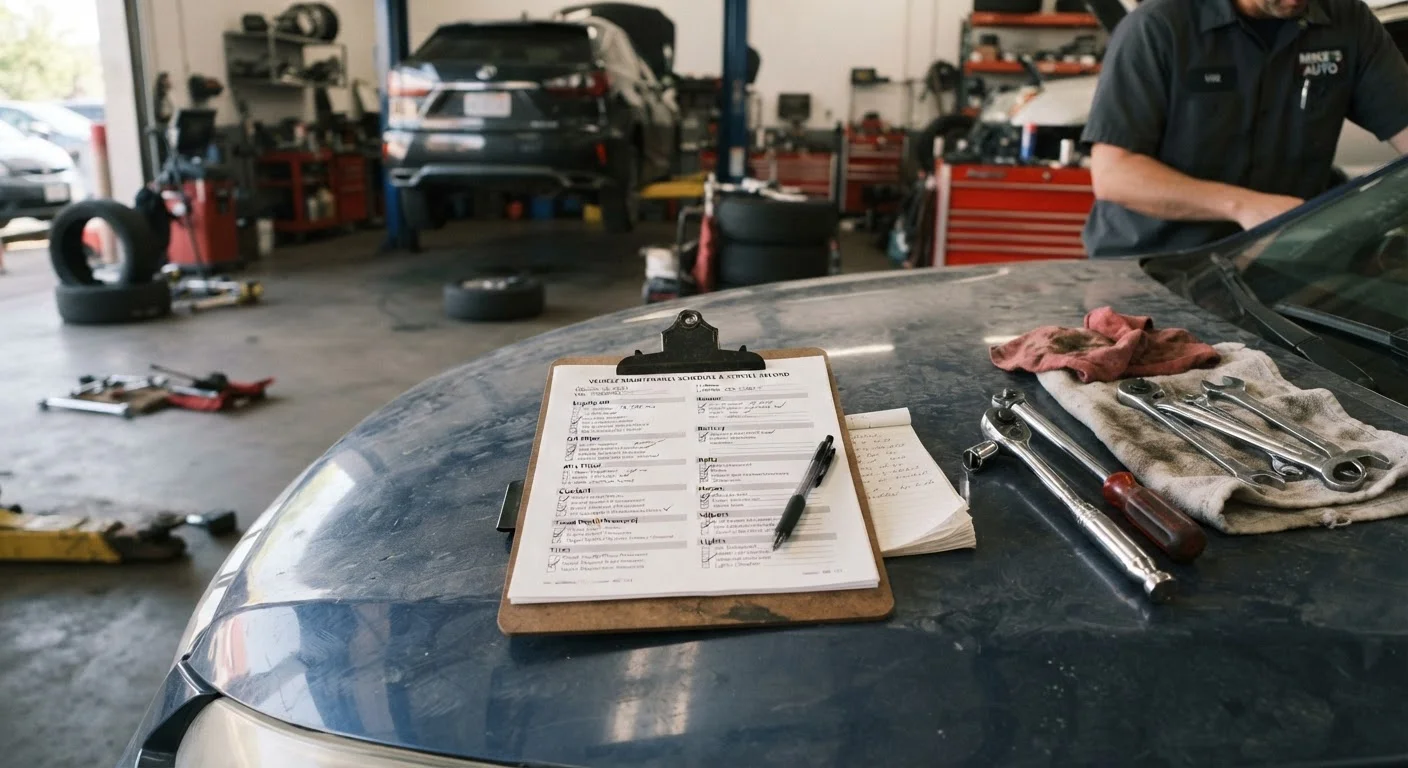
Photo: QuickAdvisor.net editorial
Key Takeaways
- Your owner's manual contains the definitive maintenance schedule for your specific vehicle - not generic advice.
- Mileage and time both trigger service intervals; whichever comes first applies.
- Skipping scheduled maintenance can void warranties and accelerate mechanical wear.
- Driving conditions affect how often you need service - 'severe' conditions require more frequent attention.
- Keeping a service record protects both your engine and your vehicle's resale value.
What a Maintenance Schedule Actually Is
Every vehicle sold in the United States comes with a manufacturer-designed maintenance schedule - a structured plan that specifies which services your car needs and when. These intervals are based on engineering data, testing, and real-world wear patterns specific to your make and model.
The schedule lives in your owner's manual, often in a dedicated section that lists services by mileage milestone - such as every 5,000, 15,000, or 30,000 miles. Time-based triggers also apply: if you drive relatively few miles, certain services (like an annual brake inspection or coolant check) are still recommended on a calendar basis regardless of mileage.
Understanding this schedule is foundational. As our guide to using your owner's manual explains, most drivers never open this resource - yet it contains fluid specifications, torque ratings, and service intervals that generic advice simply can't replicate.
Common Service Intervals and What They Cover
While exact intervals differ by vehicle, most maintenance schedules follow a recognizable pattern of escalating service depth as mileage accumulates.
5,000-10,000 mi
Typical modern oil change interval
Many current manufacturers recommend this range for full synthetic oil, replacing the outdated 3,000-mile rule.
~$1,200
Average annual vehicle maintenance cost
According to AAA's annual Your Driving Costs survey, routine maintenance averages roughly $1,200 per year for a typical passenger vehicle.
35%
Drivers who skip recommended maintenance
Industry surveys consistently find a substantial share of vehicle owners delay or skip at least one manufacturer-recommended service per year.
- Every 5,000-7,500 miles: Oil and filter change, tire rotation, visual inspection of fluid levels and lights. For vehicles using full synthetic oil, this interval may extend to 10,000 miles per the manufacturer's guidance.
- Every 15,000-30,000 miles: Air filter replacement, cabin filter check, brake inspection, battery test, and a comprehensive fluid review (coolant, power steering, brake fluid).
- Every 30,000-60,000 miles: Spark plug replacement (on many vehicles), transmission fluid service, coolant flush, and timing belt inspection where applicable.
- Every 60,000-100,000 miles: Timing belt replacement (if not chain-driven), major brake component inspection, and a full drivetrain review.
These categories represent a general framework. Your specific schedule may differ - always defer to the manufacturer's published intervals for your vehicle rather than generalized guidance.
Normal vs. Severe Driving Conditions
One of the most overlooked aspects of a maintenance schedule is the distinction between normal and severe service intervals. Many drivers assume they fall into the normal category - but the reality is that a significant portion of American drivers qualify for the more demanding severe schedule.
Severe driving conditions include: frequent short trips of less than five miles, stop-and-go city traffic, towing or hauling heavy loads, operation in extreme heat or cold, and prolonged idling. Under these conditions, engine oil degrades faster, brakes wear more quickly, and filters clog sooner.
Check Both Columns in Your Manual
If your commute involves mostly short city trips or you live in a region with harsh winters or summers, consult your owner's manual's severe-duty section for adjusted intervals. Ignoring this distinction is a common and costly oversight.
Why Following the Schedule Matters
A maintenance schedule isn't arbitrary - it reflects the engineering tolerances your vehicle was built around. Adhering to it accomplishes several things simultaneously: it prevents accelerated wear on critical components, helps you catch developing problems early, and maintains any applicable manufacturer or powertrain warranty.
The financial case is equally straightforward. Routine maintenance costs are predictable and relatively modest. Deferred maintenance - ignored coolant flushes, overdue transmission service, worn timing belts left in place - tends to produce failures that are exponentially more expensive. Our article on what happens when you skip scheduled maintenance breaks down how these delays cause compounding damage over time.
There's also a resale dimension. A vehicle with a complete, documented service history commands stronger buyer confidence. Keeping a maintenance log ties your consistent schedule directly to verifiable evidence of responsible ownership.
Whether you handle some services yourself or rely on a qualified mechanic, understanding what your schedule requires - and why - puts you firmly in control of your vehicle's long-term health. See our DIY vs. shop guide to decide which tasks are appropriate for home completion and which require professional attention.
Frequently Asked Questions
The content on this site is for informational purposes only and is not a substitute for professional advice. Always consult a qualified professional for guidance specific to your situation.