
Reading Your Owner's Manual: The Most Underused Maintenance Tool

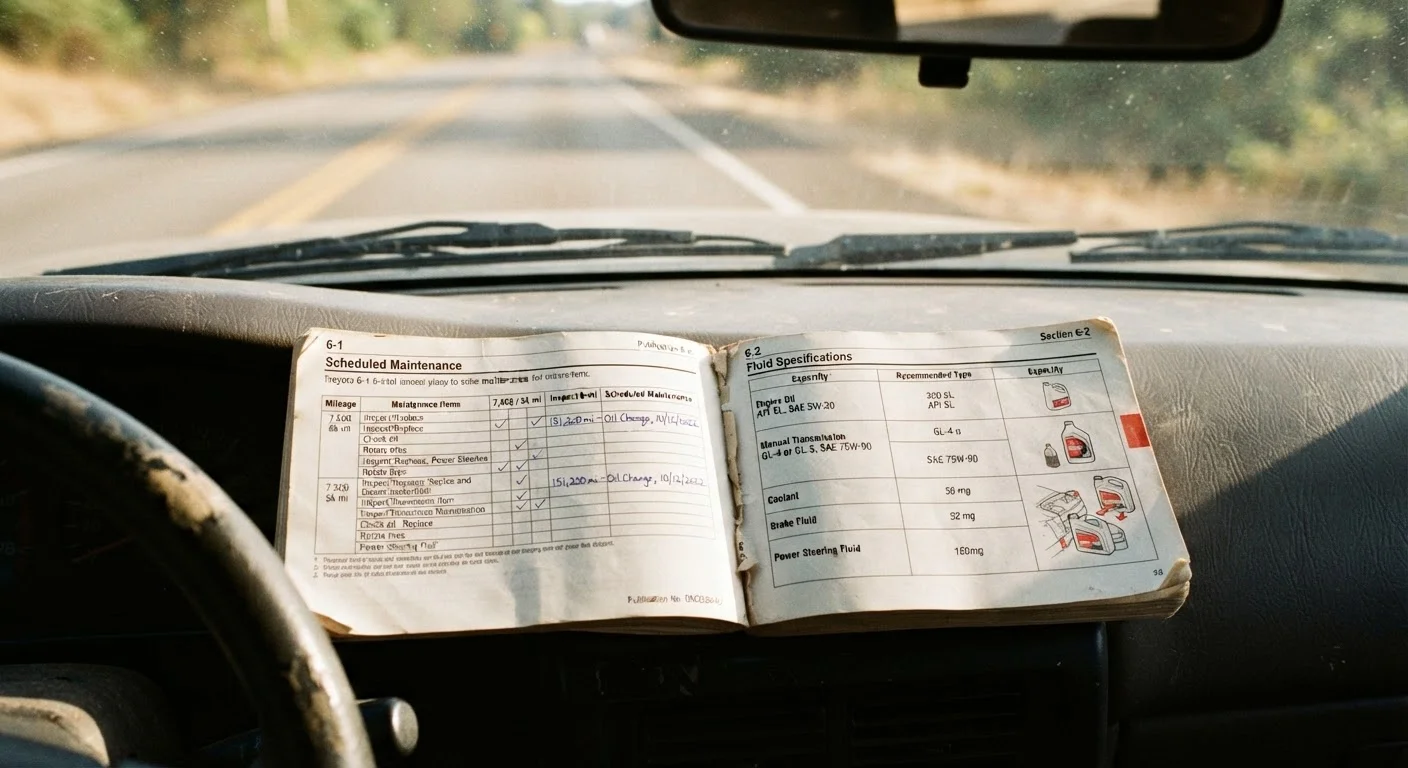
Photo: QuickAdvisor.net editorial
Key Takeaways
- Your owner's manual contains model-specific maintenance intervals that generic advice cannot replicate.
- Fluid type specifications in the manual prevent costly mistakes from using incompatible products.
- Most manuals include a severe-duty schedule for drivers with stop-and-go, towing, or extreme-temperature conditions.
- Digital versions of owner's manuals are often available free from manufacturer websites.
- Cross-referencing the manual with a maintenance log strengthens your vehicle's service history.
Why Your Owner's Manual Is the Starting Point for Every Maintenance Decision
Most drivers glance at the owner's manual once - usually to figure out how to turn off a warning light - then tuck it back into the glove box permanently. That's a missed opportunity. The manual is the single document written specifically for your vehicle's engine, transmission, and systems by the engineers who designed them.
Generic maintenance advice - "change your oil every 3,000 miles," for example - doesn't account for whether your engine takes conventional or full-synthetic oil, your transmission's actual fluid-change interval, or the brake fluid specification your hydraulic system requires. Getting those details wrong can accelerate wear, void warranty coverage, or cause outright component failure. The manual eliminates that guesswork. If you're building a reliable service routine from scratch, pairing manual guidance with our First-Time Car Owner's Maintenance Primer gives you a strong foundation.
Best Practices for Reading and Using Your Manual Effectively
Knowing the manual exists isn't enough - you need a practical system for consulting it. These approaches help you extract real value from it throughout your ownership.
Quick Actions You Can Take Today
You don't need a service appointment or a mechanic to start benefiting from your manual. Here are immediate steps any driver can take.
Once you're comfortable reading your manual, consider expanding your maintenance awareness. Our guide to car fluids you shouldn't ignore between oil changes walks through exactly what each fluid does and how to spot problems early. And if you want to understand what happens when scheduled maintenance gets skipped, skipping scheduled maintenance lays out the compounding damage in plain terms.
Putting Manual Knowledge Into Long-Term Practice
Reading the manual once is useful. Building a habit around it is far more valuable. Record every service interval from your manual - oil type and mileage, transmission fluid, coolant flush, spark plugs, timing belt or chain - in a maintenance log alongside your actual service dates. This creates a verifiable record that protects you both mechanically and financially. See how that log pays off in our guide to maintenance logs at resale time.
Also look at the severe-duty maintenance schedule your manual almost certainly includes. Most drivers who commute in traffic, live in climates with extreme temperatures, or occasionally tow a trailer qualify for more frequent service intervals than the standard schedule shows. Consulting seasonal car care preparation alongside your manual's guidance helps you adapt your schedule to real conditions rather than ideal ones.
Finally, if a dashboard warning light does come on, the manual's warning light section is your first stop - not an internet search. Cross-reference what you find there with our dashboard warning lights reference for plain-language context on when to act quickly versus when to monitor and schedule a visit. For any repair or maintenance task that feels uncertain, always consult a qualified mechanic rather than proceeding without confidence.
The content on this site is for informational purposes only and is not a substitute for professional advice. Always consult a qualified professional for guidance specific to your situation.