
Night Driving Is Statistically Riskier - Here's Why and What Reduces That Risk

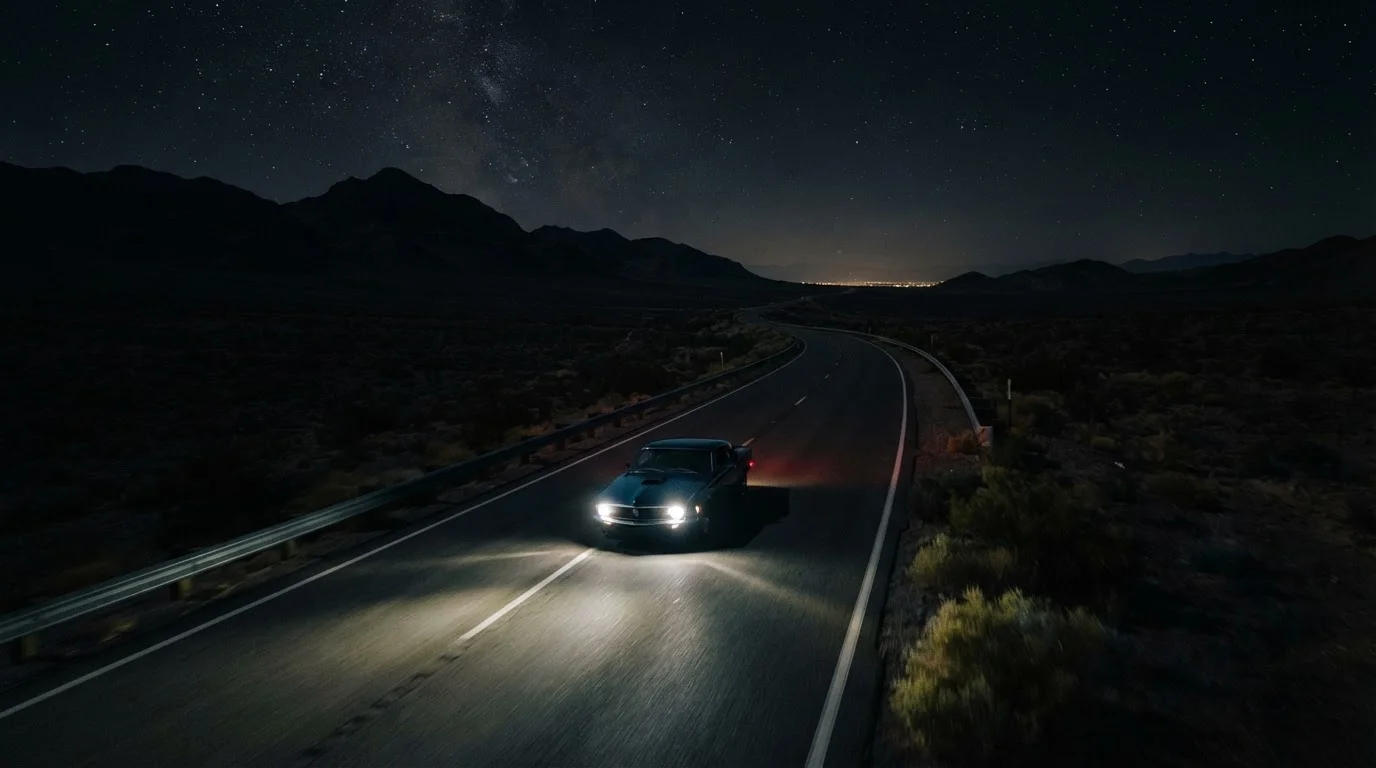
Photo: QuickAdvisor.net editorial
Key Takeaways
- Fatal crash rates are roughly three times higher per mile driven at night compared to daytime.
- Reduced visibility, driver fatigue, and impaired drivers all converge to make nighttime roads more dangerous.
- Adjusting speed, increasing following distance, and managing headlight use are the most effective countermeasures.
- Even sober, rested drivers face physiological limits - human vision degrades significantly in low light.
- Defensive awareness, not just legal compliance, is what separates safe night drivers from at-risk ones.
The Numbers Behind the Darkness
Traffic volumes drop considerably after dark, yet fatality rates rise sharply. According to the National Highway Traffic Safety Administration (NHTSA), roughly half of all traffic deaths occur at night despite nighttime accounting for a smaller share of total miles driven. That disproportionate toll isn't coincidence - it reflects a predictable set of hazards that compound after sundown.
Several forces converge between dusk and dawn: dramatically reduced visibility, a spike in impaired and fatigued drivers, and reduced road infrastructure lighting on many routes. Understanding why these factors matter is the first step toward managing them. Nighttime danger isn't inevitable - it responds to driver behavior.
~50%
Share of traffic fatalities occurring at night
Despite lower total traffic volumes after dark, NHTSA data consistently shows nighttime accounts for roughly half of all U.S. traffic deaths.
3x
Higher fatality rate per mile driven at night vs. daytime
Industry safety analyses estimate the per-mile fatal crash rate at night is approximately three times higher than during daylight hours.
~160 ft
Typical low-beam headlight range
Standard low-beam headlights illuminate roughly 160 feet ahead - less than the stopping distance required at 60 mph.
Why Night Driving Is Physiologically Harder
Human eyes are not well-adapted to driving at speed in low light. Standard low-beam headlights illuminate roughly 160 feet ahead, while a vehicle traveling at 60 mph requires nearly 200 feet to stop - a gap known as overdriving your headlights. This physics problem alone makes nighttime stopping distances dangerously tight.
Beyond stopping distance, contrast sensitivity and peripheral vision both decline in darkness. Glare from oncoming headlights temporarily impairs night-adapted vision, sometimes for several seconds. Older drivers are especially affected; the pupil's ability to dilate and recover diminishes with age. Driver fatigue compounds all of this - the body's natural circadian rhythms push toward sleepiness between midnight and 6 a.m., a window when single-vehicle run-off-road crashes spike. For a deeper look at how speed interacts with road conditions, see our guide on speed limits and road conditions.
“Darkness doesn't just reduce what you can see - it changes how your entire perceptual system performs. Speed that feels safe in daylight can be profoundly unsafe when your visual range is cut by 80 percent.”
— Road Safety Research Community, Composite position from traffic safety research literature on nighttime driving risk
Core Practices for Safer Night Driving
Managing nighttime risk requires deliberate technique rather than routine habits carried over from daytime. The practices below address the most consequential hazards.
Reduce your speed specifically for nighttime conditions, regardless of the posted limit.
Use high beams strategically - switch to low beams within 500 feet of oncoming traffic and 300 feet when following another vehicle.
Increase your following distance to at least four seconds behind the vehicle ahead.
Ensure headlights, taillights, and windshield are clean and properly aimed before driving at night.
Recognize and respond to signs of drowsiness before they become dangerous.
Scan wide and look further down the road than you would during the day.
Quick Actions You Can Take Tonight
Some improvements require no extra cost or planning - they're simply decisions made before and during the drive. Beyond individual habits, distraction is a multiplier of every other nighttime risk. Our overview of driver distraction explains how non-phone distractions are equally serious, particularly when visibility is already reduced. Also consider that following distance becomes even more critical at night - your reaction time to an obstacle you can barely see is far shorter than most drivers assume.
The content on this site is for informational purposes only and is not a substitute for professional advice. Always consult a qualified professional for guidance specific to your situation.