
Tailgating Is More Dangerous Than Most Drivers Realize

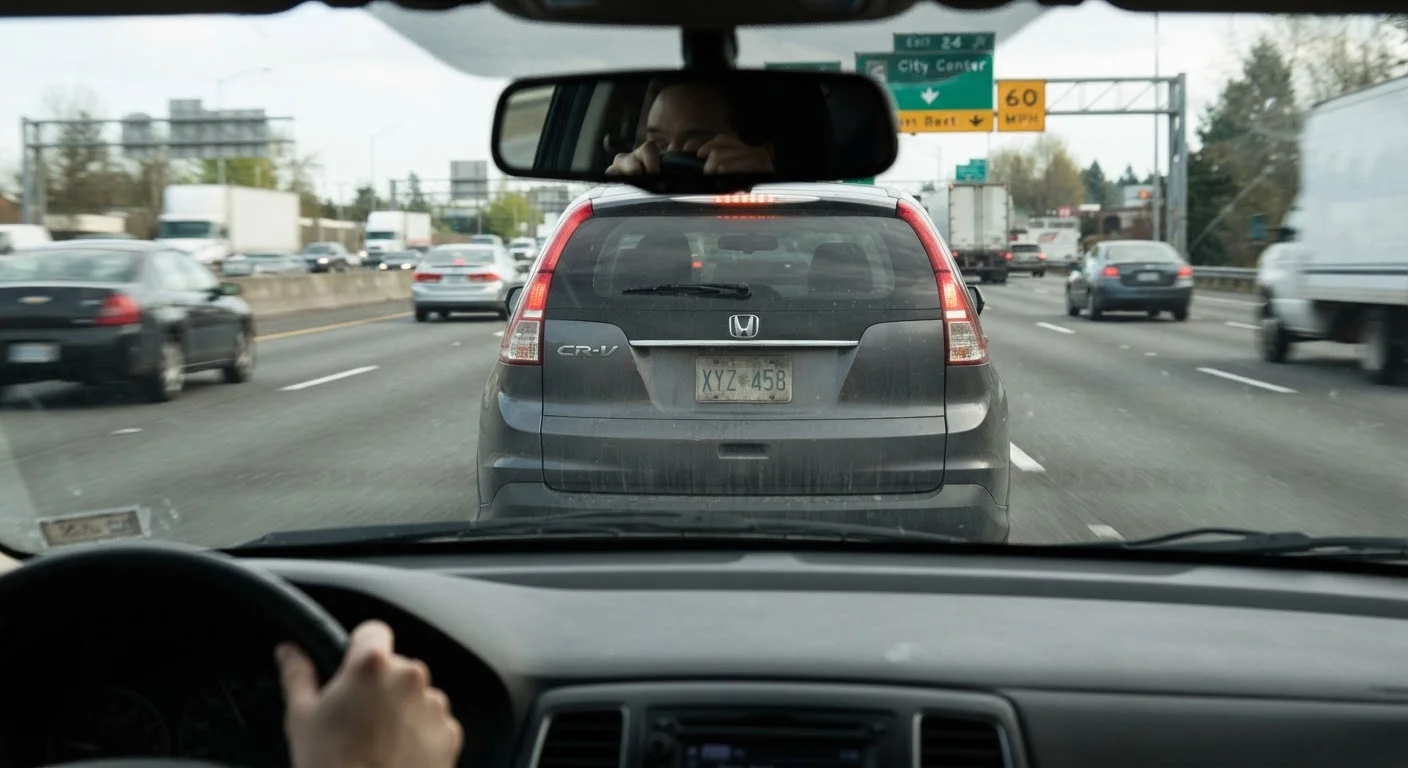
Photo: QuickAdvisor.net editorial
Key Takeaways
- Rear-end collisions are among the most common crash types in the U.S., and following too closely is a primary contributing factor.
- At highway speeds, a car can travel over 100 feet before a driver even begins to brake - reaction time alone causes that gap.
- The 3-second rule is a reliable, speed-independent method for maintaining a safe following distance.
- Adverse conditions like rain, fog, or heavy traffic require even greater spacing - at least 4 to 6 seconds.
- Tailgating behind large trucks is especially dangerous due to their longer stopping distances and large blind zones.
The Physics That Make Close Following So Hazardous
When a driver follows too closely, they're betting that nothing unexpected will happen in the next one or two seconds. That's a bet physics rarely lets them win. Stopping a vehicle involves two distinct phases: reaction distance - the road covered while your brain processes a threat and your foot moves to the brake - and braking distance - the space required for the vehicle to actually halt once the brakes are applied.
At 60 mph, the average driver traveling at that speed covers roughly 88 feet per second. With a typical human reaction time of around 1.5 seconds, a car travels approximately 132 feet before braking even begins. Add the braking distance on dry pavement - often another 120-140 feet - and total stopping distance can exceed 250 feet. A driver following just two car lengths behind has surrendered most of that buffer before their foot leaves the accelerator.
Stopping distance doesn't scale linearly with speed - it scales exponentially. A vehicle going 60 mph requires approximately four times the stopping distance of one going 30 mph. This is why high-speed tailgating is so disproportionately dangerous, and why the gap between legal speed and genuinely safe speed matters so much in practice.
~29%
Share of all U.S. crashes that are rear-end collisions
According to NHTSA data, rear-end crashes are consistently one of the most common crash types on American roads, and following too closely is a leading contributing factor.
250+ ft
Typical stopping distance at 60 mph on dry pavement
This total - combining reaction distance and braking distance - illustrates why a one- or two-car-length gap is dangerously insufficient at highway speeds.
4×
Stopping distance increase when speed doubles
Stopping distance scales with the square of speed, meaning going from 30 to 60 mph roughly quadruples the road needed to stop safely.
Why the 3-Second Rule Works - and When to Extend It
The 3-second rule is the most widely recommended tool for maintaining safe following distance, and its strength lies in its simplicity: it adjusts automatically to your speed. As you drive faster, you naturally need more physical space, and counting three seconds from a fixed reference point ensures that space scales accordingly.
To apply it: watch for the vehicle ahead to pass a stationary road feature - a sign, overpass, or painted marking - then count to three. If you pass the same feature before reaching three, ease off the accelerator.
Under normal conditions, three seconds is a reasonable floor. But several factors demand more:
- Rain or wet pavement: Braking distance increases significantly on slick surfaces. Extend your following time to at least 4-5 seconds.
- Fog or low visibility: You need extra time to perceive obstacles at all. Six or more seconds may be appropriate.
- Heavy loads or towing: Extra vehicle weight extends stopping distance considerably.
- Older vehicles or worn brakes: Braking performance degrades with age and use. If your vehicle's brakes aren't well-maintained, your actual stopping distance will be longer than you might expect.
Adverse conditions compound quickly. Driving in rain at highway speeds while following closely combines multiple risk factors - an approach worth avoiding. The elevated risks of night driving similarly call for greater spacing between vehicles.
Use a Fixed Marker, Not Your Own Judgment
Special Situations: Highways, Trucks, and Congestion
Highway driving amplifies the consequences of following too closely. At 70 mph, even a minor distraction or brief hesitation can turn inadequate spacing into a catastrophic rear-end crash within a fraction of a second. Common highway habits that increase crash risk - including tailgating - often feel ordinary right up until something goes wrong.
Following large commercial trucks deserves particular caution. Trucks have braking distances substantially longer than passenger vehicles - a fully loaded 18-wheeler traveling at 65 mph may require up to 525 feet to stop under ideal conditions. Drivers who follow trucks closely also position themselves inside the truck's rear blind zone, meaning the truck driver has no visibility of them. If the truck brakes hard, the car behind has almost no warning time and may slide under the trailer - a type of crash known as an underride collision, which is frequently fatal.
Congested urban traffic presents a different challenge. Stop-and-go conditions tempt drivers to close gaps to avoid being cut off, but this reduces the buffer available if the car ahead stops abruptly. Maintaining a consistent 2-3 second gap even in slow traffic gives you maneuvering room and reduces the chain-reaction risk common in multi-vehicle pileups.
Distracted driving makes all of these scenarios worse. A driver whose attention drifts - even momentarily - while following closely has effectively eliminated their reaction time altogether. Understanding the full scope of driver distraction helps put tailgating risk in its proper context.
What to Do If You're Involved in a Rear-End Collision
Even drivers who follow the 3-second rule can find themselves struck from behind or, in rare circumstances, in situations they couldn't anticipate. Knowing how to respond matters. Move vehicles out of active traffic lanes if it's safe to do so, check for injuries, and contact emergency services promptly. Document the scene thoroughly - photos, witness information, and a police report form the basis for any insurance claim or legal process.
Our step-by-step guide to what to do after a crash covers the immediate priorities in more detail. The moments after a collision are disorienting, and having a mental framework in advance helps drivers respond clearly rather than reactively.
Ultimately, maintaining a proper following distance is one of the simplest and most effective things any driver can do to reduce crash risk. It costs nothing, requires no special equipment, and only demands a small, consistent habit: count to three before you pass the marker.
Frequently Asked Questions
The content on this site is for informational purposes only and is not a substitute for professional advice. Always consult a qualified professional for guidance specific to your situation.