
Why Distracted Driving Isn't Just About Phones

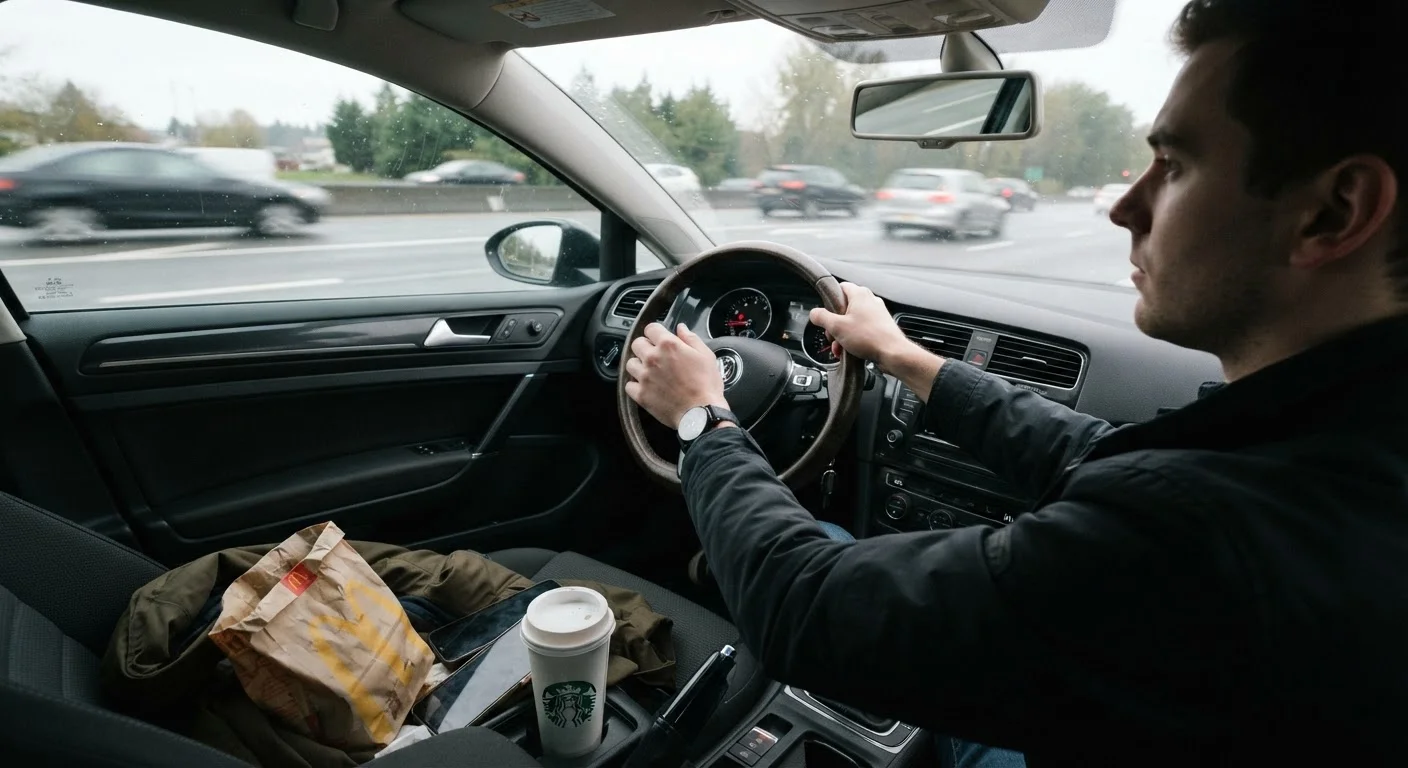
Photo: QuickAdvisor.net editorial
Key Takeaways
- Distracted driving includes visual, manual, and cognitive distractions - not just phone use.
- Eating, grooming, daydreaming, and passengers are among the most common non-phone distractions.
- Modern infotainment systems can create significant cognitive distraction even with hands-free operation.
- At 55 mph, looking away for just 5 seconds covers the length of a football field.
- Awareness of the full distraction spectrum is the first step toward consistently safer driving.
The Distraction Problem Is Broader Than Headlines Suggest
Phone use behind the wheel rightly receives serious public attention, but framing distraction as a phone-only problem leaves drivers blind to a wide range of equally hazardous behaviors. The NHTSA consistently reports thousands of annual fatalities attributed to distracted driving, and phones account for only a portion of those incidents.
The fuller picture includes eating, personal grooming, adjusting climate or audio controls, interacting with passengers, and the most invisible distraction of all - a wandering mind. Understanding each category is essential for any driver who wants an honest assessment of their own habits on the road.
See also: highway driving habits that quietly increase crash risk - patterns that compound when attention wavers.
Manual and Visual Distractions You May Not Recognize
Manual distractions remove one or both hands from the wheel. Eating is among the most normalized of these - a drive-through meal feels routine, but unwrapping food, managing a cup, or reacting to a spill all create real moments of reduced vehicle control.
Grooming - applying makeup, adjusting hair, or checking appearance in the mirror - is another frequent offender, particularly during commutes. Reaching into the back seat to retrieve items, or programming a navigation system after departure, also falls into this category.
Visual distractions take eyes off the road. Reading dashboard alerts, glancing at a GPS display, rubbernecking at a roadside incident, or looking at a billboard all qualify. Even a brief glance away matters: at 55 mph, 5 seconds of inattention covers approximately the length of a football field.
~3,300
Annual U.S. distracted driving fatalities
The NHTSA reports approximately 3,000-3,500 people are killed in distraction-related crashes each year in the United States.
5 seconds
Average eyes-off-road time when texting
According to NHTSA research, the average text message takes about 5 seconds to read or send - long enough to travel a football field's length at highway speed.
40+ seconds
Time some infotainment tasks take to complete
AAA Foundation for Traffic Safety research found that certain in-vehicle infotainment systems demand visual and manual attention for more than 40 seconds per task.
For drivers who want a fuller picture of reduced-visibility risk, nighttime driving statistics and risk factors illustrate how compounding hazards work.
The Invisible Threat: Cognitive Distraction
Cognitive distraction is the least visible and arguably the most underestimated. It occurs when the mind disengages from driving even while the eyes remain nominally on the road - a phenomenon researchers call "inattention blindness."
A mentally preoccupied driver can look directly at a stop sign, a pedestrian, or a merging vehicle and fail to consciously register it. Common triggers include emotionally charged phone conversations, stress about a destination or deadline, and passive daydreaming on familiar routes.
“Drivers can be looking directly at something and not see it when their mind is somewhere else. Cognitive distraction causes a kind of tunnel vision that leaves drivers dangerously unaware of hazards right in front of them.”
— David Strayer, Cognitive psychologist and distracted driving researcher, University of Utah
Passengers can also create cognitive load. High-emotion conversations - arguments, serious discussions - are particularly distracting in ways a solo driver scrolling briefly through a playlist may not be. Drivers should recognize that a routed, familiar commute does not make cognitive distraction less dangerous; it may actually encourage it by reducing active engagement.
This connects closely to how blind spots interact with reduced attention - two compounding risks that share a common remedy: deliberate awareness.
Modern Vehicles and the Infotainment Paradox
Today's vehicles are engineered with advanced safety features, yet many include touchscreen-based infotainment systems that introduce substantial distraction. Research from the AAA Foundation for Traffic Safety found that certain in-vehicle systems require drivers to divert visual and manual attention for extended periods - in some cases exceeding 40 seconds to complete a single task.
Voice-activated controls seem like a solution, but they generate cognitive distraction even when eyes stay forward and hands stay on the wheel. The mental effort of formulating commands, waiting for system responses, and correcting errors keeps the brain partially occupied with the technology rather than the road.
A practical approach: configure navigation, audio, and climate settings before the vehicle is in motion. Pull over safely if a task genuinely requires more than a glance. Treat infotainment interaction like any other distraction - minimized, not assumed to be safe because it feels "built in."
Equally worth understanding is how following distance is affected when attention is divided - reaction time deficits from distraction and tailgating are a dangerous combination.
Applying This Awareness Practically
Recognizing the full spectrum of distraction is the foundation of defensive driving. A few durable habits make a measurable difference. Stow or silence devices before moving, not just phones - any item likely to demand attention mid-trip. Eat before or after the drive rather than during. Set up navigation while parked.
On longer trips, schedule deliberate rest stops rather than managing fatigue at the wheel. If a conversation with a passenger becomes emotionally demanding, it is reasonable - and responsible - to ask to continue it after arriving. For deeper dashboard and system awareness, understanding dashboard warning lights is a useful companion reference for staying engaged with vehicle feedback without becoming distracted by uncertainty.
Distraction behind the wheel is not a character flaw - it is a predictable human response to cognitive demands. Building habits that reduce those demands in advance is what separates reactive driving from genuinely safer driving.
This article is for general informational and educational purposes only. Driving safety guidance does not substitute for formal driver training or applicable traffic laws in your jurisdiction.
Frequently Asked Questions
The content on this site is for informational purposes only and is not a substitute for professional advice. Always consult a qualified professional for guidance specific to your situation.