
The Difference Between Skidding and Hydroplaning - and How to Respond to Each

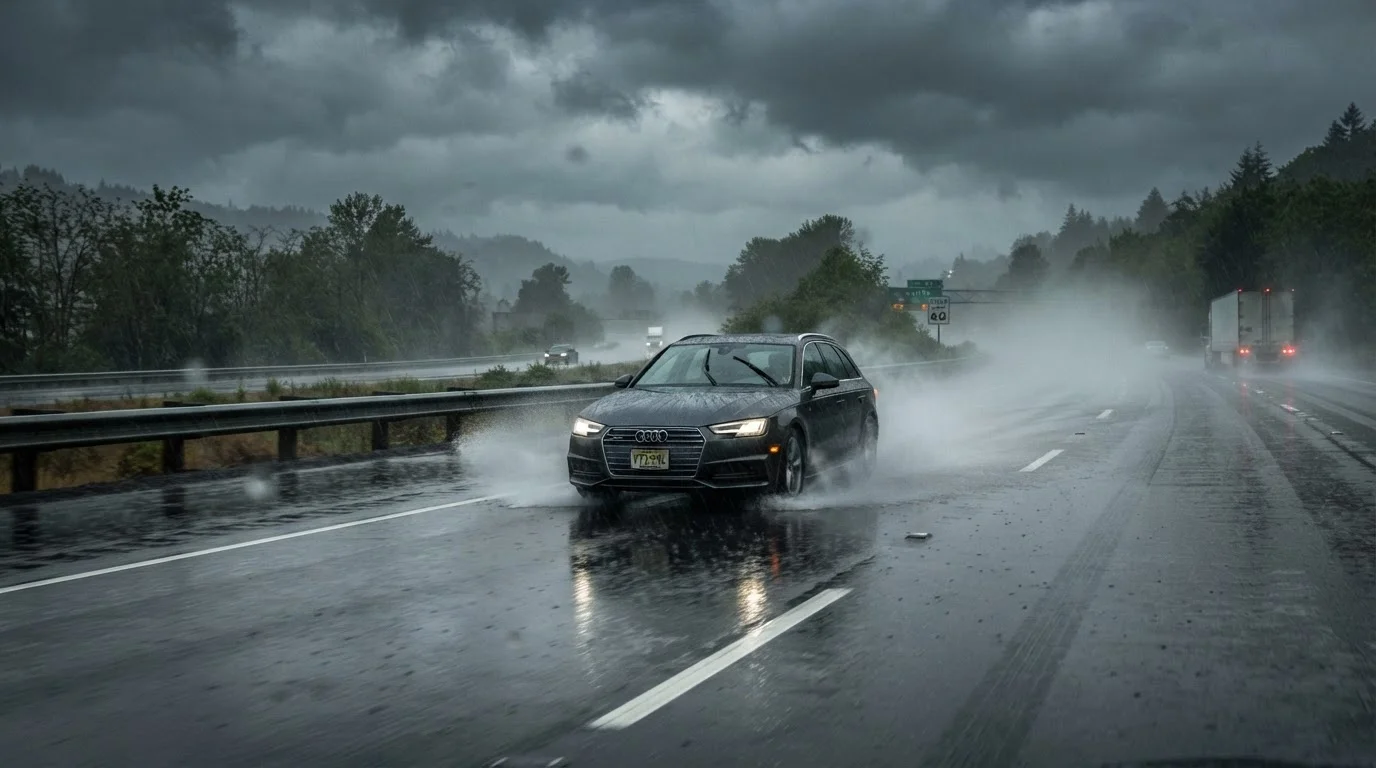
Photo: QuickAdvisor.net editorial
Key Takeaways
- Skidding is a traction failure caused by driver input or road conditions; hydroplaning is caused by water overwhelming tire drainage.
- Hydroplaning can occur at speeds as low as 35 mph on standing water with worn tires.
- Steering into a skid restores control; during hydroplaning, gentle inputs and gradual deceleration are key.
- Proper tire tread depth and inflation are the most effective defenses against both hazards.
- Abrupt braking or sharp steering during either event typically worsens the situation.
What Skidding Actually Is
A skid occurs when one or more of your tires lose traction with the road surface. This can happen in several ways: locking up the wheels under hard braking, spinning the drive wheels with too much throttle, or pushing the front tires past their grip limit in a corner. The common thread is a mismatch between what the tires are being asked to do and what the surface allows.
Skidding can happen on dry pavement if the driver input is aggressive enough, but it's far more common on wet, icy, or loose surfaces. Modern vehicles equipped with anti-lock braking systems (ABS) and electronic stability control (ESC) are designed to reduce skid risk by automatically modulating brake pressure and engine torque - but they have limits, and they don't replace good driving habits.
How to respond: For a rear-wheel skid (fishtail), steer gently in the direction the rear is sliding to realign the car. For a front-wheel skid (understeer, or pushing straight), ease off the throttle and avoid adding more steering input - let the tires regain grip first. Never jerk the wheel or stamp the brakes, as that tends to deepen the skid. See how different weather conditions affect control for broader wet-road guidance.
What Hydroplaning Actually Is
Hydroplaning - sometimes called aquaplaning - is a fundamentally different event. It occurs when water on the road surface builds up in front of a tire faster than the tire's tread can channel it away. The result: the tire rides up on a thin wedge of water and loses direct contact with the pavement entirely. Without that contact, steering, braking, and acceleration inputs become nearly useless.
Speed plays a major role. Studies from tire and road safety organizations suggest hydroplaning can begin at around 35 mph on standing water, depending on tire condition and water depth, and the risk increases significantly at highway speeds. Tire tread depth is equally critical - worn tires have shallower grooves and dramatically reduced ability to evacuate water. Keeping tires at proper tread depth and inflation is one of the most effective preventive steps a driver can take.
How to respond: Don't panic-brake - that can trigger a skid on top of the hydroplane. Instead, ease smoothly off the accelerator, hold the steering wheel firmly and straight, and allow the vehicle to decelerate naturally until the tires reconnect. You'll feel steering responsiveness return. Only then should you apply gentle braking if needed.
| Criterion | Skidding | Hydroplaning |
|---|---|---|
| Primary cause | Traction loss from input or surface | Water film lifts tire off road |
| Road conditions required | Any slippery or dry surface | Standing or flowing water only |
| Speed threshold | Any speed | Typically 35 mph or higher |
| Driver sensation | Rear slides or front pushes wide | Steering goes light, car feels floaty |
| Correct steering response | Steer into the skid direction | Hold straight, minimal input |
| Correct braking response | Ease off brakes if locked up | Avoid hard braking until reconnected |
| Key prevention factor | Smooth inputs, appropriate speed | Tread depth, speed reduction in rain |
Key Differences and How to Tell Them Apart
In the moment, skidding and hydroplaning can feel similar - both involve reduced steering response and a sense of the car moving independently of your inputs. The distinction often comes down to context and sensation.
Skidding typically involves a clear physical trigger you can identify: a too-sharp turn, hard braking on ice, or wheel spin on acceleration. You may feel the rear of the car rotating, or the front pushing wide. Hydroplaning, by contrast, tends to feel like the car has gone suddenly light or floaty - particularly at speed on a rain-soaked road. Steering may feel eerily easy, almost as if there's no resistance.
Road conditions matter too. Hydroplaning requires standing water - it's specifically a wet-road phenomenon. Skidding can happen anywhere grip is compromised, including packed snow, ice, gravel, or even dry pavement during aggressive driving. Understanding how different vehicles handle these conditions can also improve your situational awareness on shared roads.
ABS and ESC Don't Eliminate These Risks
Prevention: The Common Ground
Despite their differences, skidding and hydroplaning share a core set of preventive measures. Speed management is the most important lever - slowing down increases the time tires have to maintain or regain contact with the road. The National Highway Traffic Safety Administration (NHTSA) consistently identifies excessive speed for conditions as a leading factor in wet-road crashes.
Tire condition is equally foundational. Tread grooves are specifically engineered to channel water away from the contact patch; as tread wears down, that capacity diminishes. Most experts recommend replacing tires before tread depth reaches 2/32 of an inch - many suggest acting sooner, around 4/32 of an inch, for wet-weather performance. Proper inflation also keeps the tire's contact patch correctly shaped and sized.
Smooth, deliberate inputs - on the brake, throttle, and steering - reduce the likelihood of overwhelming tire grip in any condition. Anticipate rather than react: scan further ahead, increase following distances in wet weather, and avoid sudden maneuvers. These habits create the margin that prevents both skidding and hydroplaning before they begin.
~35 mph
Speed at which hydroplaning can begin
Tire and road safety research indicates hydroplaning can start at approximately 35 mph on standing water, with risk rising sharply at higher speeds.
4/32"
Tread depth threshold for wet-weather risk
Many tire safety experts recommend replacing tires at or before 4/32-inch tread depth to maintain adequate wet-road grip and water evacuation performance.
The content on this site is for informational purposes only and is not a substitute for professional advice. Always consult a qualified professional for guidance specific to your situation.