
Tire Pressure, Tread, and Rotation: Keeping Your Tires Road-Ready

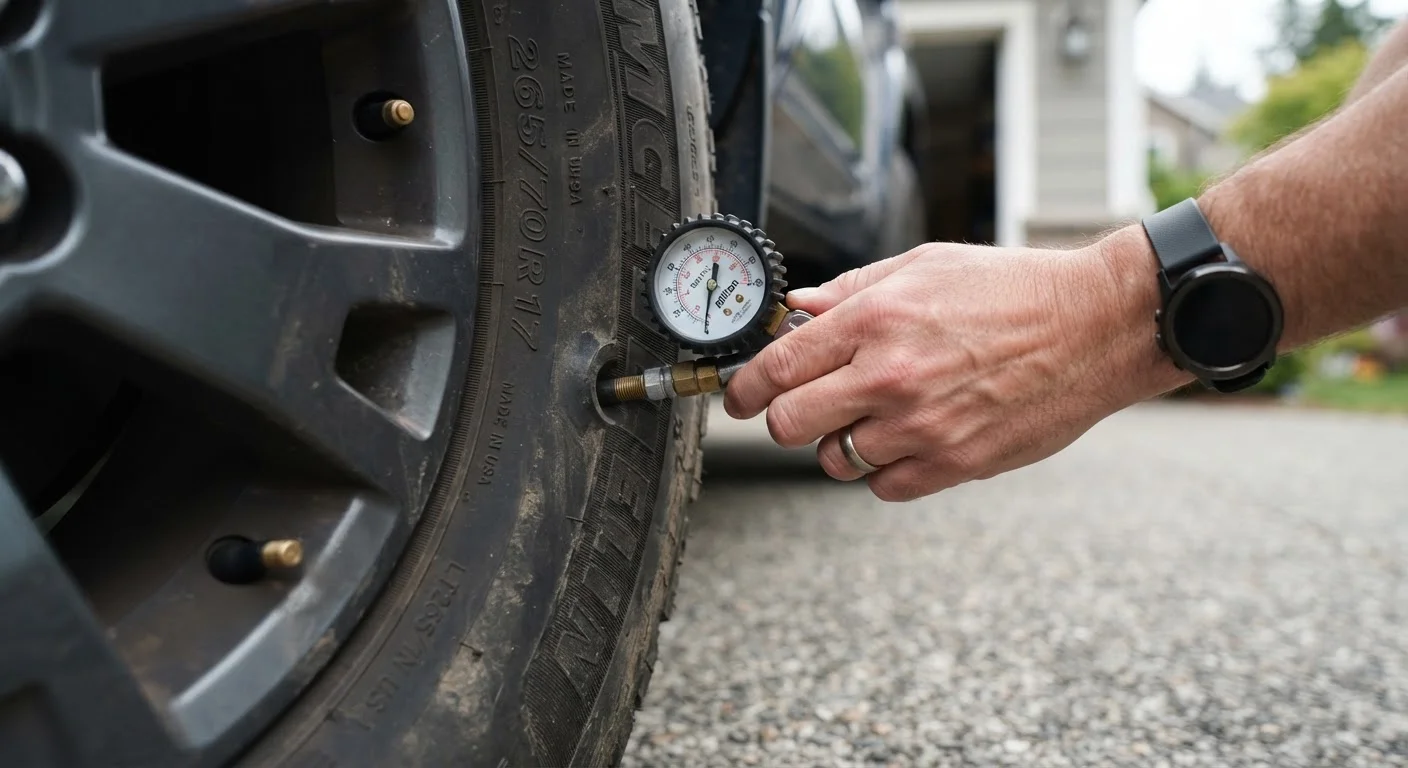
Photo: QuickAdvisor.net editorial
Key Takeaways
- Tire pressure should be checked monthly and always when tires are cold for an accurate reading.
- The correct PSI is found on your door jamb sticker, not on the tire sidewall itself.
- Tread depth below 2/32 of an inch is legally and safely insufficient - replace tires at that point.
- Rotating tires every 5,000-7,500 miles helps ensure even wear and extends tire lifespan.
- Uneven tread wear patterns can signal alignment or suspension problems worth investigating.
- Consistent tire maintenance directly reduces blowout risk and improves braking performance.
What You'll Need Before You Start
Tire maintenance is one of the most accessible forms of routine car care - no specialized training required. Before getting started, gather the right tools and know where to find your vehicle's specifications. Your recommended tire pressure is printed on a sticker inside the driver's door jamb (not on the tire sidewall, which shows the tire's maximum rated pressure, not your car's target). For more on using your vehicle's documentation effectively, see how to get the most from your owner's manual.
What you will need
Tire Pressure Gauge
Measures the air pressure inside each tire so you can compare it to your vehicle's recommended PSI.
Air Compressor or Air Pump
Adds air to underinflated tires; available at most gas stations if you don't own one.
Tread Depth Gauge
Provides a precise measurement of remaining tread depth in 32nds of an inch.
Penny (for tread test)
Used as a quick field check to determine whether tread depth has fallen to 2/32" or below.
How to Check and Adjust Tire Pressure
Tire pressure should be checked at least once a month and before any long trip. Pressure readings are most accurate when tires are cold - meaning the vehicle hasn't been driven for at least three hours or has traveled fewer than a mile at low speed. Heat from driving temporarily increases pressure by several PSI, which can lead to a false reading. To understand exactly how inflation levels affect your vehicle's handling and blowout risk, read how tire pressure affects handling, braking, and blowout risk.
Locate your vehicle's recommended PSI
Find the tire pressure sticker on the inside edge of the driver's door jamb. It lists the correct PSI (pounds per square inch) for front and rear tires - these numbers may differ. Write them down or take a photo for reference before you start.
Remove the valve cap and attach the gauge
Unscrew the small valve cap from the tire's valve stem and set it somewhere safe. Press the tire pressure gauge firmly and squarely onto the valve stem. A good seal prevents air from escaping - you should hear only a minimal hiss, if any.
Read the pressure and compare to spec
Note the PSI reading on your gauge. Compare it to the recommended figure from your door jamb sticker. A reading within 1-2 PSI of the target is generally acceptable; anything more than that warrants adjustment.
Add or release air as needed
If pressure is low, use an air compressor to add air in short bursts, rechecking after each. If pressure is too high, press the small pin inside the valve stem with a thin tool (or the back of some gauges) to release air in controlled increments, checking frequently.
Replace the valve cap and repeat for all four tires
Screw the valve cap back on finger-tight after adjusting each tire. Work through all four tires systematically. If your vehicle has a spare in the trunk or beneath the vehicle, check its pressure as well - an underinflated spare is useless in an emergency.
Reading Tread Wear - and What Patterns Tell You
Tread depth is measured in 32nds of an inch. New tires typically start at 10/32" to 11/32". The legal minimum in most U.S. states is 2/32", and many safety organizations recommend replacing tires at 4/32" for adequate wet-weather performance.
The quickest field test is the penny test: insert a penny into the tread groove with Lincoln's head pointing down. If you can see the top of Lincoln's head, the tread is at or below 2/32" - replacement is overdue. For a more precise reading, an inexpensive tread depth gauge gives you an exact measurement.
Where wear appears matters as much as how much. Center wear points to chronic overinflation; edge wear on both shoulders suggests underinflation. One-sided wear typically indicates a wheel alignment problem, while cupping or scalloping often signals worn shocks or struts. Unusual wear patterns are worth having a qualified mechanic evaluate - they frequently point to suspension or alignment issues that go beyond the tires themselves.
Check All Four Tires - Including the Spare
Tire Rotation: Why It Matters and When to Do It
Tires wear unevenly by design. Front tires on front-wheel-drive vehicles handle both steering and power delivery, causing them to wear faster than rears. Rotation redistributes that burden so all four tires wear at a comparable rate, extending the usable life of the full set.
Most vehicle manufacturers and tire industry guidance recommend rotating tires every 5,000 to 7,500 miles, though your owner's manual may specify a different interval. Many drivers conveniently schedule rotation with every oil change. The rotation pattern - front-to-rear, cross-rotation, or X-pattern - depends on whether your vehicle has directional or non-directional tires and whether the tires are the same size front and rear. A tire shop can advise on the correct pattern for your setup.
Neglecting rotation doesn't just shorten tire life - it can mask uneven wear that signals alignment drift. Staying current with tire rotation fits naturally into the broader maintenance rhythm described in your car's maintenance schedule. If you're preparing for a long drive, tire rotation is also a core item in a pre-trip vehicle safety walkthrough.
Temperature swings - particularly the drop from fall into winter - cause pressure to fall roughly 1 PSI for every 10°F decrease in ambient temperature. For that reason, seasonal transitions are a natural checkpoint for tire inspection. Seasonal car care guidance covers what else to check when the weather shifts.
Don't Ignore TPMS Warning Lights
The content on this site is for informational purposes only and is not a substitute for professional advice. Always consult a qualified professional for guidance specific to your situation.