
Sautéing, Pan-Frying, and Stir-Frying Are Not the Same Thing

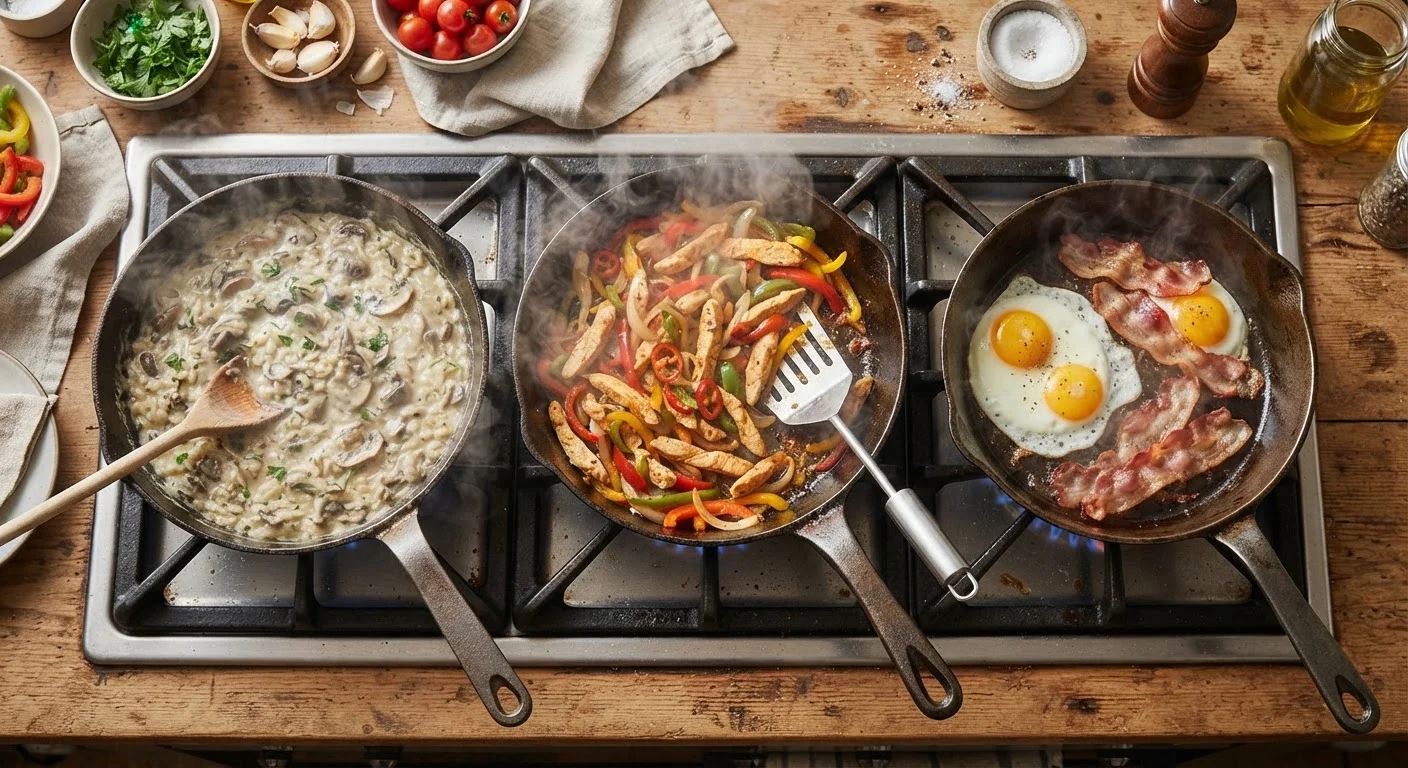
Photo: QuickAdvisor.net editorial
Key Takeaways
- Sautéing uses high heat, minimal fat, and frequent movement to cook small, tender pieces quickly.
- Pan-frying uses moderate heat and more fat to cook larger, often breaded or coated items until golden.
- Stir-frying uses very high heat, constant agitation, and minimal fat to cook small pieces extremely fast.
- The wrong technique for a given ingredient can mean uneven cooking, wrong texture, or lost flavor.
- Pan choice matters: stir-frying demands a wok or large skillet; sautéing suits a wide, shallow pan.
Why the Distinction Actually Matters
Most home cooks treat these three methods as interchangeable - different words for "cooking stuff in a hot pan with some oil." But each technique produces a genuinely different result, and using the wrong one for a given ingredient is one of the most common reasons food turns out soggy, overcooked, or flat. Before you read a recipe like a cook, it helps to understand what the method itself is actually doing to your food.
The differences come down to three variables: heat level, fat quantity, and movement. Understanding how each technique handles those variables tells you everything about when and why to use it.
Sautéing: High Heat, Quick Movement, Small Pieces
The word sauté comes from the French verb meaning "to jump," and that's an accurate description of the technique. Sautéing uses relatively high heat with a small amount of fat - just enough to coat the pan - and relies on frequent tossing or stirring to cook food evenly and quickly.
It works best with food that is already cut small or thin: sliced mushrooms, diced onions, shrimp, strips of chicken breast, or tender vegetables. Because the pieces are small and the heat is high, the goal is rapid cooking with some browning - not a deep crust, but a light golden color and good flavor development through the Maillard reaction (the browning that happens when proteins and sugars are exposed to heat).
The key failure mode in sautéing is overcrowding the pan. Too much food at once drops the pan temperature, causing ingredients to steam in their own moisture rather than brown. Work in batches when necessary.
Dry Your Ingredients Before Cooking
Pan-Frying: Moderate Heat, More Fat, Less Movement
Pan-frying is a slower, more deliberate technique. It uses noticeably more fat than sautéing - not enough to submerge the food (that's deep-frying), but enough to come partway up the side of whatever you're cooking. The heat is moderate rather than high, and crucially, you leave the food alone while it cooks.
This method suits larger, denser, or breaded items: bone-in chicken pieces, thick fish fillets, pork chops, or breaded cutlets. The goal is a deeply golden, crispy exterior with a thoroughly cooked interior - and that requires time and steady contact with the fat. Constant flipping or stirring would break a coating and prevent even crust formation.
Because the fat plays a structural role in the result, the type of fat matters. Oils with high smoke points - such as canola, vegetable, or refined avocado oil - are generally a better fit than butter alone for pan-frying at the temperatures required. Understanding what fat actually does during cooking helps clarify why this choice isn't just about flavor.
Stir-Frying: Extreme Heat, Constant Motion, Minimal Fat
Stir-frying is the most demanding of the three techniques - not in complexity, but in speed and heat. Developed in Chinese culinary tradition and now widely used across East and Southeast Asian cuisines, stir-frying depends on very high heat and near-constant motion to cook small, uniformly cut pieces of food in just a few minutes.
The target is a wok or large skillet brought to the highest heat your burner can deliver. A small amount of oil goes in, followed by aromatics (garlic, ginger), then protein, then vegetables, often added in stages based on how long each takes to cook. The food is kept moving almost continuously.
The distinctive slightly charred, smoky quality in restaurant stir-fries - sometimes called wok hei, meaning "breath of the wok" - comes from extremely high heat that a standard home burner struggles to replicate. While home cooks can approximate it by ensuring the pan is very hot and the pan isn't overcrowded, it's worth understanding that the gap between home and restaurant stir-fry results is often simply one of BTU output, not technique. As with sautéing, stir-frying's speed and minimal fat preserve more nutrients than longer, higher-liquid methods.
| Sautéing | Pan-Frying | Stir-Frying | |
|---|---|---|---|
| Heat Level | High | Moderate | Very high |
| Fat Quantity | Minimal (thin coating) | Moderate (partially submerged) | Minimal (thin coating) |
| Movement | Frequent tossing or stirring | Minimal - let it sit | Near-constant motion |
| Best Food Size | Small or thin pieces | Large, thick, or breaded | Uniformly small pieces |
| Cooking Time | 2-8 minutes | 8-20 minutes | 2-5 minutes |
| Ideal Result | Lightly browned, tender | Deep golden crust, cooked through | Slightly charred, crisp-tender |
| Best Pan | Wide skillet or sauté pan | Heavy skillet or cast iron | Wok or large skillet |
Choosing the Right Technique Every Time
The simplest decision framework: look at what you're cooking and what you want it to become. Thin, tender, already-small? Sauté. Thick, dense, wanting a crust with full cooking through? Pan-fry. Cut uniformly small, mixed with other ingredients, wanted fast and slightly charred? Stir-fry.
Equipment matters too. A wide, shallow sauté pan or skillet suits all three in a pinch, but a wok's sloped sides and concentrated heat zone genuinely improve stir-fry results. Pan-frying benefits from a heavy skillet - cast iron or stainless - that retains heat when cold food is added. Some widely repeated kitchen rules about heat and oil are worth revisiting once you understand how these three methods actually work. Matching technique to ingredient is one of the clearest levers a home cook has for consistently better results.
The content on this site is for informational purposes only and is not a substitute for professional advice. Always consult a qualified professional for guidance specific to your situation.