
The Rise and Meaning of Fusion Cuisine in America

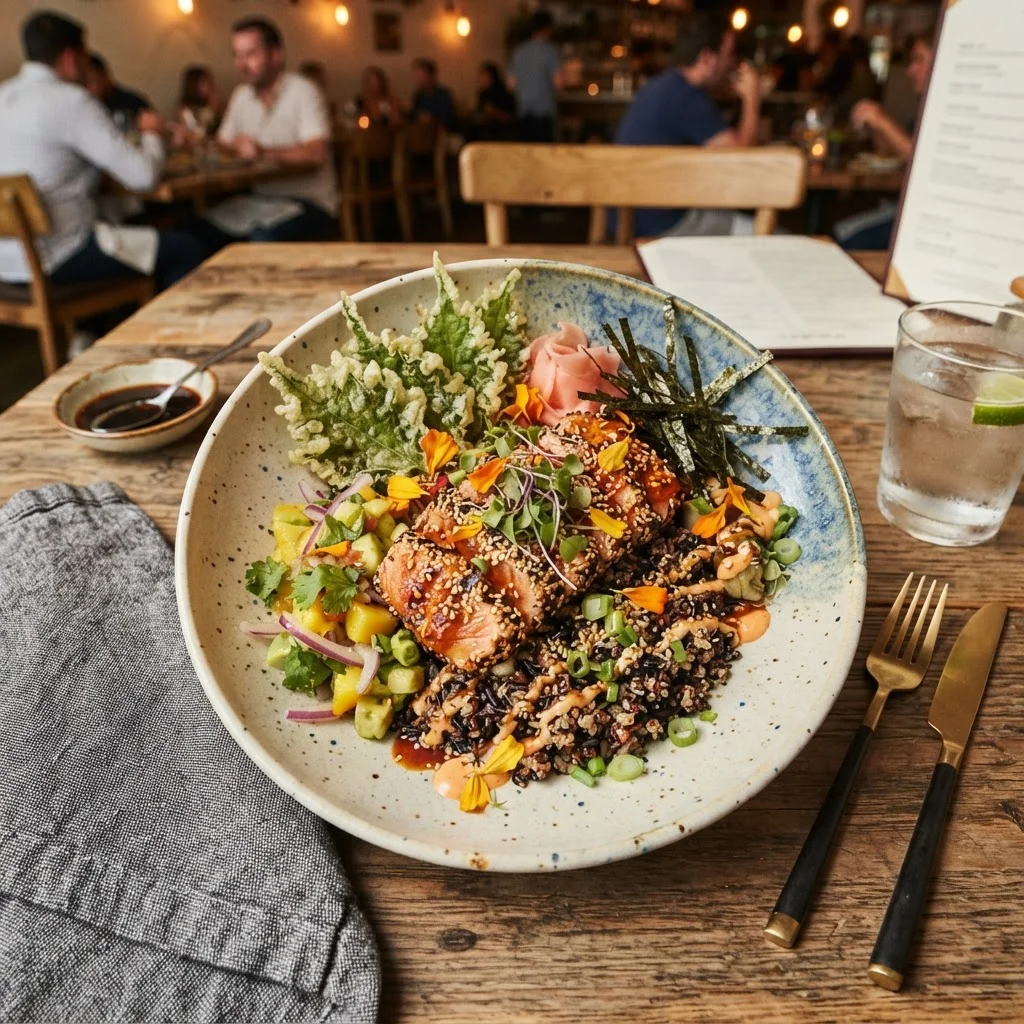
Photo: QuickAdvisor.net editorial
Key Takeaways
- Fusion cuisine has deep historical roots in immigration and cultural adaptation, not just modern restaurant trends.
- The term 'fusion' was popularized in the 1970s-80s as chefs began explicitly crossing culinary boundaries.
- Fusion can reflect genuine cultural exchange, but it also raises legitimate questions about power and attribution.
- Who is doing the fusing - and who profits - matters significantly to affected communities.
- Some of America's most beloved everyday foods are themselves products of culinary fusion.
A History That Predates the Trend
Long before restaurant menus advertised "fusion" as a selling point, immigrants were doing what people have always done when they move: they cooked what they knew using what they could find. The result was perpetual, quiet blending. As explored in Immigration and the American Plate, each successive wave of newcomers reshaped the national diet - not through grand culinary statements, but through daily kitchen necessity.
Italian immigrants swapped San Marzano tomatoes for whatever was available. Chinese railroad workers adapted their cooking to American pantries. Jewish delis in New York fused Eastern European tradition with local ingredients. None of this was called fusion. It was survival, adaptation, and eventually, identity.
The word "fusion" arrived as a marketing concept in the 1970s and 1980s, when formally trained chefs - many educated in classical French technique - began deliberately combining those traditions with Japanese, Thai, Vietnamese, and Latin American influences. Suddenly, blending wasn't just what immigrants did at home. It was a restaurant concept, a brand, and a culinary ideology.
The Cultural Conversation Fusion Starts
Fusion cuisine doesn't exist in a cultural vacuum. Every fusion dish carries a question embedded in its ingredients: Who is doing the combining, and whose traditions are being combined?
When a chef with access to capital, media, and elite dining rooms repackages flavors from a community that faces economic marginalization, critics note an uncomfortable asymmetry. The source culture may not be credited. Its own restaurants and cooks may be undervalued in the very market that celebrates their flavors in a different context. This dynamic is central to the broader conversation about food appropriation versus food exchange.
At the same time, dismissing all cross-cultural cooking as appropriation flattens the reality of how cuisine actually evolves. Food cultures have always traveled - through trade, conquest, migration, and curiosity. The question most food scholars now ask isn't whether blending should happen, but how it happens and whether the exchange is fair and transparent.
“Cuisines are not museum pieces. They are living systems that change as people move, trade, and share their tables. The question is never whether change should happen, but whether the exchange is honest.”
— Krishnendu Ray, Food Studies scholar, NYU Department of Nutrition and Food Studies
What Makes Fusion Work - and When It Falls Flat
Successful fusion cooking tends to share a few characteristics: deep knowledge of both source traditions, a clear culinary rationale for the combination, and respect for the integrity of the flavors involved. When a chef understands why certain techniques or ingredients work in their original contexts, they can find genuine points of connection rather than arbitrary mashups.
Fusion fails - culinarily and culturally - when it treats another tradition as a collection of interchangeable exotic ingredients to be deployed for novelty. This kind of surface-level borrowing produces dishes that feel disconnected and flavors that clash without purpose. It also tends to flatten complex food cultures into stereotypes, a dynamic examined in depth in the legacy of 'ethnic' restaurants in America.
44 million
Foreign-born residents in the U.S.
According to U.S. Census Bureau data, America's large immigrant population is a persistent driver of culinary diversity and informal food blending across the country.
~1 in 3
U.S. restaurant meals drawing on non-European cuisines
Industry analysts have consistently noted that American dining preferences have shifted substantially toward cuisines from Asia, Latin America, and the Middle East over recent decades.
Fusion cooking at its best is a form of dialogue. It acknowledges that dishes carry culture across borders and that combining them thoughtfully can create something genuinely new - while honoring what came before.
Fusion as a Mirror for American Identity
Perhaps no other culinary concept captures the contradictions of American food culture quite like fusion. It embodies the country's genuine diversity and its history of absorbing outside influences. It also reflects persistent inequities in who gets to define, profit from, and receive credit for that diversity.
Understanding fusion cuisine means understanding that food is never just food. A Korean barbecue taco or a miso-glazed cod isn't just a recipe - it's a statement about whose flavors are valued, whose labor is visible, and how cultures interact when they share a table. Soul food and Southern cuisine offer a parallel lesson in how shared ingredients can carry entirely different stories depending on who is doing the cooking and why, as explored in Soul Food and Southern Cuisine: Shared Roots, Different Stories.
Fusion will continue to evolve as America does. The more useful question for any diner, cook, or reader isn't whether to embrace it - but whether to engage with it thoughtfully, with curiosity about where those flavors came from and gratitude toward the communities that developed them.
Frequently Asked Questions
The content on this site is for informational purposes only and is not a substitute for professional advice. Always consult a qualified professional for guidance specific to your situation.