
The Regions That Define American Barbecue

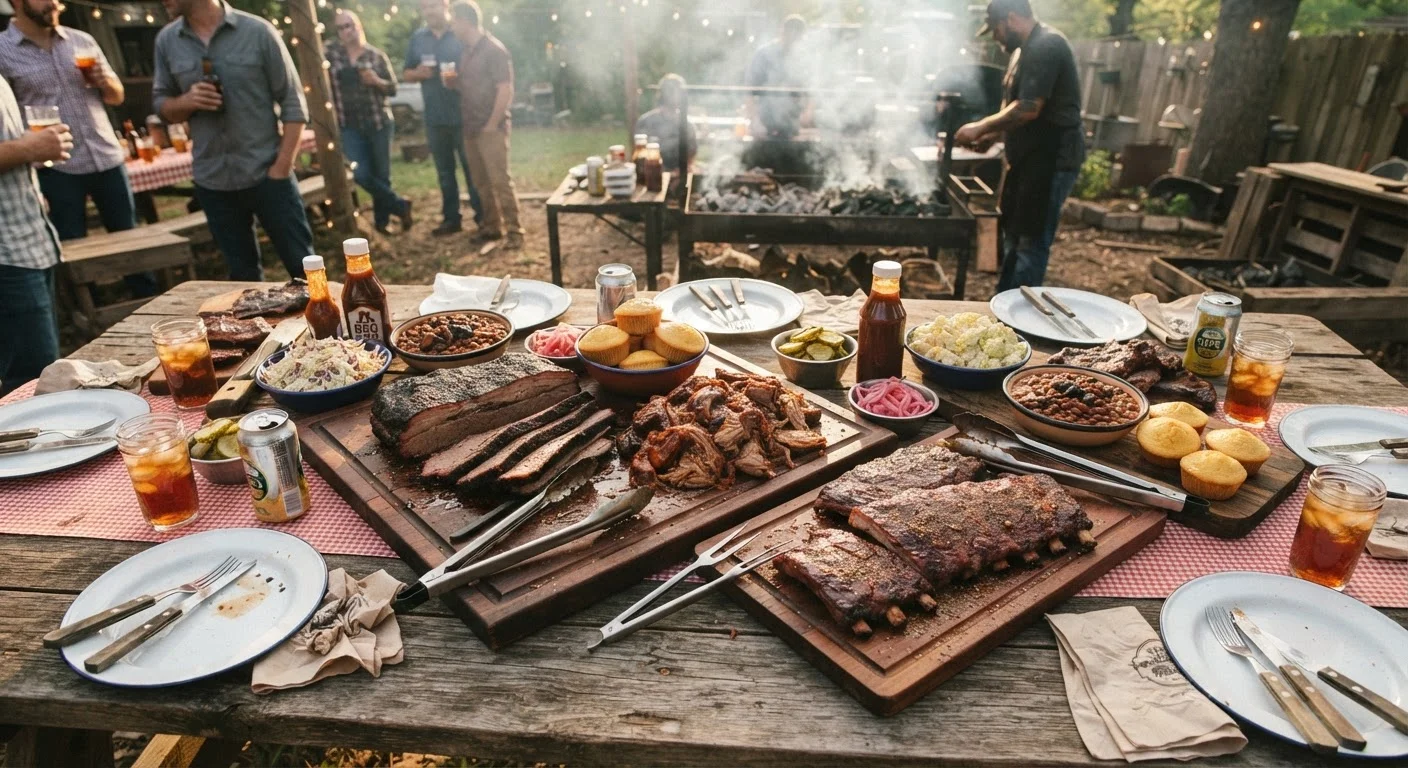
Photo: QuickAdvisor.net editorial
More Than Smoke and Meat
American barbecue is one of the few culinary traditions that can legitimately claim to be indigenous to the country - not imported wholesale but shaped over centuries by geography, climate, available livestock, and the labor and ingenuity of enslaved and working-class cooks. When people argue about barbecue, they're rarely just debating cooking techniques. They're defending a sense of place and identity that runs deep.
As food often becomes tied to national identity, regional barbecue styles carry that same symbolic weight at a more local scale - embedded in community pride, historical memory, and the unspoken rules of where you grew up.
| Oldest U.S. Barbecue Tradition | Eastern North Carolina whole-hog, vinegar-based (Food historians broadly attribute this as one of the earliest colonial-era American barbecue styles) |
| Texas Signature Meat | Beef brisket |
| Kansas City Distinctive Item | Burnt ends (charred brisket tips) |
| South Carolina Sauce Base | Mustard (German immigrant influence) |
| Common Texas Smoke Wood | Post oak |
| Memphis Barbecue Specialty | Dry-rubbed pork ribs |
The Four Major Regional Styles
Texas: Beef Above All
Central Texas barbecue centers on beef - specifically brisket - slow-smoked over post oak for 12 to 18 hours, typically seasoned with nothing more than salt and black pepper. The tradition traces back to German and Czech butchers who settled the Hill Country in the 19th century and smoked unsold meat cuts to preserve them. East Texas barbecue differs, favoring pork and a sweeter, tomato-based sauce, reflecting closer cultural ties to the Deep South.
The Carolinas: Pork and the Sauce Divide
Both North and South Carolina claim pork as their barbecue foundation, but they disagree sharply on sauce. Eastern North Carolina uses a thin vinegar-and-pepper sauce - one of the oldest barbecue preparations in the country - applied to whole-hog smoked pork. Western North Carolina (Lexington style) adds a splash of ketchup to the vinegar base. South Carolina stands apart with a mustard-based sauce - a legacy of German immigrants - concentrated in the state's Midlands region. The deep roots connecting Southern food traditions run directly through Carolina barbecue, where the techniques of enslaved pitmasters shaped the cuisine that became regional identity.
Kansas City: The Smoky, Saucy Middle Ground
Kansas City barbecue is defined by its inclusivity - virtually every meat is fair game, from ribs to burnt ends (the flavorful charred tips of smoked brisket, once considered scraps). The city's style reflects its history as a meatpacking hub. Thick, molasses-rich, tomato-based sauce applied at the end of cooking is the signature; the smoke is typically hickory.
Memphis: Dry Rubs and Wet Ribs
Memphis is pork rib country, and the city's contribution to barbecue culture is the dry rub - a blend of spices applied before and after cooking, with no sauce involved. Wet ribs also exist, finished with a tangy tomato sauce, but it's the dry preparation that defines the city's identity. Memphis barbecue places the seasoning craft squarely at the center of the craft.
Dry Rub
A blend of spices and seasonings applied directly to meat before cooking, without liquid sauce. The rub forms a flavorful crust during smoking and is a hallmark of Memphis-style barbecue.
Burnt Ends
The charred, caramelized tips cut from a smoked brisket point. Once considered scraps, they became a prized specialty of Kansas City barbecue, known for their intense smoky flavor.
Whole-Hog Barbecue
A traditional method - especially common in Eastern North Carolina - of slow-smoking an entire pig over wood coals, then chopping or pulling all the meat together. The technique requires considerable skill and time.
Pitmaster
A person who specializes in the art of barbecue smoking, managing fire, smoke, temperature, and timing to produce finished meat. The term carries significant cultural respect in barbecue communities.
Post Oak
A hardwood native to Central Texas, used as the primary smoking fuel in Central Texas barbecue. It burns cleanly and imparts a mild, savory smoke flavor well-suited to beef.
Why These Differences Persist
Regional barbecue distinctions aren't accidents of taste - they're the accumulated results of who settled where, which animals thrived in which climates, what wood was locally available, and which communities developed and passed down the techniques. Pigs were practical livestock across the humid Southeast; cattle dominated the drier, more expansive Texas landscape. Wood species vary by region, and each - hickory, oak, pecan, mesquite - contributes a distinct flavor profile to the smoke.
These styles have also survived commercial pressure precisely because identity is attached to them. Just as immigrant foods carry cultural memory across borders, regional barbecue encodes a community's history in its preparation methods. Changing the sauce or the wood can feel, to locals, like rewriting that history.
Today, barbecue competes in the same marketplace of food culture as every other cuisine - subject to fusion, reinvention, and the flattening pressures of chain restaurants. But the regional pillars remain remarkably durable, sustained by competition circuits, family-owned pits, and a collective insistence that where barbecue comes from is inseparable from what it is.
The content on this site is for informational purposes only and is not a substitute for professional advice. Always consult a qualified professional for guidance specific to your situation.