
What It Actually Means for a Food to Be 'Authentic'

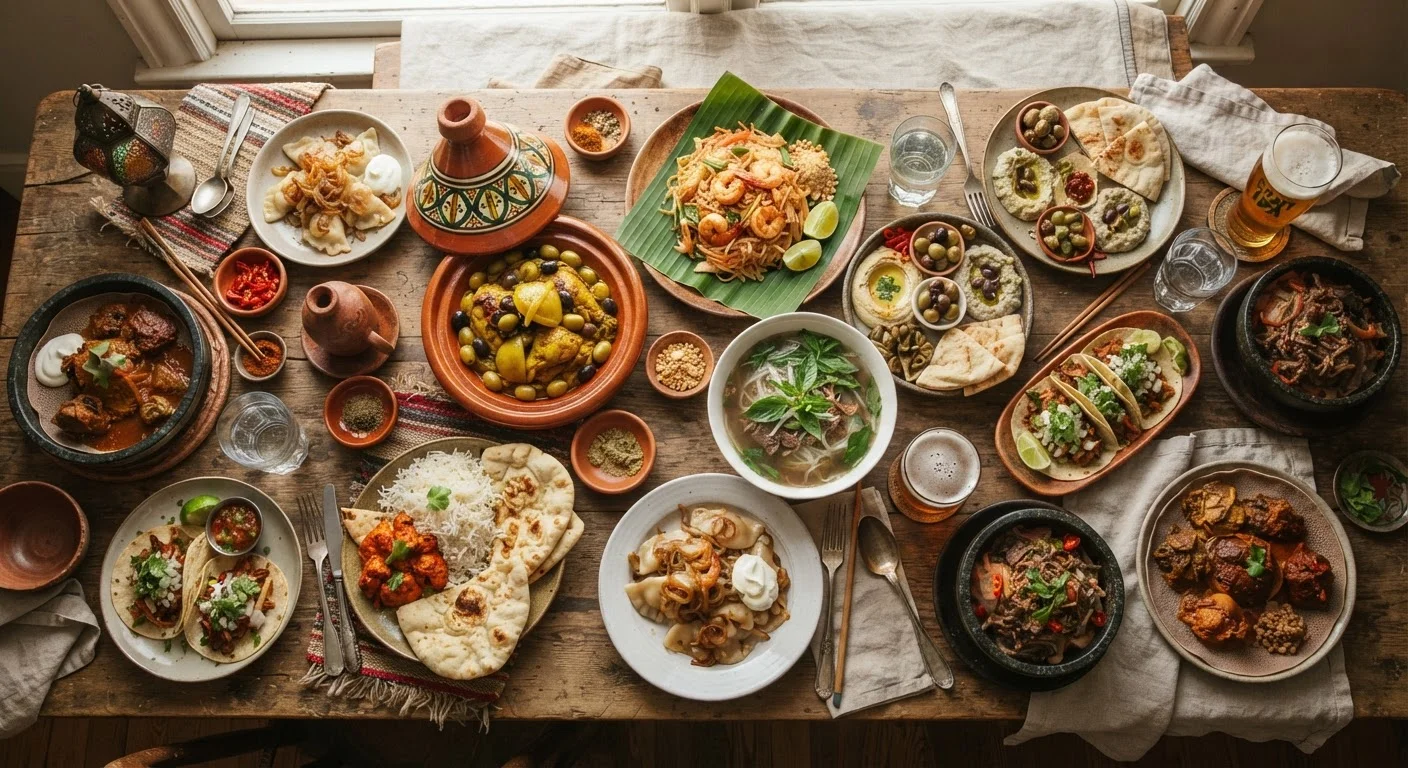
Photo: QuickAdvisor.net editorial
Key Takeaways
- Authenticity in food is a cultural and social construct, not a fixed culinary standard.
- Most 'traditional' dishes have histories of migration, trade, and adaptation baked into them.
- Gatekeeping food authenticity often reflects power dynamics more than culinary truth.
- Fusion and adaptation are not corruptions - they are how food has always evolved.
- Who gets to define authentic food is rarely a neutral question.
Why 'Authentic' Is a Loaded Word
Walk into any restaurant district in America and you'll see it on signs, menus, and marketing: authentic Thai, authentic Italian, authentic Mexican. The word promises something real - a direct line to a place, a tradition, a people. But what it actually delivers is far messier and more interesting. Authenticity in food is not a fixed culinary standard. It is a cultural claim, and like all cultural claims, it carries history, politics, and power along with the flavor.
Food scholars and anthropologists have long noted that cuisines are never static. They evolve through trade routes, migration, colonization, and simple human creativity. What gets labeled "authentic" at any given moment often reflects who has the cultural authority to define it - not who actually cooked it first. Words like 'artisanal' and 'traditional' carry social weight that is worth examining carefully before accepting at face value.
Myth
An authentic dish is one made exactly the same way it has always been made, using only original ingredients.
Fact
Virtually every cuisine has been shaped by trade, migration, and ingredient availability. There is rarely a single original version.
Ingredients we think of as native to a cuisine were often introduced centuries after the cooking tradition began. Italian pasta sauces without tomatoes, Korean food without chili peppers, Indian curries without potatoes - these were all realities before global trade reshaped ingredient access. Demanding an unchanging original is demanding something that never existed.
Myth
Fusion food is inauthentic because it mixes traditions that don't belong together.
Fact
Fusion is how most of the world's beloved cuisines were created in the first place. Mixing traditions is a culinary norm, not an exception.
Japanese ramen draws heavily on Chinese noodle traditions. Tex-Mex reflects the layered cultural history of the Texas-Mexico borderlands. Peruvian cuisine is a documented fusion of Indigenous, Spanish, Japanese, and African influences. Calling fusion "inauthentic" ignores that cultural contact and creative adaptation are the engines of culinary history.
Myth
Only people from a specific culture can make that culture's food authentically.
Fact
Cultural origin can inform skill and context, but cooking knowledge has always been shared across communities - through migration, apprenticeship, and necessity.
Recipes and techniques have crossed borders via enslaved people, indentured workers, immigrants, and travelers for as long as humans have moved. Restricting culinary legitimacy purely to ethnic origin erases this history. What matters more is respect, understanding of the tradition, and honest representation - not ancestry alone.
Myth
A dish served in its country of origin is always more authentic than a version made in a diaspora community.
Fact
Diaspora communities often preserve older techniques and ingredients that have actually changed or been lost in the origin country.
Food practices in immigrant communities can be remarkably conservative, maintaining versions of dishes that have since evolved significantly back home. In some cases, the most historically continuous versions of a cuisine exist thousands of miles from its named origin. Authenticity is not geography - it is practice, memory, and meaning.
The Myth of the Unchanging Original
One of the most persistent assumptions is that somewhere out there exists an original, unchanged version of a dish - a platonic ideal that modern or diaspora versions have strayed from. This idea feels intuitive but collapses under historical scrutiny.
Consider the tomato, now inseparable from Italian cuisine. Tomatoes originated in the Americas and did not arrive in Italy until after the 16th century. Similarly, chili peppers - foundational to Thai, Indian, and Korean cooking - are all post-Columbian imports. The "ancient traditions" surrounding these dishes are, in many cases, a few hundred years old at most. Cuisine has always been a record of contact and exchange, not isolation.
Soul food and Southern cuisine offer a compelling American example: dishes built from the ingenuity of enslaved people, adapting available ingredients under brutal constraints, and yet carrying profound cultural meaning. Authenticity here is rooted in lived experience and resilience - not in geographic origin or fixed recipe.
~500 years
Age of tomatoes in Italian cuisine
Tomatoes arrived in Europe from the Americas after the 16th century, making them a relatively recent addition to a cuisine often framed as ancient.
281+
Distinct cultural cuisines recognized by food researchers
Culinary anthropologists have documented hundreds of distinct food traditions globally, each shaped by layers of migration, trade, and adaptation.
Who Gets to Decide - and Why It Matters
The gatekeeping of food authenticity is rarely neutral. Whose version of a cuisine gets elevated as "real" and whose gets dismissed as a cheap imitation often tracks along lines of race, class, and geography. A grandmother in Oaxaca and a chef in a New York restaurant may both be making mole, but they will rarely be judged by the same standard.
This dynamic has real consequences. When diaspora communities adapt their cuisine to local ingredient availability or customer palates, they are often accused of inauthenticity. Yet the same creativity, when deployed by a celebrated non-native chef, may be praised as innovation. Understanding why certain foods become tied to national identity helps explain why these judgments carry such emotional and economic weight.
Travelers who seek "authentic" food experiences abroad are navigating the same terrain. Using food as a lens for culture means being curious and humble - recognizing that what a local community eats today is just as genuine as anything coded as "traditional" in a guidebook.
Authenticity Can Erase Real History
The content on this site is for informational purposes only and is not a substitute for professional advice. Always consult a qualified professional for guidance specific to your situation.