
Whole Grains vs. Refined Grains: What Changes When Wheat Gets Processed

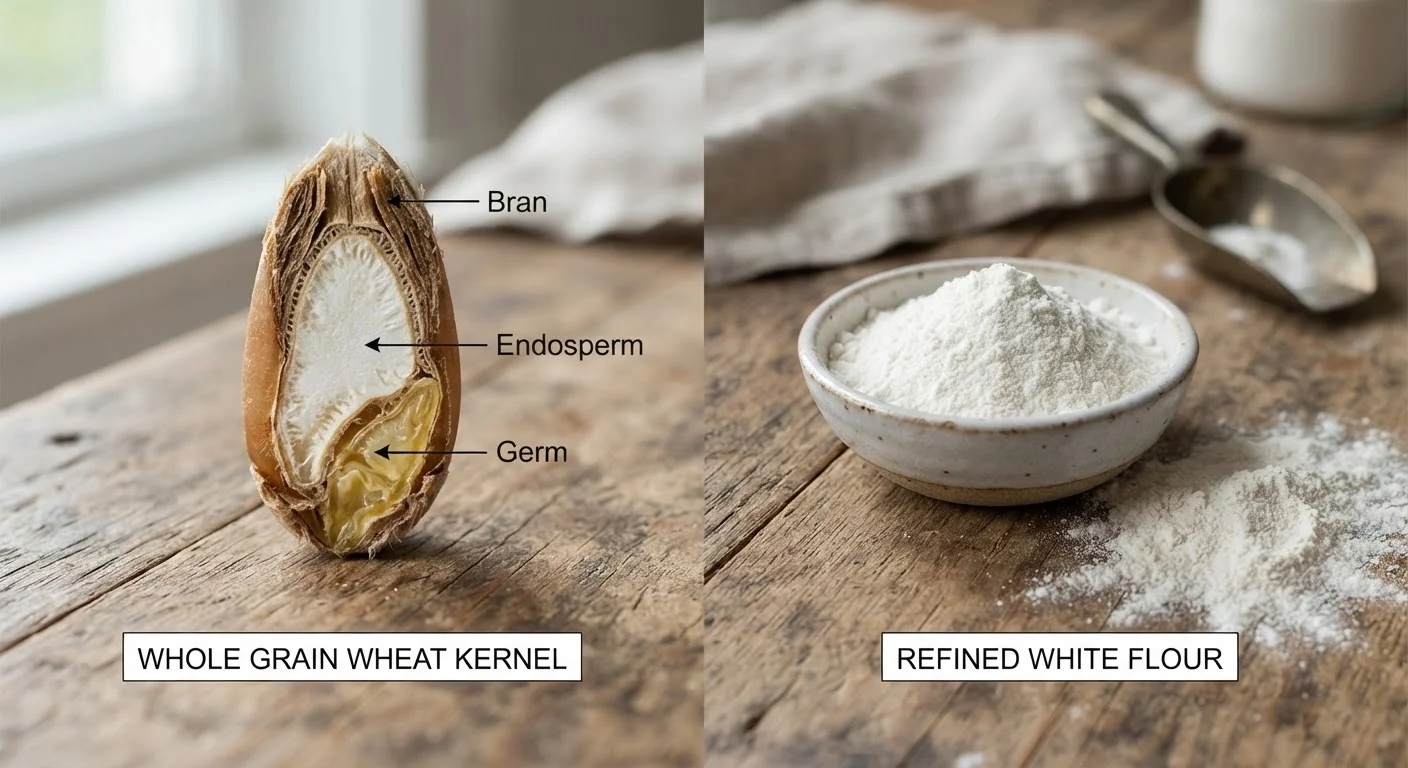
Photo: QuickAdvisor.net editorial
Key Takeaways
- Refining removes the bran and germ, stripping out fiber, B vitamins, iron, and healthy fats.
- Enriched refined grains have some nutrients added back, but fiber is generally not restored.
- Whole grains are consistently linked to lower risks of heart disease and type 2 diabetes in large observational studies.
- Label terms like 'wheat bread' or 'multigrain' do not guarantee whole grain content - check the ingredient list.
- Both types can fit a balanced diet; the practical goal is making whole grains the majority of daily grain choices.
What Happens Inside the Mill
A wheat kernel is composed of three distinct layers: the bran (the fibrous outer shell), the germ (the nutrient-dense embryo of the seed), and the endosperm (the starchy inner core). A whole grain product retains all three layers in their natural proportions. Refining strips away the bran and germ, leaving only the endosperm.
That distinction sounds simple, but its nutritional consequences are substantial. The bran contributes the majority of a grain's dietary fiber, along with B vitamins like thiamine, niacin, and folate, plus minerals such as iron, magnesium, and zinc. The germ adds vitamin E, healthy unsaturated fats, and additional B vitamins. Removing both layers concentrates starch and removes most of the nutritional complexity that makes grains valuable beyond basic energy supply.
To partially offset this, many refined grain products sold in the United States are enriched - meaning iron, thiamine, riboflavin, niacin, and folic acid are added back after processing. Enrichment has meaningfully reduced nutrient deficiency diseases, but it does not restore the full nutrient profile. Fiber, vitamin E, magnesium, and dozens of phytochemicals (plant compounds with potential health significance) are typically not replaced.
| Criterion | Whole Grains | Refined Grains |
|---|---|---|
| Kernel layers retained | All three: bran, germ, endosperm | Endosperm only |
| Dietary fiber (per serving) | Higher - bran layer intact | Lower - bran removed |
| B vitamins & iron | Naturally present | Often added back via enrichment |
| Vitamin E & healthy fats | Present from germ | Largely absent |
| Blood glucose response | Generally more gradual | Generally faster spike |
| Shelf life | Shorter - germ fats can go rancid | Longer - germ removed |
| Texture in baked goods | Denser, heartier | Lighter, more tender |
What the Research Shows
Decades of large observational studies have consistently associated higher whole grain consumption with lower rates of cardiovascular disease, type 2 diabetes, and certain digestive conditions. A frequently cited analysis published in The Lancet found that adults consuming the most whole grains had meaningfully lower risks of coronary heart disease and stroke compared with those eating the least. Researchers attribute much of this effect to fiber's role in cholesterol management, blood sugar regulation, and gut microbiome support.
Refined grains, by contrast, are digested more rapidly, which tends to produce faster increases in blood glucose and insulin. Over time, diets consistently high in refined grains - particularly when combined with added sugars and low fiber intake - have been linked in epidemiological data to higher cardiometabolic risk. It is worth noting that these are associations, not proof of direct causation; diet is complex and these foods rarely appear in isolation.
25%
Reduced heart disease risk with high whole grain intake
A 2019 meta-analysis in The Lancet found a roughly 22-25% lower risk of cardiovascular disease among those with the highest whole grain consumption compared to the lowest.
~96%
Of Americans fall short of whole grain recommendations
USDA dietary data consistently shows the vast majority of Americans consume far less than the recommended three or more servings of whole grains per day.
3
Daily whole grain servings recommended for adults
The 2020-2025 Dietary Guidelines for Americans recommend making at least half of all grain servings whole grains, equating to roughly three or more servings daily.
For context on how grain choices fit into broader eating patterns, see our comparison of whole foods vs. ultra-processed foods and what the research actually shows about minimally processed versus heavily processed eating.
How to Read Grain Claims on Packaging
Food packaging language around grains is frequently misleading. Terms like "wheat bread," "multigrain," "stone-ground," and "made with whole grain" do not guarantee that the primary flour is a whole grain product. A loaf labeled "multigrain" may contain multiple types of refined flour with a small amount of oats sprinkled in for appearance.
The most reliable approach is to check the ingredient list rather than the front-of-package claim. The first ingredient should be a whole grain flour - such as whole wheat flour, whole oat flour, or whole grain corn flour. If the first ingredient is simply "enriched flour" or "wheat flour," the product is primarily refined regardless of what the front panel implies.
The Nutrition Facts panel itself can also help. A meaningful whole grain serving typically delivers at least 2-3 grams of dietary fiber per serving, though this varies by grain type. Learning to read a food label with a specific health goal in mind makes this process significantly faster. For a broader walkthrough of the entire label, the Nutrition Facts label guide covers every section in plain terms.
The '100% Whole Grain' Stamp Explained
This article is for general informational purposes only and does not constitute medical or dietary advice. Readers with specific health conditions or concerns should consult a qualified healthcare professional before making significant changes to their diet.
The content on this site is for informational purposes only and is not a substitute for professional advice. Always consult a qualified professional for guidance specific to your situation.