
Portion Size vs. Serving Size: A Distinction That Actually Matters

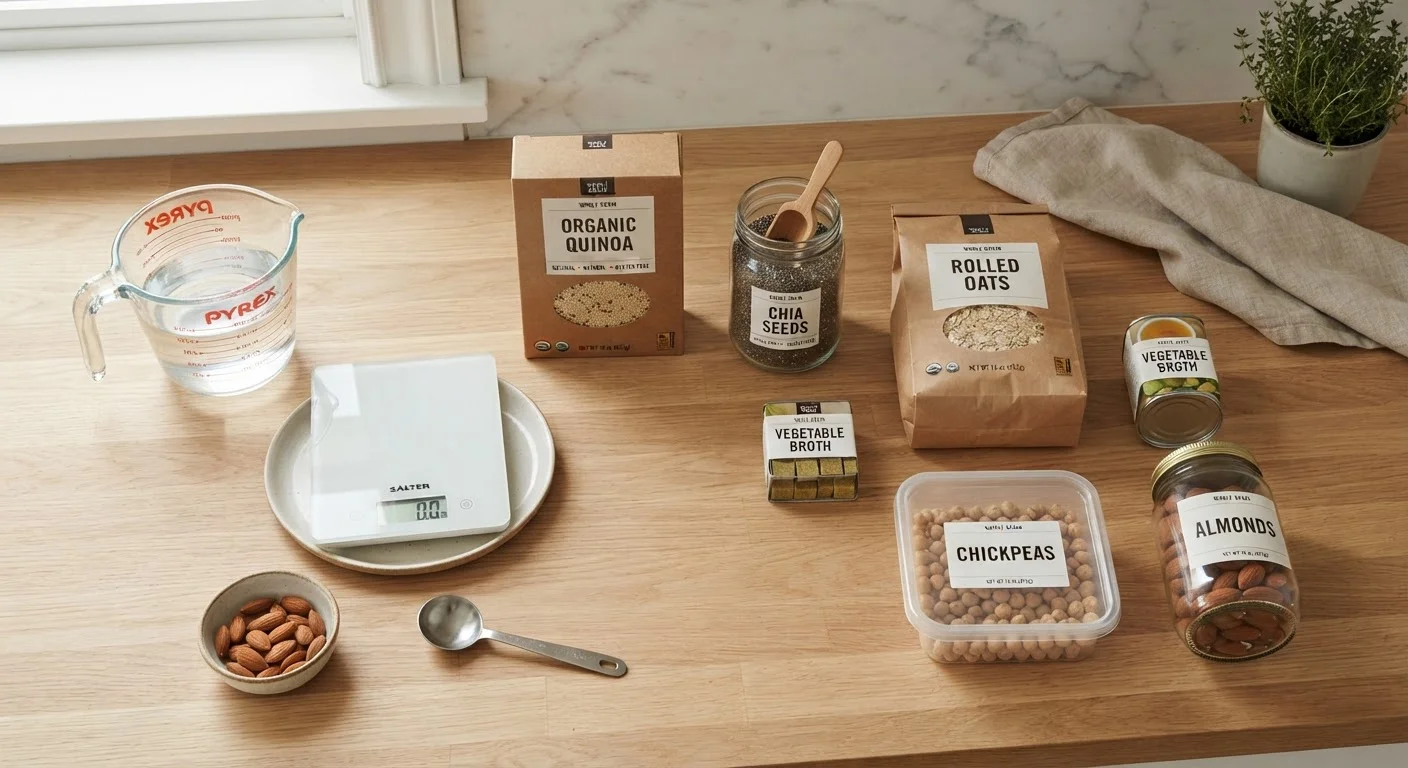
Photo: QuickAdvisor.net editorial
Key Takeaways
- Serving sizes on labels are regulatory reference amounts, not eating recommendations.
- The portion you actually eat may be larger or smaller than the listed serving size.
- Nutrition data on a label scales proportionally with how much you eat relative to one serving.
- Updated FDA rules now require serving sizes to reflect amounts people realistically consume.
- Awareness of this distinction helps you make more accurate, informed food choices.
Two Terms, One Common Misunderstanding
Walk down any grocery aisle, pick up a package, and you'll see "Serving Size" near the top of the Nutrition Facts panel. Most people assume this number represents what they should eat. It doesn't - and that single misunderstanding can distort how you interpret everything else on the label.
A serving size is a regulatory reference unit. The FDA establishes these amounts to ensure that nutritional information is presented consistently across similar products, making comparisons possible. A portion size, by contrast, is simply how much food you actually put on your plate. The two figures may sometimes match - but often don't.
For a deeper look at how every line of a nutrition label fits together, see Reading a Nutrition Facts Label Without Getting Confused.
Serving Sizes Are Not Dietary Goals
Where the FDA's Serving Sizes Come From
The FDA calculates serving sizes using data on how much of a food Americans typically consume in one eating occasion. These reference amounts are formally called Reference Amounts Customarily Consumed, or RACCs. In 2016, the agency updated these figures to better align with real-world eating habits, revising categories like ice cream, soda, and certain snack foods.
This means serving sizes are descriptive, not prescriptive. A serving of ice cream listed as two-thirds of a cup isn't a cap or a goal - it's a benchmark the FDA chose so that a pint of ice cream and a gallon both communicate nutrition the same way. The serving size is a unit of measurement, similar to how an ounce or a cup functions in a recipe.
2.5×
Typical restaurant vs. label serving size gap
Research published in nutrition journals has found that restaurant portions commonly exceed standard serving sizes by more than double, particularly for energy-dense foods.
2016
Year FDA updated Nutrition Facts label serving sizes
The FDA revised Reference Amounts Customarily Consumed to better reflect how Americans actually eat, including increasing the serving size for ice cream and revising soda reference amounts.
~90%
Americans who misread at least one label element
Studies on nutrition label literacy suggest the majority of consumers misinterpret at least one key component of the Nutrition Facts panel, with serving size among the most frequently misunderstood.
How the Gap Between Them Affects What You Think You're Eating
Here's where the practical stakes come in. Every number on a Nutrition Facts label - calories, sodium, saturated fat, vitamins - applies to exactly one serving as defined by the label. If you eat twice that amount, you've consumed double the listed values across the board.
Consider a bag of chips with a listed serving size of one ounce and 150 calories. If you eat three ounces without noticing, you've consumed 450 calories - none of which is inaccurate on the label, but all of which is easy to miss if you're not paying attention to the serving-to-portion gap.
This isn't a reason to obsess over every gram, but it is a reason to use the label as a starting point rather than a final answer. What a Nutrition Label Is Actually Telling You can help contextualize those numbers further.
Practical Ways to Use Both Numbers Accurately
You don't need a food scale at every meal to make sense of this distinction. A few habits can meaningfully sharpen how you read labels and estimate what you're actually eating:
- Check the serving size first, before reading any other value. It anchors everything else on the panel.
- Compare your portion to the reference. Visual cues help - a three-ounce serving of cooked meat is roughly the size of a deck of cards.
- Use the "servings per container" line to gauge how much a package actually contains. A bottle of juice labeled 2.5 servings isn't a single serving, even if it looks like one.
- Scale the math when needed. If you eat 1.5 servings, multiply every nutrient by 1.5 for an accurate read.
For ideas on improving what's in your meals without overhauling your routine, Getting More Nutrients from Your Meals Without Overhauling Your Diet offers practical, sustainable guidance.
This article is for general informational purposes only and is not a substitute for professional medical or dietary advice. Consult a registered dietitian or qualified healthcare provider for guidance tailored to your individual health needs.
Frequently Asked Questions
The content on this site is for informational purposes only and is not a substitute for professional advice. Always consult a qualified professional for guidance specific to your situation.