
How Material Choice Shapes a Product's Durability and Safety

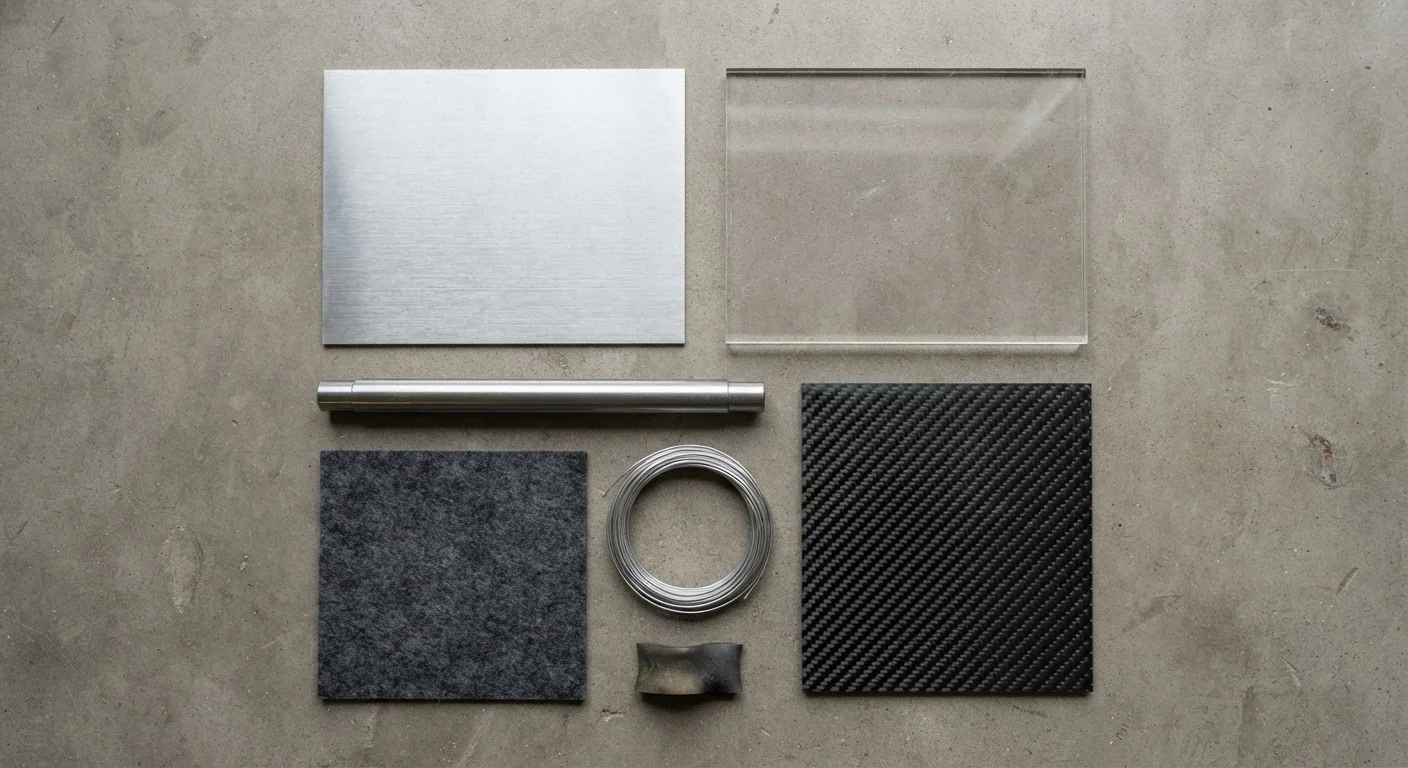
Photo: QuickAdvisor.net editorial
Key Takeaways
- The material a product is made from sets a hard limit on its durability - no amount of design can overcome weak material properties.
- Common plastics vary enormously in strength, heat resistance, and safety; knowing the type matters more than knowing it's "plastic."
- Metals offer superior load-bearing and longevity but add weight and cost; look for specific alloys rather than generic terms.
- Composite materials can combine the best traits of multiple substances but require careful manufacturing to deliver on that promise.
- Third-party certifications tied to specific materials (UL, NSF, ASTM) are more reliable signals than manufacturer safety claims.
- Mismatched materials - such as incompatible metals that corrode on contact - are a common hidden failure point in assembled products.
Why Material Matters More Than Marketing Language
Walk through any store or scroll through any product listing and you'll encounter words like "military-grade," "aircraft aluminum," or "industrial strength." These phrases are largely unregulated and tell you almost nothing precise about a product's actual capability. What tells you something real is the specific material and, where possible, its grade or formulation.
Material properties are governed by physics and chemistry - not branding. A polypropylene container rated for high heat will behave predictably under hot liquids. A cheaper polyethylene container with similar-looking marketing copy may warp, leach, or fail. The gap between them shows up after purchase, not before.
This is why material literacy is a core part of any smart pre-purchase evaluation. It's covered in detail in our full product evaluation framework, which walks through the structured questions worth asking before committing money to anything significant.
~40%
Product recalls linked to material or component failures
U.S. Consumer Product Safety Commission recall data consistently shows material-related failures - including chemical hazards and structural breakdowns - as a leading category across consumer goods.
50+
Distinct polymer types in common consumer use
The American Chemistry Council notes that the plastics category encompasses dozens of chemically distinct polymers, each with unique safety, thermal, and mechanical profiles that vary significantly from one another.
Plastics: A Family, Not a Single Material
Saying a product is made of "plastic" is like saying a vehicle has an "engine" - technically informative but practically incomplete. The plastics family includes dozens of distinct polymers with dramatically different properties. A few worth knowing:
- Polycarbonate (PC): Impact-resistant and optically clear, but can yellow with UV exposure and may contain bisphenol A (BPA) in older formulations. Used in safety eyewear and some water bottles.
- Acrylonitrile Butadiene Styrene (ABS): Rigid and tough, common in tool housings and electronics casings. Not suitable for high-heat or food-contact applications.
- High-Density Polyethylene (HDPE): Chemical-resistant, widely considered safe for food and drink storage, and highly recyclable. Common resin code: 2.
- Polypropylene (PP): Heat-tolerant and fatigue-resistant, making it well-suited for hinged components like bottle caps and food containers. Resin code: 5.
When a product lists a specific resin or carries an NSF, FDA food-contact, or similar certification tied to material type, that's a meaningful signal - not a vague claim. Check the pre-purchase product assessment checklist for a practical way to track these details before buying.
Metals and Composites: Strength With Trade-Offs
Metals generally outperform plastics on load-bearing strength and long-term durability - but the type of metal matters considerably. Stainless steel (especially 304 and 316 grades) resists corrosion well and is widely used in cookware, cutlery, and medical tools. Aluminum alloys are lightweight and corrosion-resistant but vary in strength by alloy series - 6061-T6 aluminum is a sturdy structural choice, while unspecified "aluminum" could be a softer, less reliable grade.
Galvanic corrosion is a real and underappreciated risk: when two dissimilar metals are in direct contact in the presence of moisture, one corrodes faster than it otherwise would. This is a common failure mode in assembled products - outdoor fixtures, marine hardware, bicycle components - and it's invisible until it causes a problem.
Composite materials, such as carbon fiber reinforced polymer (CFRP) or fiberglass, combine a structural fiber with a resin matrix to achieve high strength-to-weight ratios. Their performance depends heavily on layup quality and curing conditions during manufacturing - factors that are genuinely difficult to evaluate from the outside. When buying composites, third-party certifications or verified testing data carry more weight than visual appearance alone.
“The properties of materials are not matters of opinion. They are measurable, testable, and - when specified correctly - highly predictive of how a product will actually perform in service.”
— Henry Petroski, Civil engineer and author on design and failure analysis
For a hands-on approach to judging build quality without specialized equipment, see how to evaluate build quality without specialized tools.
Reading Material Signals at the Point of Purchase
Most consumers won't have lab access before buying a product, but several practical signals are available at the point of purchase:
- Specific material callouts: "304 stainless steel" or "6061-T6 aluminum" indicates a manufacturer confident enough to be precise. Vague terms like "stainless" or "alloy" invite skepticism.
- Third-party certifications: Look for marks from recognized testing bodies - UL (safety), NSF (food/water safety), ASTM compliance statements - tied explicitly to the material or product category.
- Country-specific regulatory compliance: In the U.S., products like children's goods, food-contact items, and electrical devices must meet material safety standards set by agencies such as the CPSC and FDA. Stated compliance is a meaningful baseline.
- Weight and finish consistency: Genuine metal components have a characteristic heft; uniform finishes with no thin spots suggest consistent manufacturing. These physical checks are detailed further in the signals that separate well-designed products from hollow ones.
Material choice intersects with nearly every other dimension of product quality. A product loaded with features but built from mismatched or substandard materials is likely to disappoint - which is a pattern explored in how feature creep undermines real product value.
Frequently Asked Questions
The content on this site is for informational purposes only and is not a substitute for professional advice. Always consult a qualified professional for guidance specific to your situation.