
Solo Travel vs. Group Travel: Choosing the Right Approach for Your Trip

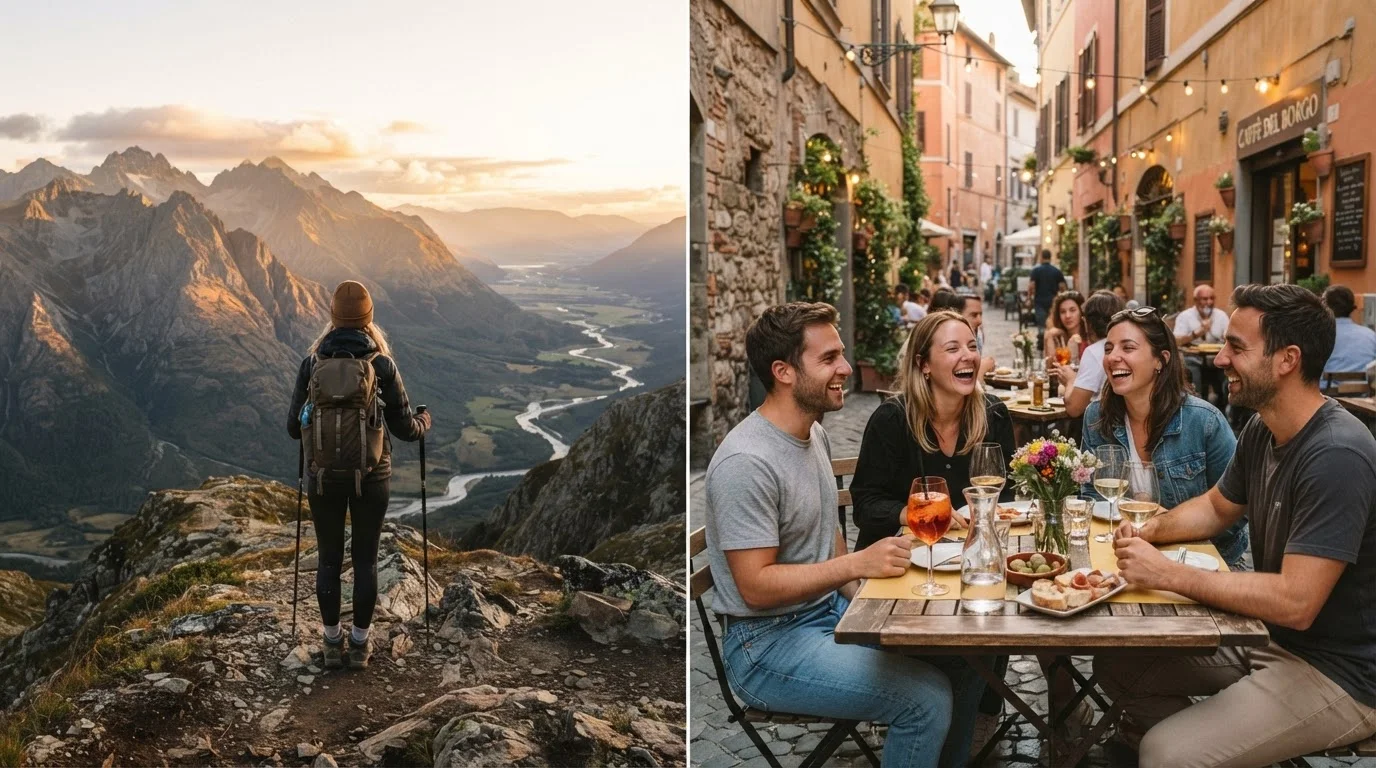
Photo: QuickAdvisor.net editorial
Key Takeaways
- Solo travel maximizes flexibility and self-discovery but places all logistics on one person.
- Group travel distributes costs and decisions but requires compromise on pace and preferences.
- Safety, budget, and personal goals are the three biggest factors to weigh before booking.
- Neither approach is universally better - destination type and trip length both matter.
- Hybrid models, such as joining a group for one leg, can capture benefits of both styles.
Total flexibility to change plans anytime
Solo travelers can pivot without negotiation - sleep in, skip a stop, or add an unplanned detour based on a local tip. This spontaneity is one of the most consistently cited advantages by experienced solo travelers.
Deeper immersion in local culture
Traveling alone tends to push people toward more authentic interactions - locals are more likely to approach a solo traveler, and solo travelers are more likely to seek connection rather than rely on their own group bubble.
Builds genuine self-reliance and confidence
Navigating an unfamiliar place independently - including the inevitable hiccups - develops problem-solving skills and a sense of accomplishment that's difficult to replicate in a group setting.
No compromise on interests or pace
Whether you want to spend three hours in a single museum or leave a city after one night, you're accountable only to yourself - a significant advantage when personal interests are niche or highly specific.
Easier to book last-minute or flexible arrangements
Securing a single bed in a hostel, a seat at a small restaurant, or a spot on a day tour is almost always easier than coordinating availability for a group.
Higher per-person costs without cost-sharing
Single-occupancy rooms, solo car rentals, and private guides all carry a financial premium. Solo travelers can pay meaningfully more for equivalent experiences compared to those splitting costs with companions.
No built-in safety net in emergencies
Whether it's a health issue, a lost wallet, or a missed connection, having no travel companion means handling stressful situations entirely alone - a real consideration in remote or less-traveled destinations.
Loneliness can set in, especially on long trips
Extended solo travel, particularly in places with a language barrier, can become isolating. Shared experiences - a meal, a laugh, a reaction to something surprising - lose something without anyone to share them with.
Full logistical burden falls on one person
Research, bookings, navigation, and contingency planning all sit with you alone. This is manageable for short trips but can become genuinely taxing over weeks or in complex, multi-stop itineraries.
Group travel requires significant compromise
Aligning preferences on pace, budget, food, and activities across multiple people is a real ongoing effort. Misaligned expectations are one of the most common sources of conflict in group travel.
Less spontaneity when plans involve others
Changing a booking or redirecting a day's plans affects everyone, which means group itineraries tend to be more fixed and harder to pivot when something better comes along.
The Core Trade-Off: Freedom vs. Shared Experience
Choosing between solo and group travel isn't just a logistical question - it's a reflection of what you want a trip to feel like. Solo travel hands you the wheel entirely: you pick the pace, change plans without negotiating, and experience destinations on your own terms. Group travel trades some of that control for something else entirely - shared moments, distributed costs, and the kind of spontaneous connection that rarely happens when you're traveling alone.
Neither approach fits every trip or every traveler. A solo week in Kyoto navigating train schedules and quiet temples can be deeply rewarding. That same week with four friends who want to see and eat different things can become a negotiation marathon. Conversely, a group trip through Iceland's remote interior makes practical sense in ways a solo drive might not. The question is always: what does this trip actually need?
For a deeper look at how independence plays out once you're on the ground, guided tours vs. independent exploration walks through how structure and freedom each hold up by destination type.
Pros and Cons at a Glance
Before diving into specifics, it helps to see the advantages and drawbacks of solo travel laid out plainly - because both columns carry real weight.
Total flexibility to change plans anytime
Solo travelers can pivot without negotiation - sleep in, skip a stop, or add an unplanned detour based on a local tip. This spontaneity is one of the most consistently cited advantages by experienced solo travelers.
Deeper immersion in local culture
Traveling alone tends to push people toward more authentic interactions - locals are more likely to approach a solo traveler, and solo travelers are more likely to seek connection rather than rely on their own group bubble.
Builds genuine self-reliance and confidence
Navigating an unfamiliar place independently - including the inevitable hiccups - develops problem-solving skills and a sense of accomplishment that's difficult to replicate in a group setting.
No compromise on interests or pace
Whether you want to spend three hours in a single museum or leave a city after one night, you're accountable only to yourself - a significant advantage when personal interests are niche or highly specific.
Easier to book last-minute or flexible arrangements
Securing a single bed in a hostel, a seat at a small restaurant, or a spot on a day tour is almost always easier than coordinating availability for a group.
Higher per-person costs without cost-sharing
Single-occupancy rooms, solo car rentals, and private guides all carry a financial premium. Solo travelers can pay meaningfully more for equivalent experiences compared to those splitting costs with companions.
No built-in safety net in emergencies
Whether it's a health issue, a lost wallet, or a missed connection, having no travel companion means handling stressful situations entirely alone - a real consideration in remote or less-traveled destinations.
Loneliness can set in, especially on long trips
Extended solo travel, particularly in places with a language barrier, can become isolating. Shared experiences - a meal, a laugh, a reaction to something surprising - lose something without anyone to share them with.
Full logistical burden falls on one person
Research, bookings, navigation, and contingency planning all sit with you alone. This is manageable for short trips but can become genuinely taxing over weeks or in complex, multi-stop itineraries.
Group travel requires significant compromise
Aligning preferences on pace, budget, food, and activities across multiple people is a real ongoing effort. Misaligned expectations are one of the most common sources of conflict in group travel.
Less spontaneity when plans involve others
Changing a booking or redirecting a day's plans affects everyone, which means group itineraries tend to be more fixed and harder to pivot when something better comes along.
What Solo Travel Actually Demands
Solo travel looks liberating from the outside - and often is - but it carries a real logistical load. Every decision, from accommodation to emergency planning, lands on one person. That's energizing for some travelers and quietly exhausting for others, especially over longer trips.
Budget management is one area solo travelers consistently underestimate. Without anyone to split room costs or car rentals with, daily expenses run noticeably higher. Safety considerations also land differently: in unfamiliar cities or remote areas, having no travel companion to consult or assist in a pinch is a genuine factor worth thinking through honestly before you go.
~25%
Solo travelers as share of all leisure travelers
Industry travel research consistently finds solo travel accounts for roughly a quarter of leisure trips, with the segment growing steadily over the past decade.
Up to 2×
Accommodation cost premium for solo travelers
Single-occupancy rates at hotels and guesthouses can run close to double the per-person cost of a shared double room, making accommodation the biggest solo budget gap.
The payoff, though, is real. Solo travelers consistently report stronger connections with locals and fellow travelers - partly because they're more approachable, and partly because they have to reach out. There's also something quietly powerful about navigating a foreign country on your own terms and discovering what you're actually capable of. For honest perspective on what each style truly asks of you, see what group and solo travel each demand.
What Group Travel Actually Demands
Group travel - whether with friends, family, or an organized tour - introduces dynamics that have nothing to do with the destination. Aligning schedules before the trip, agreeing on a daily pace during it, and managing the inevitable friction when preferences diverge are all part of the deal. The larger the group, the more coordination overhead accumulates.
That said, the practical advantages are substantial. Shared accommodation and transport costs can make destinations genuinely more affordable. Group members can divide research tasks, cover for each other in stressful moments, and simply make certain experiences richer - a shared meal or a sunrise hike hits differently with people you care about.
When Group Size Matters Most
Planning style matters enormously in group settings. A rigid itinerary can feel suffocating for some members while a go-with-the-flow approach can frustrate others. Comparing structured, flexible, and hybrid itinerary styles is worth reading before you lock anything in with your travel companions.
Making the Call: Questions Worth Asking Before You Book
Rather than defaulting to habit - always traveling solo, or always going with a group - it's worth asking a few targeted questions about the specific trip in front of you.
- How complex is the destination? Some regions reward careful local knowledge and group logistics; others are well-set-up for independent navigation.
- What's your budget ceiling? If solo costs would stretch you thin, a group split may unlock better experiences.
- What do you want to feel at the end? Accomplishment and solitude, or shared memories and laughter? Both are valid answers.
- How long is the trip? Solo travel fatigue is real on long trips; group friction compounds over time too.
It's also worth knowing that the choice doesn't have to be binary. Many experienced travelers book a solo first leg in a city they know well, then join a small-group experience for a more logistically demanding stretch. The timing of your trip relative to crowds and seasons also shapes how both styles feel on the ground - peak vs. off-season trade-offs is worth factoring into whichever approach you choose.
The content on this site is for informational purposes only and is not a substitute for professional advice. Always consult a qualified professional for guidance specific to your situation.