
Road-Tripping Across the Great Plains: What to Expect When the Landscape Opens Up

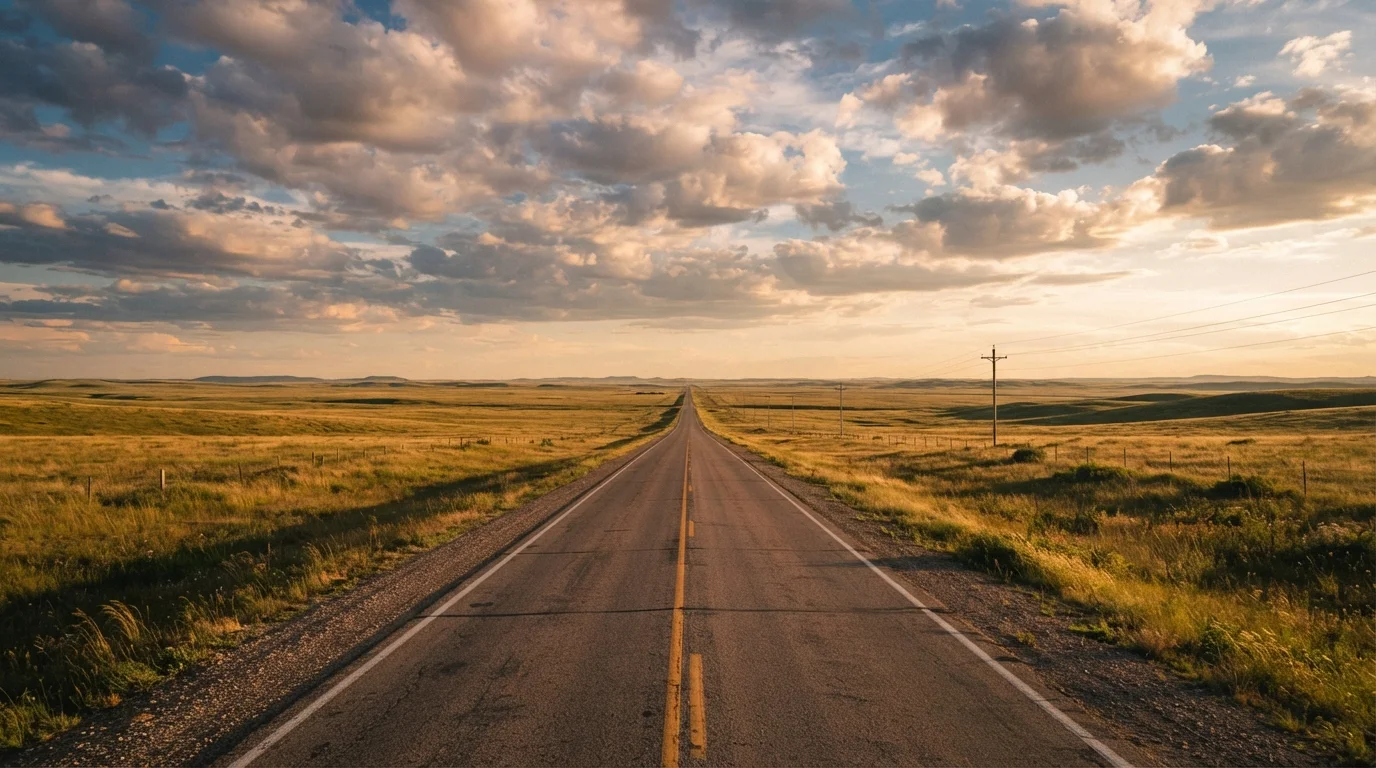
Photo: QuickAdvisor.net editorial
Key Takeaways
- Gas stations and towns can be 60-100 miles apart; never let your tank drop below half.
- Weather on the Plains changes fast - thunderstorms and high winds require a flexible itinerary.
- The landscape rewards patient travelers with wildlife, roadside history, and stunning night skies.
- Cell service is genuinely sparse across large stretches - download offline maps before you go.
- Mid-size Plains cities like Amarillo, Rapid City, and Wichita make excellent overnight anchors.
- Driving distances are deceptive - what looks short on a map can take several hours of open-road time.
Understanding the Terrain Before You Go
The Great Plains cover roughly 500 million acres sweeping from Texas north through the Dakotas, and from the Rocky Mountain foothills east toward the Missouri River. That's not one landscape - it's a mosaic of shortgrass prairie, sandhills, badlands, river breaks, and agricultural flatlands. What unites it all is scale. Distances that look manageable on a standard road map have a way of expanding dramatically once you're actually behind the wheel.
This isn't meant to discourage anyone. The Plains are genuinely spectacular - particularly for travelers willing to engage with the slow, cumulative drama of a horizon that keeps retreating. But it's a region that punishes wishful planning. Service gaps are real. If you're used to coastal or mountain road trips where towns arrive every 15 miles, the Plains will reset your expectations quickly.
For context on how Plains driving differs from desert terrain out west, see our look at the American Southwest's open roads - the heat challenges differ, but the logistics of fuel and distance rhyme closely.
What you will need
How to Plan Your Route Smartly
A successful Plains road trip starts with honest mileage math. Pick your daily driving targets based on what's realistically ahead - not what Google Maps shows in ideal conditions. A 300-mile Plains day sounds modest until afternoon thunderstorms close a highway or you spend 45 minutes at the only fuel stop for 80 miles because the card reader is down.
Interstate 90 through South Dakota, US-83 through the heart of Kansas and Nebraska, and US-287 through the Texas Panhandle and eastern Colorado are among the great Plains corridors. Each has its own rhythm. I-90 gives you Mount Rushmore access and the Badlands; US-83 is pure solitude with occasional river crossings and grain elevator towns; US-287 carries more traffic but runs through some dramatic open ranch country.
Map Your Fuel Stops Before You Drive Each Segment
Look up every fuel stop along the day's route and mark them on your offline map before leaving your morning stop. Identify your halfway fuel point and your fallback if the first station is closed. On stretches like US-83 through central Nebraska, gaps of 60-80 miles between open stations are common. A half-tank rule - stop whenever you drop below half - is the most practical discipline you can build.
Check Weather Before Every Morning Departure
Pull up radar and the National Weather Service forecast for your day's corridor before you get on the road. Note any severe thunderstorm or tornado watches. Identify the towns along your route where you could shelter if conditions deteriorate - a truck stop, a gas station with a basement, a sturdy public building. This takes ten minutes and dramatically reduces your risk exposure.
Set a Realistic Daily Mileage Ceiling
Cap your daily driving at a distance you can complete comfortably with weather delays, fuel stops, and unplanned pauses factored in. For most travelers on Plains roads, 250-350 miles per day is a sustainable range that leaves room for stops without creating fatigue. Long, straight highways create a deceptive sense of speed - driver fatigue accumulates just as it does on more demanding terrain.
Book Lodging in Anchor Towns Ahead of Time
Mid-size Plains cities are your best overnight anchors - they reliably have lodging options, food beyond fast food, and basic services. Smaller towns may have one motel, and if it's full or closed, your next option could be 40 miles away. Book your anchor-town nights in advance, particularly in summer when regional tourism and agricultural travel converge on limited inventory.
Leave Room in Your Schedule for the Unplanned Stops
The best Plains road-trip moments are rarely on the itinerary: a historical marker about a forgotten railroad town, a pull-off that reveals a sweeping river valley, a roadside diner that turns out to be genuinely excellent. If every hour of your day is scheduled, you'll drive past all of it. Build deliberate empty space - a couple of unscheduled hours per day - and treat it as the point, not the padding.
For a broader framework on structuring a multi-state American drive, the complete guide to planning a US road trip covers route selection, lodging logistics, and fuel budgeting in detail.
What the Plains Actually Reward
The biggest mistake travelers make on the Plains is treating the drive as dead time between destinations. The landscape itself is the destination, and it has layers. Prairie dog towns, pronghorn antelope alongside the road, abandoned homesteads half-swallowed by grass, grain elevators that double as the tallest structures for 100 miles - these things register when you slow down and look.
Night skies on the Plains are among the darkest in the continental US. Pulling over away from town on a clear night delivers a level of stargazing that genuinely stuns first-timers. Several areas in Nebraska and the Dakotas carry official dark-sky designations worth building around.
Don't overlook the cities either. Rapid City, South Dakota; Amarillo, Texas; Wichita, Kansas; and Bismarck, North Dakota are legitimate overnight anchors with real food scenes, museums, and local character. Our feature on underappreciated American cities touches on several Plains and near-Plains destinations that punch above their reputations.
Time Your Drive for the Golden Hours
Safety and Preparedness on Isolated Stretches
The Plains demand vehicle readiness more than almost any other American road-trip environment. Breakdowns that would be minor inconveniences near a city become multi-hour ordeals when the nearest mechanic is 60 miles away. Before any Great Plains leg, run through a proper pre-departure check - tires, fluids, spare, and emergency kit. The pre-drive vehicle safety walkthrough is a practical checklist worth running before you leave.
Weather deserves its own serious attention. Tornado season peaks May through June across the southern and central Plains. Severe thunderstorms can produce dangerous winds, large hail, and flash flooding with little warning. Check radar each morning, understand your route's shelter options, and don't ignore watches or warnings. Most Plains locals are matter-of-fact about severe weather - follow their lead, not your schedule.
Don't Count on Cell Service for Navigation
Cell service is intermittent to nonexistent across wide stretches. Download offline maps for your entire route before leaving populated areas, and consider a physical road atlas as backup. Sharing your itinerary with someone off-route is a simple habit that significantly improves your safety margin in genuinely remote country.
The content on this site is for informational purposes only and is not a substitute for professional advice. Always consult a qualified professional for guidance specific to your situation.