
Underappreciated American Cities Worth a Closer Look

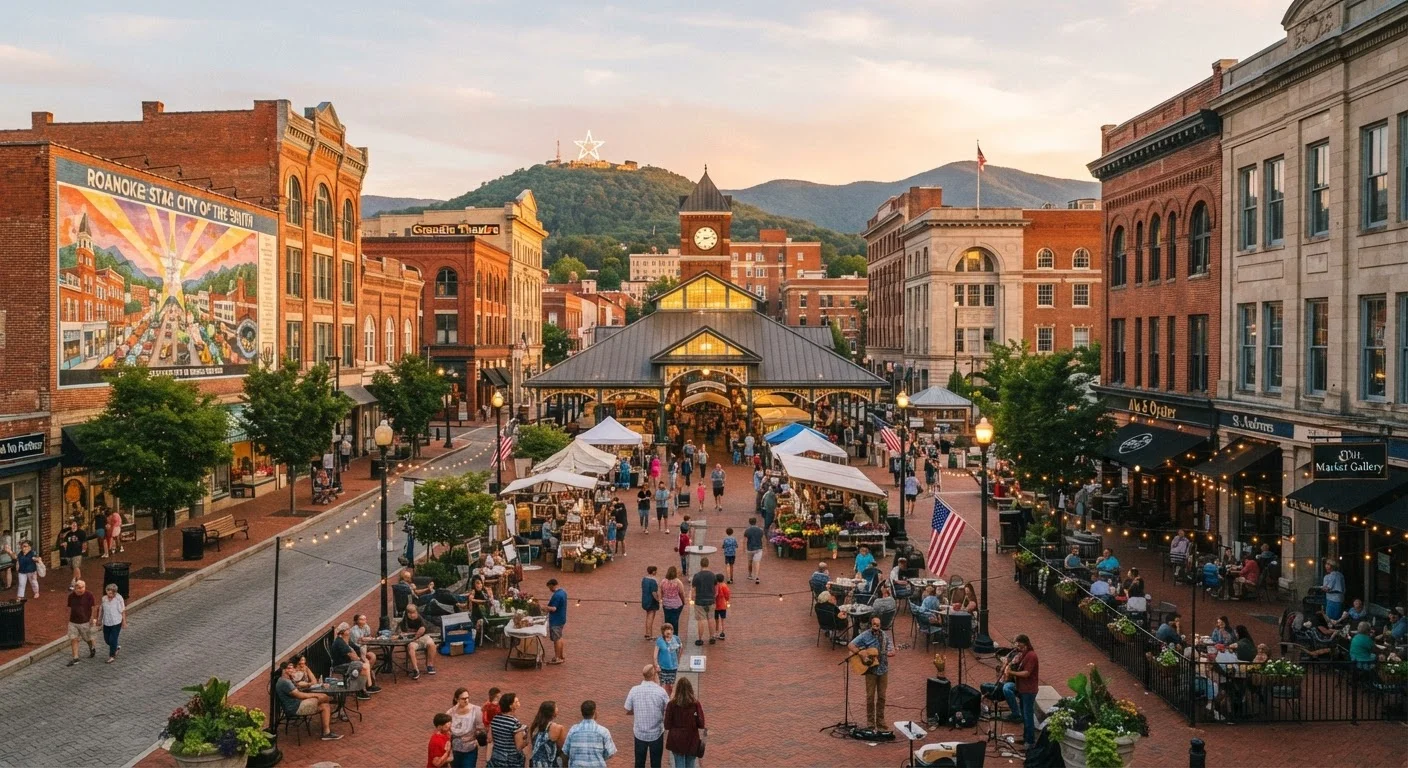
Photo: QuickAdvisor.net editorial
Key Takeaways
- Several mid-sized American cities offer rich culture, food, and history without the crowds of major tourist hubs.
- Cities like Tulsa, Spokane, Providence, and El Paso each have distinct identities worth exploring in depth.
- Underrated destinations often mean lower costs, easier logistics, and more authentic local experiences.
- Doing a little homework before arrival helps travelers unlock what makes each city genuinely memorable.
- Skipping familiar marquee cities in favor of overlooked ones can reframe your whole sense of American travel.
Why the B-List Is Worth Your Attention
America's travel conversation tends to loop through the same short roster - New York, Chicago, New Orleans, San Francisco. Those cities have earned their reputations, but the fixation on them means millions of travelers walk past destinations with just as much substance and considerably less congestion. Overpacked itineraries and algorithm-driven lists tend to funnel everyone toward the same dozen places, leaving a whole tier of genuinely compelling cities almost entirely to locals.
The cities below aren't hidden gems in the clichéd sense - they're real, functioning American cities with their own histories, food cultures, art scenes, and neighborhoods. They just don't lead travel headlines. That's a gap worth closing.
A Note on 'Underrated' Travel
Cities That Reward Curious Travelers
Tulsa, Oklahoma
Tulsa doesn't shout, but it has a lot to say. The city holds one of the finest concentrations of Art Deco architecture in the United States - a legacy of its oil-boom years in the early twentieth century. The Philbrook Museum of Art, housed in a former oil baron's villa surrounded by formal gardens, would be a major attraction in any city. Tulsa also carries the weight of the 1921 Greenwood District massacre, a pivotal and long-underacknowledged chapter in American history; the Greenwood Cultural Center and the recently opened Greenwood Rising museum address that history with seriousness and care. The Brady Arts District brings a contemporary creative energy to the mix, with independent restaurants, galleries, and live music venues scattered across walkable blocks.
Tulsa's Art Deco skyline and honest reckoning with history make it one of America's most underestimated city visits.
Spokane, Washington
Spokane occupies the eastern edge of Washington State, separated from Seattle by the Cascade Range and a very different cultural identity. The Spokane River runs right through the city center, and Riverfront Park - developed for the 1974 World's Fair - remains a genuine urban asset with trails, an IMAX theater, and open green space. The South Hill neighborhood has a distinctly walkable residential character, while the emerging Perry Street district has become a local hub for independent dining and specialty coffee. Spokane also serves as a practical base for exploring the surrounding Inland Northwest, including the Palouse Hills to the south - one of the most visually striking agricultural landscapes in the country.
Spokane's river-centered downtown and proximity to stunning rural landscapes make it an underrated Pacific Northwest base.
Providence, Rhode Island
Rhode Island's capital tends to get swallowed by Boston in regional travel coverage, but Providence has a character entirely its own. The city is home to the Rhode Island School of Design (RISD), whose influence permeates the local arts scene and whose museum is among the finest small art museums in the Northeast. College Hill, with its Federal-style houses and steep, tree-lined streets, is one of the most walkable historic neighborhoods on the East Coast. Providence also has a food culture that punches well above its weight - the city has been a serious dining destination for years, rooted in a combination of Italian-American tradition, RISD creative energy, and an increasingly diverse culinary landscape.
Providence combines exceptional historic architecture, a top-tier art museum, and a food scene that consistently surprises first-time visitors.
El Paso, Texas
El Paso sits at the far western tip of Texas, closer to downtown Tucson than to Dallas, and it has a binational identity unlike anywhere else in the country. The city's deep ties to Ciudad Juárez across the Rio Grande shape its food, music, and everyday culture in ways that feel organic rather than curated. The El Paso Museum of Art holds a solid collection of American and European works, and the Magoffin Home State Historic Site offers a tangible connection to the region's nineteenth-century history. The Franklin Mountains State Park, entirely within city limits, offers hiking with panoramic views across both sides of the border. El Paso is also a natural entry point for travelers exploring the broader Chihuahuan Desert and the nearby White Sands National Park.
El Paso's binational culture and desert landscape make it one of the most geographically and culturally distinctive cities in the US.
Chattanooga, Tennessee
Chattanooga has reinvented itself steadily over the past few decades, transitioning from a post-industrial city with serious environmental challenges into a destination known for outdoor access, a revitalized waterfront, and genuine civic investment. The Tennessee Aquarium on the riverfront is consistently rated among the country's best. Lookout Mountain, just outside the city, provides both panoramic views and access to Ruby Falls - a natural waterfall inside a limestone cave. The Southside neighborhood has become a walkable hub of independent restaurants and creative businesses. Chattanooga also has a free electric shuttle system connecting key parts of the city, which makes getting around easier than you might expect for a mid-sized Southern city.
Chattanooga's combination of outdoor access, a revitalized waterfront, and a free city shuttle makes it surprisingly easy to navigate and enjoy.
Rochester, New York
Rochester rarely appears on travel lists despite having a cultural infrastructure that many larger cities would envy. The George Eastman Museum - dedicated to photography and film, and housed in the former home of Kodak's founder - is internationally significant and genuinely worth a trip on its own. The Memorial Art Gallery has a broad permanent collection spanning five thousand years. Rochester's public market, one of the oldest in the country, operates year-round and reflects the city's diverse immigrant communities. The Finger Lakes wine region begins practically at the city's doorstep, adding a natural extension to any visit. For a mid-sized Rust Belt city, Rochester carries its history with unusual grace.
The George Eastman Museum alone makes Rochester worth a detour - everything else around it makes a strong case for a longer stay.
If you're planning to visit any of these places, a bit of advance research pays dividends. Transit research and smart neighborhood selection are especially useful in mid-sized cities where public transport varies widely and the most interesting districts aren't always obvious from a map. And once you're on the ground, reading local rhythms through markets, transit habits, and neighborhood patterns will reveal layers that no itinerary captures.
Go Deeper Than the Top Attraction
Plan With an Open Mind
One thing underappreciated cities share: they tend to reward visitors who arrive without rigid agendas. These aren't places built around a single landmark or one famous attraction - their appeal is cumulative and layered. Spend time in the neighborhoods. Eat where locals eat. Walk streets that aren't on any tour map.
For travelers drawn to the American West, several of these cities are natural complements to broader regional trips. El Paso, for instance, pairs naturally with a deeper dive into the desert landscapes and ancient cultures of the broader Southwest. Spokane, meanwhile, sits in a part of the interior Northwest that feels worlds away from Seattle and deserves more than a gas-stop reputation. If you're drawn to open-road travel, the patience and perspective required for Great Plains road trips translates well to exploring cities like Tulsa and Wichita - places that open up slowly and generously.
The bottom line: the American city trip doesn't have to mean fighting crowds at the Riverwalk or paying peak-season prices in a place that's already over-documented. There's a whole country of cities out there, and many of the best ones are still waiting for their moment.
The content on this site is for informational purposes only and is not a substitute for professional advice. Always consult a qualified professional for guidance specific to your situation.