
US National Park Myths That Mislead First-Time Visitors

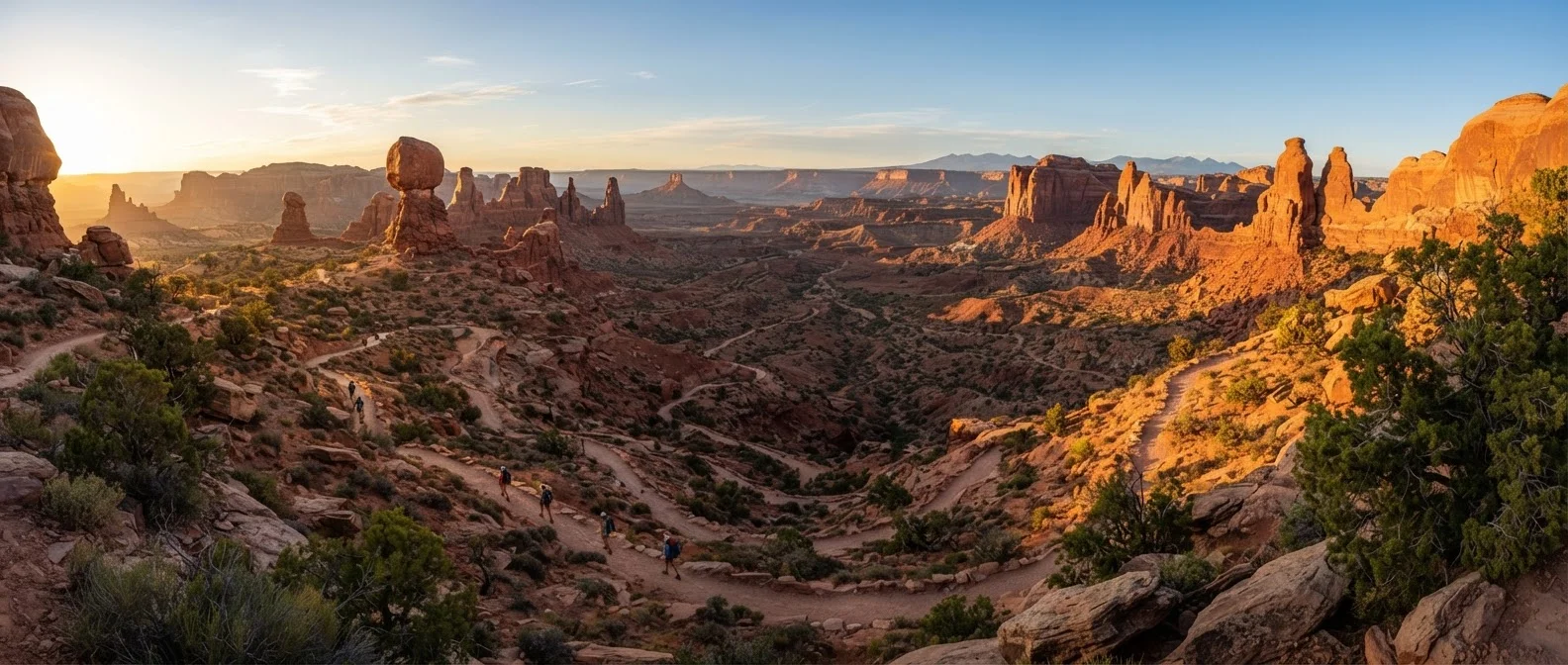
Photo: QuickAdvisor.net editorial
Key Takeaways
- The America the Beautiful annual pass does not cover all fees inside national parks.
- Many national parks are uncrowded and genuinely accessible year-round with good planning.
- Timed-entry permits and recreation.gov reservations work very differently from park to park.
- Cell service is unreliable or completely absent in most park interiors - plan accordingly.
- Wildlife encounters require real distance; animals that look calm can still be dangerous.
The Myths That Send Visitors in the Wrong Direction
National parks inspire bucket-list dreams, but a surprising number of first-timers arrive with ideas that simply don't hold up. Some come expecting crowds everywhere; others assume one pass unlocks everything. The gap between popular belief and park reality can cost you time, money, or - in the backcountry - your safety.
Whether you're heading to the desert Southwest, the Smokies, or the Pacific Northwest, getting the facts straight beforehand makes an enormous difference. If you're also thinking through what to bring, our guide on common packing myths can help you avoid loading up with gear you'll never use.
Myth
The America the Beautiful pass gets you into everything - fees, tram rides, camping, the works.
Fact
The America the Beautiful Interagency Annual Pass covers entrance fees only, not camping, permits, or concession-operated tours.
The pass - sold by the National Park Service - waives the standard vehicle or per-person entrance fee at most federal lands. It does not cover campsite reservations, backcountry permits, parking fees (like those at some trailheads), or any amenity run by a private concessioner, such as guided tours or historic site admissions within a park. Always check the specific fee structure on the NPS website for each park you plan to visit.
Myth
All the famous national parks are packed no matter when you go, so timing doesn't really matter.
Fact
Visitation at most parks is heavily concentrated in peak summer weeks and a handful of iconic trailheads - timing your visit thoughtfully makes a dramatic difference.
Yellowstone and Zion draw enormous summer crowds, but even they thin out significantly in shoulder seasons. Lesser-known parks - Great Basin, Congaree, Isle Royale, North Cascades - see a fraction of the traffic year-round. Even within popular parks, the difference between arriving at a trailhead at 6 a.m. versus 10 a.m. on a summer Saturday can mean the difference between solitude and a traffic jam. Check each park's visitation data on the NPS Stats portal to set realistic expectations.
Myth
If you get a timed-entry permit, you're all set - no other planning needed.
Fact
Timed-entry permits cover park access during a specific window; they are separate from camping reservations, backcountry permits, and activity-specific quotas.
Parks like Glacier and Rocky Mountain have introduced timed-entry systems for certain corridors or entrances, but these are distinct from - and often run on different platforms than - camping reservations (usually recreation.gov) and backcountry overnight permits (which may require lottery entry months in advance). Read each park's official planning page carefully; layering multiple reservation requirements is common and each has its own deadline.
Myth
You can rely on your phone for navigation, weather, and emergency calls inside the park.
Fact
Cell coverage is absent or extremely limited in the interior of most national parks; downloading offline maps and carrying paper backups is essential.
Many park visitors are surprised to find their phones essentially useless the moment they leave the main visitor corridor. GPS chips in smartphones can still track your position using satellite signals even without cell service - but only if you've pre-downloaded offline maps (apps like Gaia GPS or AllTrails allow this). For emergencies in remote areas, satellite communicators are a far more reliable option. Never assume you can call for help from the backcountry.
Myth
Wildlife in national parks is used to humans, so it's safe to approach for a closer look or a photo.
Fact
Habituated wildlife is not tame wildlife - animals that appear calm can charge or bite without warning, and approaching them is both dangerous and illegal.
NPS regulations require visitors to stay at least 25 yards from most wildlife and 100 yards from bears and wolves in parks like Yellowstone. Animals that seem indifferent to human presence - bison, elk, moose - are still wild and unpredictable. Every year, visitors are seriously injured by bison in Yellowstone, often after approaching for photographs. Using binoculars or a zoom lens is the right call, and it's also the one that keeps the animal's behavior natural.
Myth
National parks are basically fully accessible - paved paths and shuttle systems mean everyone can see the highlights.
Fact
Accessibility varies enormously by park and by specific feature; many iconic viewpoints or trails involve significant elevation, rough terrain, or no accessible route at all.
Some parks, like Acadia and the South Rim of Grand Canyon, have made substantial accessibility investments with paved paths, accessible shuttles, and ranger-led programs. Others have very limited infrastructure, and even well-known trails can involve steep grades, loose rock, or ladders. The NPS maintains an accessibility page for each park that details what is and isn't reachable for visitors with mobility limitations - reviewing it before arrival saves frustration and helps set realistic expectations for the whole group.
What Smart Park Visitors Actually Do
The visitors who have the best park experiences tend to share a few habits: they check the specific park's official NPS page before every trip, they arrive earlier than they think necessary, and they treat permits as a separate research project - not an afterthought.
Don't Underestimate Altitude and Heat Together
Desert parks deserve special mention. Heat, dehydration, and sudden afternoon storms catch visitors off guard more than almost any other hazard. Our companion piece on US desert trip planning covers the timing and hydration mistakes that get real people into real trouble.
One final thought: the parks most travelers overlook are often the most rewarding. Over-planned itineraries focused on the famous icons frequently miss what makes the American landscape genuinely stunning. Travelers keep skipping the best parts of destinations for exactly this reason - and national parks are no exception.
The content on this site is for informational purposes only and is not a substitute for professional advice. Always consult a qualified professional for guidance specific to your situation.