
Merging, Yielding, and Right-of-Way: The Rules Drivers Most Often Misapply

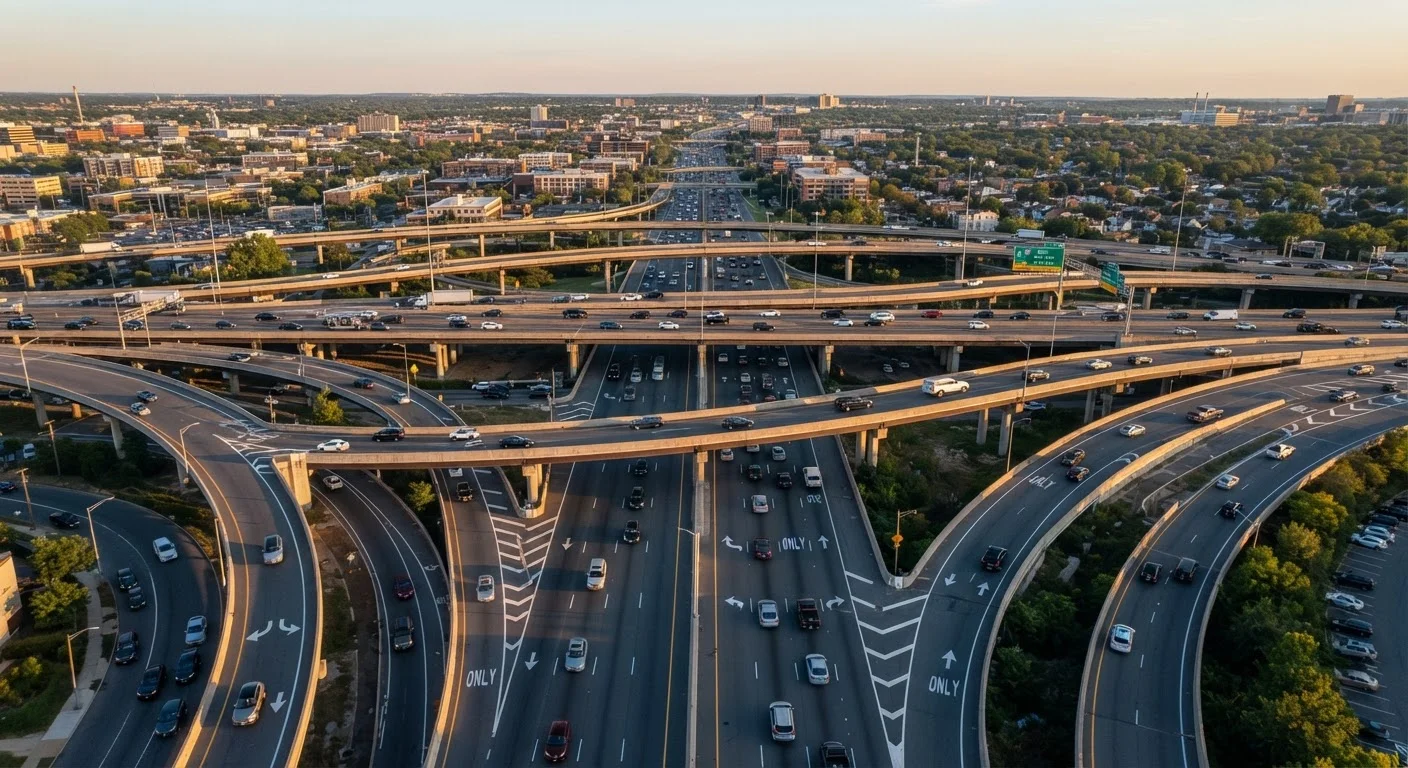
Photo: QuickAdvisor.net editorial
Why These Rules Cause So Much Confusion
Merging, yielding, and right-of-way are foundational traffic concepts - yet they account for a disproportionate share of preventable crashes on U.S. roads. The problem isn't that drivers ignore the rules outright; it's that many learned them imprecisely, reinforced bad habits over years, or encountered contradictory behavior from other drivers and concluded it was acceptable. These misunderstandings are compounded by the fact that state driver's manuals vary in how they explain these concepts.
| Who yields when merging onto a highway? | The driver entering from the on-ramp (Uniform Vehicle Code; state driver handbooks) |
| Four-way stop tiebreaker rule | Vehicle on the left yields to vehicle on the right (Standard traffic law across U.S. states) |
| Left-turn right-of-way | Turning left must yield to oncoming straight traffic (Uniform Vehicle Code) |
| Does a yield sign require a stop? | No - only if traffic or pedestrians require it (MUTCD (Manual on Uniform Traffic Control Devices)) |
| Emergency vehicle rule | Pull right and stop for active lights and sirens (Required by law in all 50 U.S. states) |
| Pedestrian right-of-way | Pedestrians in marked and unmarked crosswalks generally have priority (Varies by state; most states follow this standard) |
Understanding how these rules actually work - not just how they're commonly practiced - is one of the most practical safety investments any driver can make. And if you think road signs add another layer of confusion, our guide on road sign meanings Americans get wrong covers the markings that compound these errors.
Merging: Who Actually Has to Yield?
One of the most persistent myths in American driving is that highway traffic is always obligated to make room for merging vehicles. It is not. The driver entering the roadway from an on-ramp is legally required to yield to existing traffic. The merging driver must adjust speed - accelerating or, when necessary, briefly slowing - to find an acceptable gap before entering the travel lane.
That said, responsible highway driving includes courteous cooperation. Drivers already on the highway are not required to move over or slow down, but doing so when safe is considered good practice and helps traffic flow. The confusion arises when merging drivers treat courtesy as law: assuming that existing traffic must accommodate them creates a dangerous expectation gap.
The zipper merge is a separate but related concept. On roads where a lane ends ahead - such as construction zones - traffic engineers and safety advocates increasingly support the zipper merge: drivers use both lanes until the merge point, then alternate entry one car at a time. This reduces overall congestion compared to early lane changes, though it still requires both parties to cooperate. Check your state's guidance, as some states actively encourage zipper merging through signage.
Right-of-way
A legal framework that determines which driver must yield in a given traffic situation. No driver is granted the right-of-way; one driver is simply required to yield it to another.
Yield
To slow down and allow other traffic or pedestrians to proceed before you enter or cross their path. Yielding does not require a full stop unless conditions demand it.
Zipper merge
A traffic technique where drivers use both lanes of a closing or ending lane up to the merge point, then alternate entry one vehicle at a time. It is designed to reduce congestion in construction zones and lane-end situations.
Uncontrolled intersection
An intersection that has no traffic signals, stop signs, or yield signs. Drivers must navigate it using default right-of-way rules, typically yielding to traffic already in the intersection and then to the vehicle on the right.
On-ramp merge
The process of entering a highway or high-speed roadway from an acceleration lane. The merging driver is legally required to yield to existing traffic on the main roadway.
For a broader look at how merging behavior contributes to larger risks, see our article on highway driving habits that increase crash risk.
Right-of-Way: What the Law Actually Says
Right-of-way is not a privilege - it is a framework that assigns who must yield in a given situation. No driver is ever legally granted the right-of-way; instead, one driver is required to yield it to another. This distinction matters because it means having the right-of-way does not excuse a driver from exercising reasonable care.
Here are the most commonly misapplied right-of-way scenarios:
- Four-way stops: The first vehicle to stop proceeds first. When two vehicles stop simultaneously, the vehicle on the left yields to the vehicle on the right. If vehicles arrive at the same time from opposite directions, the vehicle turning left yields to the vehicle going straight.
- Uncontrolled intersections: Without signs or signals, drivers must yield to traffic already in the intersection, then to the vehicle on the right.
- Turning left: Vehicles turning left must yield to oncoming traffic going straight - even when the turning driver has a green light (not a green arrow).
- Pedestrians and cyclists: Pedestrians in marked or unmarked crosswalks generally have the right-of-way over vehicle traffic in most states. Cyclists riding lawfully in a lane have the same rights and responsibilities as motor vehicles.
- Emergency vehicles: All drivers must pull to the right and stop when an emergency vehicle with active lights and sirens approaches, regardless of direction.
Large commercial trucks present additional right-of-way considerations due to their limited visibility and braking distance. Our guide on sharing the road with large trucks explains how truck dynamics affect these interactions.
Yielding vs. Stopping: A Frequently Blurred Line
A yield sign does not mean stop - and that nuance catches many drivers off guard. Yielding means slowing down and preparing to stop only if traffic or pedestrians require it. If the path is clear, a driver may proceed through a yield without stopping. Treating yield signs as stop signs causes unnecessary disruption; ignoring them entirely when traffic is present causes crashes.
Yield Signs Are Not Optional Suggestions
Yielding behavior also connects directly to following distance. A driver who maintains inadequate space has fewer options when they need to yield quickly. The physics behind that gap are explored in our piece on why tailgating is more dangerous than most drivers realize.
Getting these foundational rules right doesn't just protect you legally - it reduces friction on the road and lowers the risk of the rear-end collisions and sideswipes that characterize most intersection and merge-zone crashes. Reviewing your state's current driver handbook periodically is a straightforward way to stay current, since rules and guidance do evolve.
The content on this site is for informational purposes only and is not a substitute for professional advice. Always consult a qualified professional for guidance specific to your situation.