
What Your Blind Spots Actually Cover - and Why It Matters More Than You Think

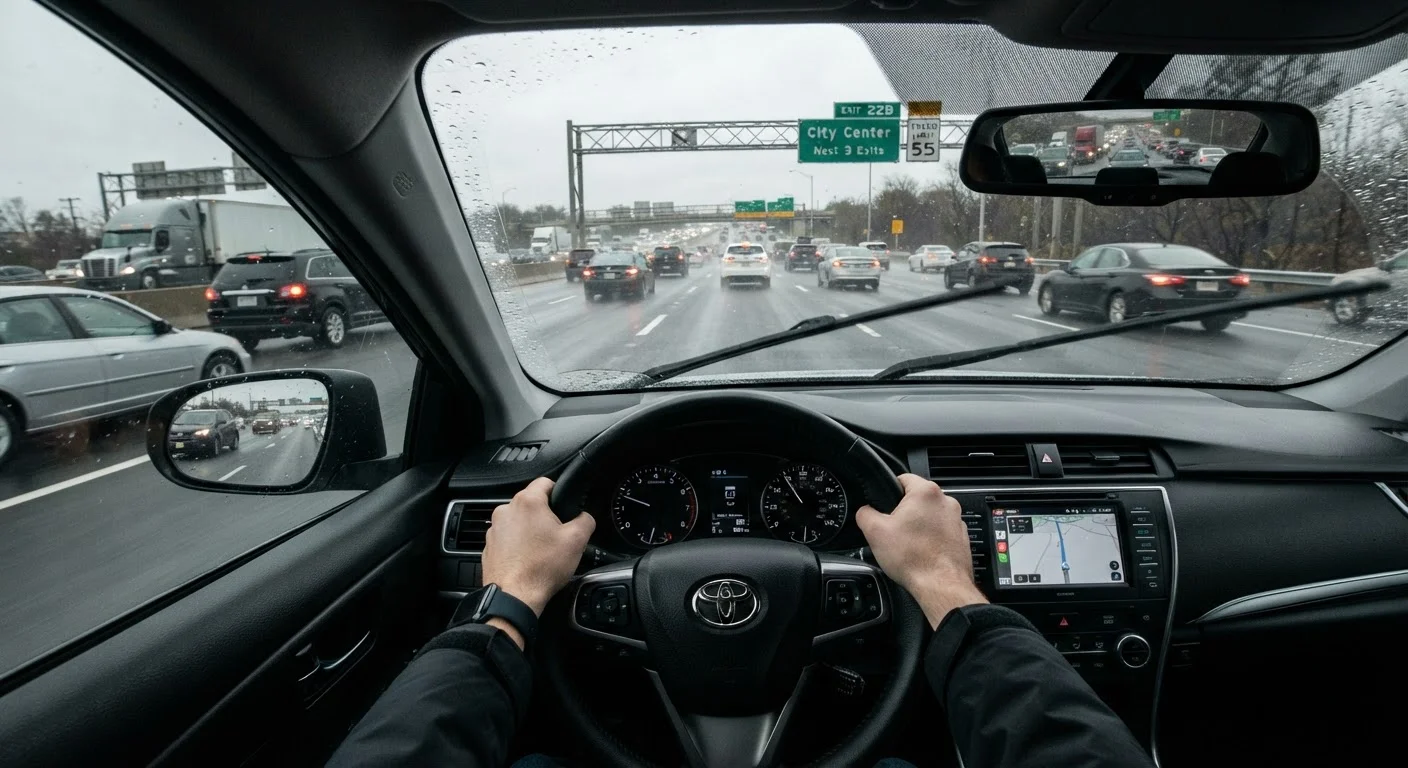
Photo: QuickAdvisor.net editorial
Key Takeaways
- Blind spots can conceal an entire vehicle traveling alongside yours at highway speed.
- The zones beside your rear quarters are the most dangerous and most underestimated.
- Large trucks have blind spots that extend up to 30 feet in front and 200 feet behind.
- Proper mirror adjustment reduces but does not eliminate blind spots - head checks remain essential.
- Blind spot monitoring technology is a helpful aid, not a replacement for active scanning.
The Zone Your Mirrors Can't See
Most drivers assume their mirrors cover the road around them fairly well. In practice, they don't. Even properly adjusted side and rearview mirrors leave distinct gaps - typically the rear-quarter zones on either side of your vehicle, extending roughly one to two car lengths back and slightly outward. At 65 mph on a highway, another vehicle can sit entirely within that space for several seconds without any mirror reflection alerting you.
The geometry is simple but easy to underestimate: side mirrors are flat or slightly convex, mounted at fixed angles, and can't rotate to follow movement. When a car begins to pass you, it travels through your mirror's range briefly, then disappears into the gap as it draws even with your rear door. That's the zone. It's not a myth or a minor inconvenience - it's a region of genuine invisibility.
Understanding what occupies that space helps calibrate how seriously to treat it. A standard passenger car, a motorcycle, a cyclist, or even a pedestrian at a wide intersection can all fit within your blind spot. For this reason, certain highway behaviors - like lingering beside other vehicles instead of passing decisively - quietly raise crash risk by prolonging the time others spend in your blind zones.
How Vehicle Type Changes the Equation
The blind spot picture changes dramatically depending on what you're driving. A low-slung sedan typically has smaller rear-quarter gaps than a tall SUV or pickup truck, where thicker roof pillars and a higher seating position create wider lateral dead zones. Minivans and full-size vans add another challenge: the area directly behind the vehicle can be nearly invisible, especially to shorter drivers.
Large commercial trucks present an extreme version of this problem. Federal Highway Administration guidance notes that semi-trucks have four distinct no-see zones: up to 20 feet in front of the cab, over 30 feet behind the trailer, a wide swath down the left side, and an even wider zone spanning multiple lanes on the right. If you're driving a passenger car and can't spot the truck driver's face in their side mirror, assume they cannot see you.
840,000+
Annual U.S. blind spot crashes
The National Highway Traffic Safety Administration has attributed approximately 840,000 crashes per year to blind spot-related lane changes.
~300 ft
Total no-see zone length on a semi-truck
Adding together front, rear, and side blind zones, a loaded tractor-trailer can have combined blind areas exceeding the length of a football field.
2-3 sec
Time a vehicle can sit invisibly beside you
At typical highway speeds, a car matching your pace can remain within your rear-quarter blind spot for several seconds without appearing in any mirror.
Sharing the road safely means understanding these asymmetries. See our overview of what car drivers should know about large trucks for a fuller breakdown of how commercial vehicles operate differently.
Mirror Adjustment: The Underused Fix
A large share of blind spot exposure is self-inflicted through poor mirror positioning. The common default - angling side mirrors so you see a generous slice of your own car's body - creates redundant coverage of space already visible in the rearview mirror, while leaving the actual danger zones uncovered.
The better approach: lean your head slightly toward the driver's window and adjust the left mirror outward until your car's body just disappears from view. Repeat on the right, leaning slightly toward the center console. With this setup, a vehicle exiting your rearview mirror's range smoothly transitions into your side mirror's field, then into your peripheral vision - significantly closing the gap. It feels unfamiliar at first but covers considerably more ground.
Reset Your Mirrors Every Time You Adjust Your Seat
Even with optimal mirror placement, a quick head check over your shoulder before lane changes remains essential. No static mirror eliminates a dynamic blind spot. This is also worth reinforcing in any vehicle you drive infrequently - mirrors reset when seats are adjusted, and what works in one vehicle's geometry doesn't automatically transfer.
Technology Helps, But Doesn't Replace Awareness
Blind spot monitoring systems - now standard or available on many newer vehicles - use radar sensors mounted in the rear bumper to detect vehicles in adjacent lanes. When something enters the monitored zone, a warning light illuminates in or near the side mirror, sometimes paired with an audible alert if you activate the turn signal.
These systems are genuinely useful, but they have documented limitations. Sensors can struggle with motorcycles, cyclists, and vehicles traveling at substantially different speeds. They also typically don't cover the zones directly in front of or behind the vehicle, and sensor range varies by manufacturer and conditions. Relying on a warning light as a substitute for active scanning is a mistake that distracted driving research consistently reinforces - attention lapses compound when drivers outsource vigilance to technology.
Blind spot awareness also interacts directly with following distance. The closer you trail another vehicle, the more you limit your own visibility and reaction time - a dynamic explained further in our piece on why tailgating is more dangerous than most drivers realize. Spacing and scanning work together; neither is sufficient alone.
Frequently Asked Questions
The content on this site is for informational purposes only and is not a substitute for professional advice. Always consult a qualified professional for guidance specific to your situation.