
Cooking From Scratch: A Complete Starting Point for Absolute Beginners

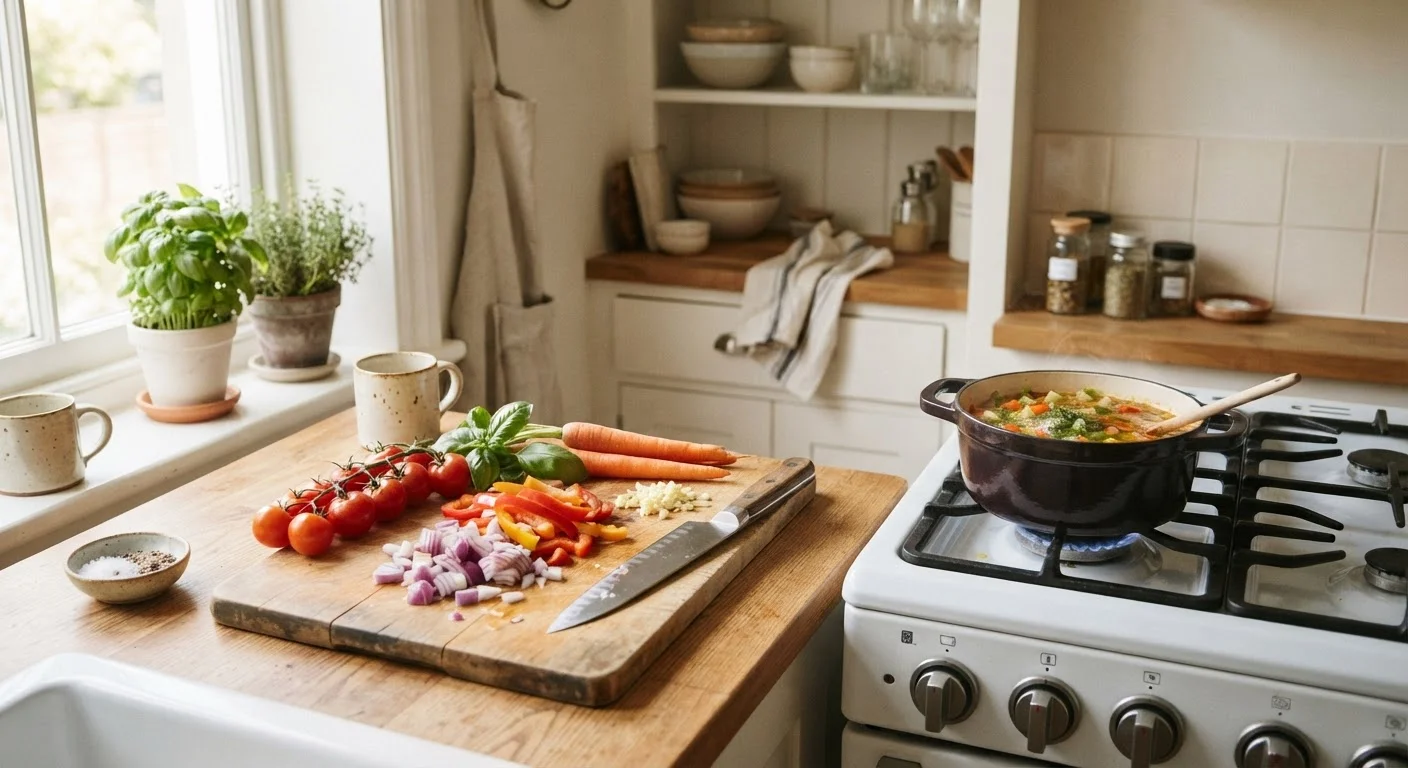
Photo: QuickAdvisor.net editorial
Key Takeaways
- A few versatile tools - a knife, cutting board, and one good pan - are enough to start cooking real meals.
- Learning five core techniques covers the majority of everyday recipes a beginner will encounter.
- Proper ingredient handling keeps food safe and helps dishes taste the way they're supposed to.
- Confidence in the kitchen comes from repetition, not perfection - expect mistakes early on.
- A stocked pantry dramatically reduces the barrier to cooking on any given night.
Why Cooking From Scratch Is Worth Learning
Cooking your own food is one of the most practical skills an adult can have - yet many Americans reach adulthood without ever learning it. The result is heavy reliance on takeout, packaged meals, and restaurant food, which tends to be higher in sodium, added sugar, and saturated fat than home-cooked alternatives. If you're looking to eat better overall, understanding core nutrition basics alongside learning to cook is a powerful combination.
Beyond nutrition, home cooking gives you direct control over what goes into your food - the quality of ingredients, the portion size, the flavor. It also tends to be more economical than eating out regularly. More than that, it's a transferable life skill that compounds over time: every technique you learn applies to dozens of future recipes.
Mise en place
A French culinary term meaning 'everything in its place.' It refers to measuring, chopping, and organizing all ingredients before cooking begins, so the process runs smoothly.
Sauté
To cook food quickly in a pan over relatively high heat with a small amount of fat, keeping the food moving to brown evenly without burning.
Deglaze
Adding liquid (wine, broth, or water) to a hot pan after cooking to loosen the browned bits stuck to the bottom, which carry concentrated flavor.
Simmer
Cooking liquid at a low-to-medium heat where small bubbles form gently at the surface - less intense than a full boil, used for soups, sauces, and braises.
Aromatics
Ingredients like onions, garlic, celery, and carrots that are cooked at the start of a recipe to build a flavor base for the dish.
Resting (meat)
Allowing cooked meat to sit off the heat for a few minutes before cutting. This lets juices redistribute through the meat rather than running out when sliced.
Essential Equipment to Get Started
You don't need a fully outfitted kitchen to cook well. A focused set of quality basics outperforms a drawer full of rarely-used gadgets. Here's what actually matters for a beginner:
- Chef's knife: A single, well-maintained 8-inch chef's knife handles the vast majority of prep work. Learning to use it properly is foundational - see our dedicated guide on knife skills every home cook should know for technique.
- Cutting board: A large wooden or plastic board gives you stable workspace. Use separate boards for raw meat and produce to prevent cross-contamination.
- 10-12 inch skillet: A stainless steel or cast-iron skillet handles sautéing, searing, frying, and more. Nonstick pans work well for eggs and delicate fish.
- Medium saucepan: Essential for sauces, grains, soups, and reheating.
- Large pot: Needed for boiling pasta, blanching vegetables, and making stocks.
- Sheet pan: Roasting vegetables and proteins in the oven is one of the easiest techniques a beginner can master.
Beyond equipment, a stocked pantry removes the biggest barrier to cooking on weeknights. Building a pantry of reliable staples means you can build a meal without a last-minute grocery run.
Core Techniques Every Beginner Needs
Five fundamental techniques cover the majority of everyday cooking. Master these, and you'll be able to approach almost any basic recipe with a working understanding of what's happening:
- Sautéing: Cooking food quickly in a small amount of fat over medium-to-high heat. Ideal for vegetables, proteins, and aromatics like onions and garlic.
- Roasting: Cooking in a dry oven environment. High heat (400-450°F) caramelizes surfaces and concentrates flavor. Works well for root vegetables, chicken, and fish.
- Boiling and simmering: Boiling is vigorous, full-rolling heat - used for pasta and blanching. Simmering is gentler and used for soups and sauces. These are not the same, and knowing the difference affects results.
- Braising: Cooking food slowly in a small amount of liquid in a covered pot. Best for tougher cuts of meat or hearty vegetables, and produces deeply flavorful results.
- Seasoning progressively: Adding salt and other seasonings in layers throughout cooking - not just at the end - builds depth of flavor that can't be corrected at the table.
Cook the Same Dish Twice in One Week
Before you ever turn on the stove, preparation matters as much as technique. Our prep checklist for home cooks walks through how to organize ingredients and tools before cooking begins - a habit that prevents most beginner mistakes.
Handling Ingredients Safely and Smartly
Food safety is non-negotiable, and a few consistent habits protect you every time you cook. The USDA identifies four core principles: clean, separate, cook, and chill.
- Clean: Wash hands thoroughly before and after handling raw meat, poultry, or seafood. Rinse produce under running water.
- Separate: Keep raw proteins away from ready-to-eat foods. Use dedicated cutting surfaces and utensils, and never let raw meat juices contact other ingredients.
- Cook: Use a food thermometer - not visual cues alone - to confirm proteins reach safe internal temperatures. Guessing leads to both undercooked food (a safety risk) and overcooked food (a quality issue).
- Chill: Refrigerate perishables within two hours of cooking. Don't leave cooked food at room temperature for extended periods.
The 'Two-Hour Rule' for Food Safety
Understanding how ingredients work also improves results. Dry proteins before searing so they brown rather than steam. Bring butter or eggs to room temperature when a recipe specifies it - these instructions exist for chemical and structural reasons, not preference.
Building Confidence One Meal at a Time
Confidence in the kitchen is earned through repetition, not born from natural talent. The most reliable path is to cook the same simple recipes multiple times until the process becomes second nature, then build outward from there. Each repetition teaches you to adjust heat, gauge doneness by smell and sound, and improvise when something goes sideways - because it will.
Expect and accept early failures. A broken sauce, an over-salted dish, or an unevenly cooked protein is information, not a verdict. Experienced cooks make mistakes constantly; they've simply learned to recognize and correct them faster.
One habit that accelerates learning: read a recipe in full before you begin. Understanding the whole arc of a dish - what comes first, how long each step takes, what the final result should look and taste like - prevents the scrambled panic of mid-cook surprises. Our guide on reading a recipe like a cook covers exactly how to approach this before you ever turn on the heat.
Start simple. Cook often. Stay curious. The skill compounds quickly once the fundamentals click.
Frequently Asked Questions
The content on this site is for informational purposes only and is not a substitute for professional advice. Always consult a qualified professional for guidance specific to your situation.