
Your Pantry as a Foundation: Staples That Make Weeknight Cooking Easier

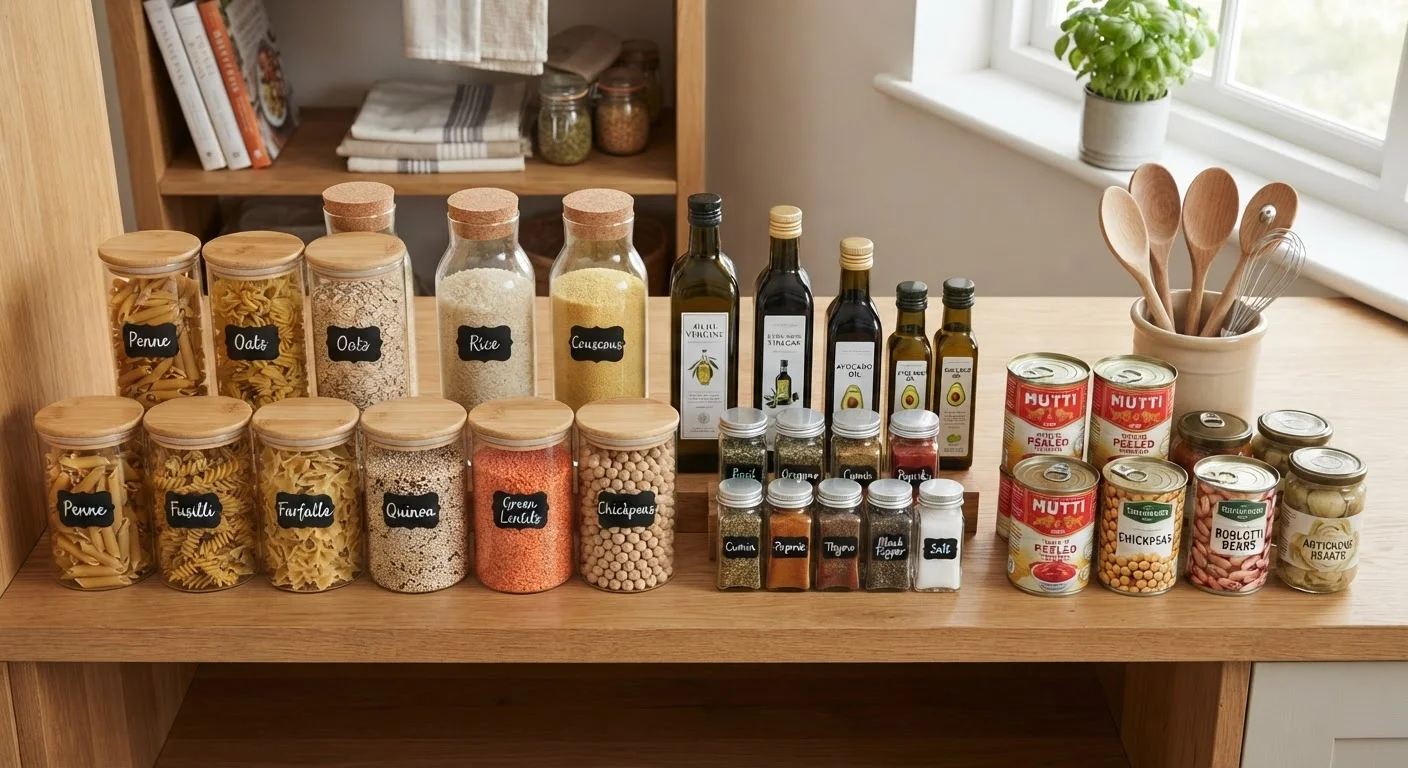
Photo: QuickAdvisor.net editorial
Why Your Pantry Does the Heavy Lifting
Most weeknight cooking failures aren't failures of skill - they're failures of preparation. When the cabinet holds only half-empty spice jars and a box of stale crackers, even a competent cook is stuck. A deliberate pantry removes that friction. With the right dry goods, oils, and condiments already on hand, dinner stops feeling like a puzzle and starts feeling like an assembly.
Think of your pantry as infrastructure. Just as building foundational kitchen skills gives you tools that apply to any recipe, a stocked pantry gives you raw material that works across cuisines and cooking styles. You're not buying ingredients for one meal - you're building a system.
The Core Categories to Stock
Dry Goods and Grains
Long-cooking staples form the backbone of the pantry. Stock white or brown rice, dried pasta in at least two shapes, and dried lentils - red lentils in particular cook in under 25 minutes without soaking. Rolled oats and canned beans (black, chickpea, white kidney) round out quick, protein-forward meals. Canned beans carry nearly the same nutritional profile as their dried counterparts - a useful edge when time is short.
Canned and Jarred Goods
Whole or crushed canned tomatoes are arguably the single most versatile pantry item: they become pasta sauce, braise liquid, soup base, or shakshuka in minutes. Coconut milk, low-sodium broth, and canned fish (tuna, sardines, salmon) expand your range considerably. For depth of flavor without effort, keep a jar of tomato paste and one of roasted red peppers.
Oils, Vinegars, and Condiments
A neutral oil (such as canola or grapeseed) handles high-heat cooking; extra-virgin olive oil finishes dishes and dresses salads. Two vinegars - red wine and apple cider - cover most acid-balancing needs. Soy sauce or tamari, fish sauce, and Dijon mustard each add layers of savory complexity that take seconds to incorporate. This approach is also friendlier on the grocery budget - see practical strategies for eating well without overspending.
Aromatics and Spices
A small, curated spice collection beats a cluttered shelf of stale powders. Prioritize: kosher salt, whole black peppercorns, smoked paprika, cumin, dried oregano, red pepper flakes, and garlic powder. Fresh garlic and yellow onions, though technically produce, store well for weeks and belong in any pantry-adjacent setup.
Pantry staple
A non-perishable ingredient kept on hand consistently because it works across many recipes. Staples reduce how often you need to shop and provide a fallback when fresh ingredients run out.
Mise en place
A French culinary term meaning 'everything in its place.' It refers to the practice of measuring, chopping, and organizing all ingredients before cooking begins, reducing errors and saving time.
Neutral oil
A cooking oil with a mild flavor and high smoke point - such as canola, grapeseed, or vegetable oil - used when you don't want the fat itself to flavor the dish.
Umami
One of the five basic tastes, often described as savory, meaty, or deeply satisfying. Ingredients like soy sauce, fish sauce, tomato paste, and aged cheese are rich sources of umami.
Rotation (pantry)
The practice of placing newly purchased pantry items behind older ones so that older stock is used first. This minimizes waste and ensures ingredients are consumed while still at peak quality.
Using Your Pantry Strategically
Stocking is only half the equation - rotation matters too. Place newer cans and jars behind older ones so you use ingredients before they expire. Most canned goods remain safe well past their printed date, but flavor and texture degrade over time, so regular turnover is worth the habit. If you're planning to buy pantry staples in larger quantities, unit price math is the clearest way to determine whether bulk buying actually saves money.
Before you cook, spend two minutes taking inventory of what proteins and produce need to be used up, then build toward your pantry rather than around it. This habit - knowing what you have before you shop - dramatically reduces both food waste and last-minute grocery runs. It pairs naturally with the mise en place approach to prep, which organizes your ingredients before the heat ever goes on.
A well-stocked pantry also makes it easier to improve the nutritional quality of everyday meals without dramatic overhauls - when lentils, canned fish, and whole grains are already on the shelf, reaching for them becomes the path of least resistance.
The content on this site is for informational purposes only and is not a substitute for professional advice. Always consult a qualified professional for guidance specific to your situation.