
Stock vs. Broth: What the Difference Means for Your Cooking

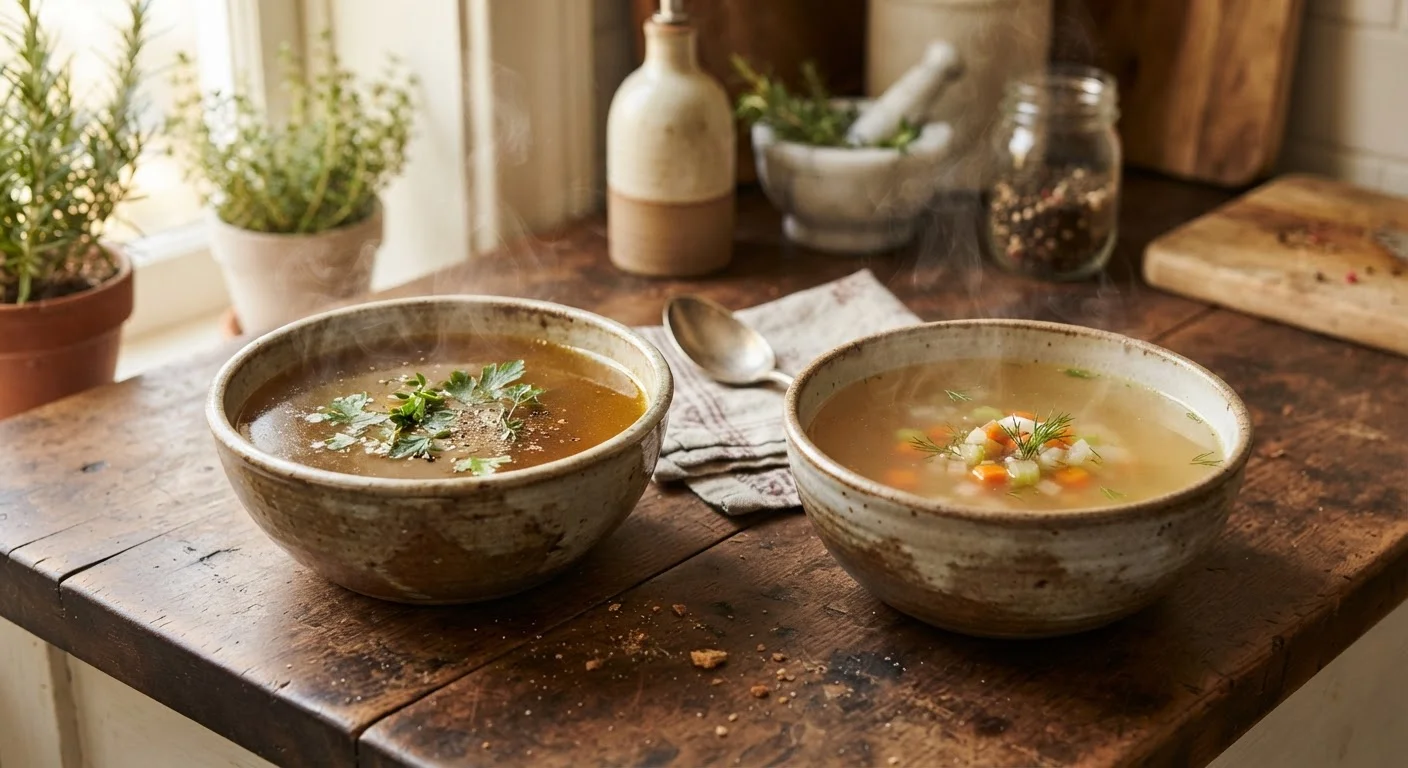
Photo: QuickAdvisor.net editorial
Key Takeaways
- Stock is made primarily from bones; broth is made primarily from meat.
- Bones release collagen during long simmering, giving stock a richer, thicker body than broth.
- Broth is typically seasoned; stock is usually left unsalted to preserve cooking flexibility.
- Stock reduces into a glossy sauce; broth does not thicken the same way.
- Both can substitute for each other in a pinch, but the results will differ in texture and depth.
The Core Distinction: Bones vs. Meat
The most important difference between stock and broth comes down to what goes into the pot. Stock is built from bones - often roasted first to deepen flavor - simmered with aromatics like onion, carrot, celery, and herbs. Broth, by contrast, is built primarily from meat, though bones may be present in smaller amounts.
This distinction isn't just culinary trivia. Bones contain collagen - a structural protein that breaks down during long, slow simmering into gelatin. Gelatin is what gives a properly made stock its characteristic body. When chilled, a good chicken or beef stock should firm up like loose jello. That gel is a sign of a well-extracted stock and directly affects how the final dish feels in the mouth.
Broth, made mostly from meat, doesn't extract nearly as much collagen. It stays liquid and thin even when cold. That's not a flaw - it's just a different tool for a different job. Just as sautéing, pan-frying, and stir-frying look similar but serve distinct purposes, stock and broth may seem interchangeable but behave very differently under heat.
How They're Made Differently
Stock is typically simmered for a long time - chicken stock for roughly three to four hours, beef stock often considerably longer. The goal is extraction: pulling minerals, gelatin, and flavor compounds out of the bones. Professional kitchens generally make stock unsalted, leaving seasoning entirely to the cook who will use it later.
Broth has a shorter cook time and is seasoned during cooking, often with salt and sometimes with peppercorns or bay leaves. Because it's built for flavor rather than texture, the simmer is shorter and the result is a thinner, more immediately drinkable liquid.
| Criterion | Stock | Broth |
|---|---|---|
| Primary ingredient | Bones (with some meat) | Meat (with few or no bones) |
| Collagen/gelatin content | High - gels when chilled | Low - stays liquid when chilled |
| Typical cook time | 3-6+ hours | 1-2 hours |
| Seasoning | Usually unsalted | Seasoned during cooking |
| Texture | Rich, full-bodied | Thin, light |
| Best use | Sauces, braises, reductions | Soups, sipping, quick cooking |
| Reduces into a sauce | Yes - thickens naturally | No - stays watery |
Understanding these process differences helps explain why the two products behave so differently in recipes. When you add salt matters as much as how much you use - and using a pre-seasoned broth in a recipe that calls for long reduction can easily push a dish into oversalted territory.
What Each One Does in a Recipe
Stock's gelatin content makes it ideal for any application where body and richness matter. When you reduce stock in a pan after searing meat, it thickens naturally into a glossy sauce - something broth simply cannot replicate. Risottos, braises, and French onion soup all benefit from the depth that a well-made stock provides.
Broth shines in lighter applications: a simple chicken noodle soup where you want a clean, clear liquid; a quick vegetable soup where the broth itself is front and center; or a cooking liquid for grains like farro or barley where you want flavor without heaviness.
~6 hrs
Typical simmer time for beef bone stock
Culinary training curricula consistently cite extended simmering as essential for full collagen extraction from beef bones.
~17g
Protein per cup in bone broth (approximate)
USDA nutrient data shows significant protein variation across commercial and homemade bone broths depending on preparation time and bone density.
It's worth noting that cooking method affects how nutrients behave in both liquids. Different cooking methods change the nutritional value of food in ways that apply to stock and broth alike - long simmering extracts minerals from bones but may also degrade some heat-sensitive vitamins from vegetables added to the pot.
When substituting one for the other, the key adjustment is salt: if a recipe calls for stock and you're using broth, reduce any added salt significantly, especially in dishes that reduce. If using stock in place of broth in a soup meant to be eaten as-is, taste frequently and adjust seasoning before serving, since unsalted stock may taste flat without it. For a deeper look at common kitchen assumptions that don't always hold up, see cooking myths that even experienced home cooks still believe.
The content on this site is for informational purposes only and is not a substitute for professional advice. Always consult a qualified professional for guidance specific to your situation.