
How the American Potluck Became a Symbol of Community

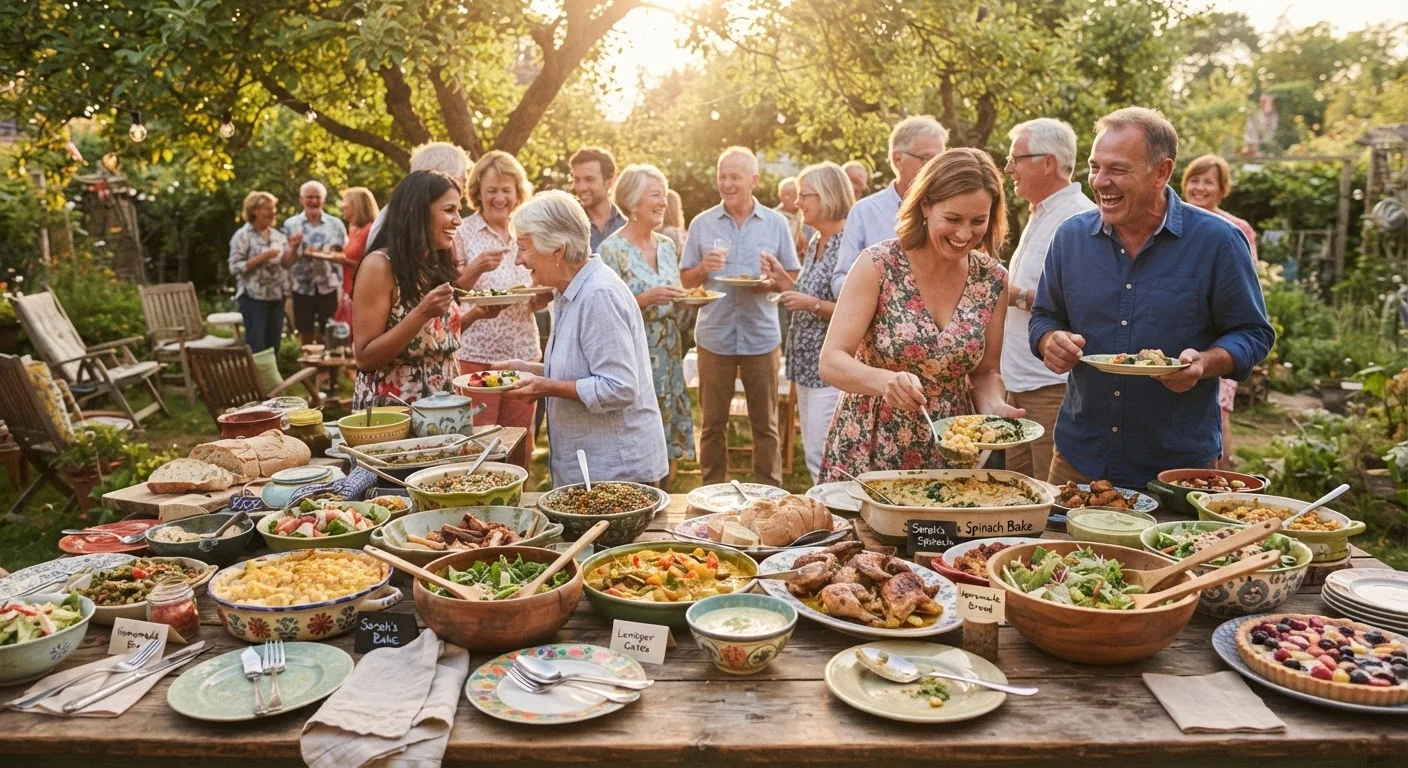
Photo: QuickAdvisor.net editorial
Key Takeaways
- Potlucks originated as a practical response to resource scarcity on the American frontier.
- The tradition evolved through church suppers, ethnic community gatherings, and mid-century suburban culture.
- Potlucks serve as a form of edible autobiography - dishes reveal heritage, identity, and memory.
- The format has adapted to modern life through workplace lunches, neighborhood dinners, and cultural festivals.
- Immigrant food traditions have consistently enriched the potluck table across American history.
From Frontier Survival to Social Ritual
Before the potluck had a name, it had a function: survival. On the American frontier, feeding a community gathered for a barn raising or harvest required pooling resources that no single household could supply alone. Every family brought what they had - preserved meats, cornbread, root vegetables - and the collective table became greater than the sum of its parts.
This pragmatic origin gave the potluck an egalitarian character that has persisted for centuries. Nobody needed to be wealthy to participate; contribution, not abundance, was the currency. Church congregations in the 19th century formalized this impulse into regular 'basket socials' and 'covered dish suppers,' weaving collective eating into the rhythm of community life. The potluck, in this sense, was never just about food - it was about showing up.
1 in 3
Americans who regularly attend potluck-style gatherings
Survey data from the Food Marketing Institute has consistently shown that shared communal meals remain a common feature of American social life across income levels and regions.
~200 years
Documented history of American communal food-sharing traditions
Historical records of church basket socials and frontier cooperative meals trace community potluck-style eating in the United States back to at least the early 19th century.
The Table as a Mirror of Identity
What someone brings to a potluck is rarely random. It tends to be a dish tied to memory - a grandmother's casserole, a regional specialty, a recipe passed down through a community. In this way, the potluck functions as a form of edible autobiography, offering a rare window into the private lives of neighbors and colleagues.
This dynamic is especially visible through the lens of immigration. As each wave of newcomers arrived in America, their kitchens traveled with them. Community potlucks within immigrant enclaves became vital acts of cultural preservation, keeping recipes and food traditions alive far from their origins. Over time, those same dishes migrated outward onto broader American tables - a process explored in depth in the history of how immigration reshaped American food.
The potluck table, at its best, is a snapshot of cultural negotiation - the same kind of exchange that plays out at Thanksgiving tables across the country, where heritage and adaptation sit side by side.
Mid-Century Suburbia and the Potluck's Golden Age
The post-World War II suburban boom gave the potluck new terrain. As Americans moved into newly built neighborhoods and sought ways to build community among strangers, the neighborhood potluck became a social technology for turning proximity into belonging. Church basements, community centers, and backyard patios became regular venues for collective eating.
This era also shaped the aesthetic of what Americans associate with the potluck: Jell-O molds, tuna noodle casseroles, deviled eggs, and ambrosia salads. These dishes were partly products of postwar food marketing and the rise of processed convenience foods - but they also represented genuine shared taste, a kind of culinary common ground that gave diverse neighbors something recognizable to gather around.
The potluck's communal spirit stands in deliberate contrast to the individualism of the drive-through. Where fast food streamlines eating into a private transaction, as explored in the cultural footprint of chain restaurants, the potluck insists on presence, contribution, and reciprocity.
“Food is our common ground, a universal experience. The act of sitting down together, each person having contributed something, is one of the most democratic rituals a community can practice.”
— James Beard, American culinary author and food educator
Why the Potluck Endures
In an era of meal delivery apps and restaurant reservations, the potluck might seem like a relic. Instead, it has quietly persisted - and in some communities, expanded. Workplace potlucks, international food festivals at schools, and neighborhood supper clubs all carry the same underlying logic: collective effort produces something no individual effort can replicate.
Part of what makes the potluck durable is its radical inclusivity. It requires no particular income, no kitchen expertise, and no formal hosting skills. A purchased pie counts as much as a hand-rolled pastry; a bag of chips placed next to homemade tamales is welcome at the table. This low barrier is itself a form of belonging - everyone can participate, and everyone is needed.
Food has long carried outsized symbolic weight in how societies define themselves, a dynamic examined in why certain foods become tied to national identity. The potluck concentrates that symbolism into a single afternoon: a table built by many hands, eaten by many mouths, remembered by everyone present.
Frequently Asked Questions
The content on this site is for informational purposes only and is not a substitute for professional advice. Always consult a qualified professional for guidance specific to your situation.