
Why Ultraprocessed Food Is a Distinct Category - Not Just 'Junk Food'

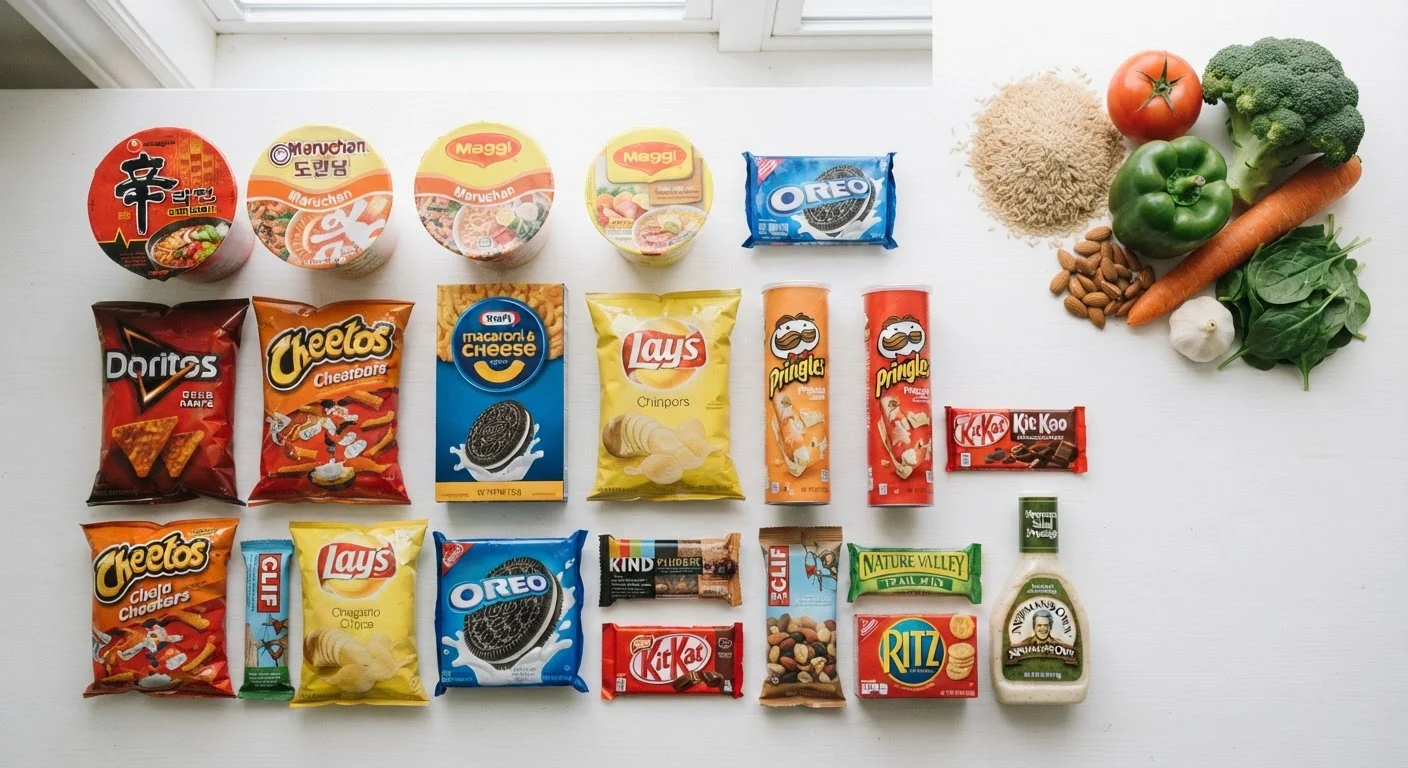
Photo: QuickAdvisor.net editorial
Key Takeaways
- Ultraprocessed foods are classified by how they're made, not by their fat, sugar, or calorie content alone.
- The NOVA system groups foods into four tiers based on the degree and purpose of industrial processing.
- Many foods that seem healthy - like certain yogurts or breakfast cereals - may qualify as ultraprocessed.
- Research links high ultraprocessed food consumption to increased risks of several chronic health conditions.
- Reducing ultraprocessed food intake doesn't require a complete diet overhaul - small swaps can make a difference.
Why 'Junk Food' Doesn't Cover It
When most people hear 'ultraprocessed food,' they picture chips, candy, and fast-food burgers. That instinct isn't wrong - but it's incomplete. The term has a precise scientific meaning that goes well beyond what we casually call junk food, and understanding the difference matters more than it might seem.
'Junk food' is an informal judgment about nutritional quality: high in calories, low in nutrients. Ultraprocessed food, by contrast, is a structural classification. It describes how a product was made, not just what's in it. A low-fat flavored yogurt with added emulsifiers and artificial sweeteners can be ultraprocessed. So can a vitamin-fortified breakfast cereal, a diet soda, or a mass-produced whole-grain bread with a dozen additives. None of these are traditional junk food - but all may fall into the ultraprocessed category.
This matters because conflating the two leads to blind spots. Shoppers avoid potato chips but trust products marketed as 'healthy' without realizing those products may share the same manufacturing profile as the foods they're avoiding. Reading food labels with purpose becomes much more useful once you know what you're actually looking for.
The NOVA System: A Process-Based Framework
The NOVA classification was developed in the 2010s by a research group at the University of São Paulo, led by epidemiologist Carlos Monteiro. Rather than organizing foods by nutrients - as most dietary frameworks do - NOVA organizes them by the nature, extent, and purpose of processing.
The four groups work like this:
- Group 1 - Unprocessed or minimally processed: Whole foods in their natural state or subjected only to basic preservation (freezing, drying). Examples: fresh fruit, plain oats, dried lentils.
- Group 2 - Processed culinary ingredients: Substances extracted from Group 1 foods and used in cooking. Examples: olive oil, butter, flour, salt.
- Group 3 - Processed foods: Group 1 foods preserved or enhanced using Group 2 ingredients. Examples: canned tomatoes, cheese, cured meats.
- Group 4 - Ultraprocessed foods: Industrial formulations made from modified food substances and additives, designed for convenience, hyper-palatability, and long shelf life. Examples: packaged snacks, soft drinks, instant noodles, mass-produced baked goods.
The defining feature of Group 4 is not a particular ingredient - it's the use of industrial processes and additives that have no equivalent in home cooking: emulsifiers, humectants, interesterified fats, flavor enhancers, and colorants added not for safety or nutrition but for texture, appearance, and craveability.
~57%
Share of U.S. adult calories from ultraprocessed foods
A 2016 study published in BMJ Open, analyzing data from the National Health and Nutrition Examination Survey, estimated that ultraprocessed foods accounted for about 57% of total caloric intake in U.S. adults.
500+
Extra calories consumed per day on ultraprocessed diet
In a 2019 NIH randomized controlled trial published in Cell Metabolism, participants on an ultraprocessed diet consumed roughly 500 more calories per day on average compared to those eating an unprocessed diet.
4 groups
Food processing tiers in the NOVA system
The NOVA classification, developed by researchers at the University of São Paulo, organizes all foods into four groups based on the extent and purpose of industrial processing.
What the Research Links to Ultraprocessed Diets
A growing body of epidemiological research has associated high consumption of ultraprocessed foods with elevated risks of obesity, type 2 diabetes, cardiovascular disease, depression, and certain cancers. It's important to note that much of this evidence is observational - meaning researchers tracked what people ate and what happened to their health over time, rather than directly testing cause and effect.
That said, the consistency of findings across large, diverse populations has prompted serious scientific attention. A notable randomized controlled trial published in Cell Metabolism in 2019 - conducted by researchers at the National Institutes of Health - found that participants who consumed an ultraprocessed diet ate significantly more calories and gained weight compared to those eating an unprocessed diet, even when both groups were offered foods matched for total sugar, fat, fiber, and macronutrients. The researchers proposed that factors beyond nutrients - such as food texture, eating rate, and gut hormone responses - may help explain the effect.
“The problem with ultraprocessed foods is not any single ingredient - it is the overall industrial formulation, which displaces the consumption of real food and reshapes eating habits in ways that nutrients alone cannot capture.”
— Carlos Monteiro, Professor of Nutrition and Public Health, University of São Paulo; lead developer of the NOVA classification system
For a deeper look at what the evidence actually shows, see what the research shows about whole foods versus ultraprocessed foods.
This article is for general informational and educational purposes only and is not a substitute for professional medical or dietary advice. Consult a qualified healthcare provider for guidance tailored to your individual health needs.
Practical Implications: Seeing the Category More Clearly
One of the most useful things NOVA offers everyday consumers is a new lens. Instead of asking 'Is this food high in fat or sugar?' you can ask 'Could I make this in my kitchen with recognizable ingredients?' If the answer is no - if the product relies on ingredients like modified corn starch, sodium stearoyl lactylate, or artificial flavor blends - it's likely ultraprocessed regardless of its health marketing.
This doesn't mean eliminating every ultraprocessed item is realistic or necessary for everyone. Diet quality exists on a spectrum, and small, sustainable shifts tend to be more effective than wholesale overhauls. Getting more nutrients without overhauling your diet is a practical starting point for readers looking to improve overall food quality without dramatic changes.
It's also worth noting that the term 'ultraprocessed' carries social weight - it can imply that certain ways of eating are morally inferior, which isn't the intent of the science. The language around food encodes class and identity in ways that matter, and access to less-processed food is not equally distributed. Understanding what ultraprocessed means scientifically is different from using it as a moral judgment.
The more grounded takeaway: knowing what the category actually means lets you evaluate products more accurately - including the ones marketed as healthy. Understanding how grain processing changes nutritional value is one concrete example of how process-level thinking applies to everyday food choices.
Frequently Asked Questions
The content on this site is for informational purposes only and is not a substitute for professional advice. Always consult a qualified professional for guidance specific to your situation.